Introduction
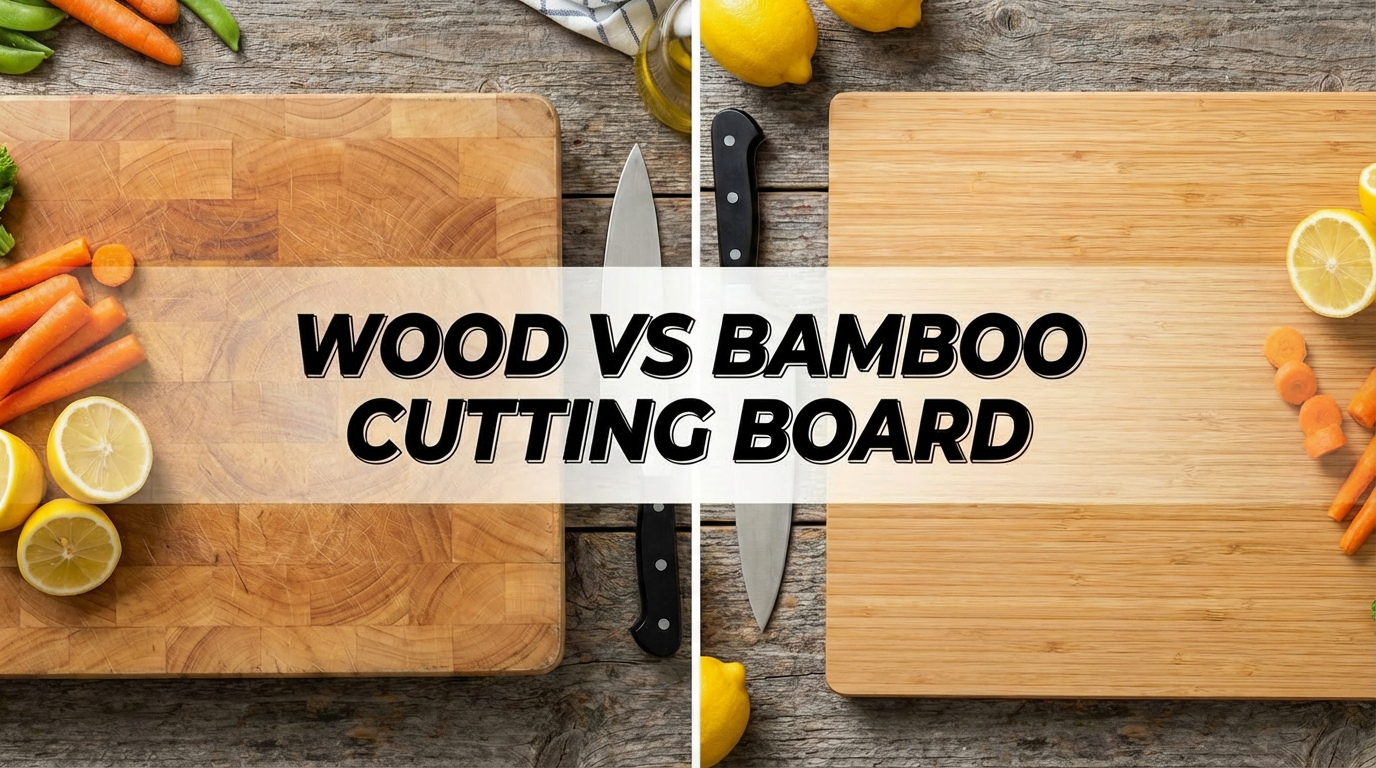
Wood and bamboo are popular materials used for making kitchen cutting boards. They both have their pros and cons, and are ideal for certain types of use.
Many people don’t know a lot about these differences, which is perfectly normal. If you happen to be one of these people, don’t worry. In this guide by Ruvati, we’re going to tell you about it all.
Understanding the Materials: Wood Vs. Bamboo
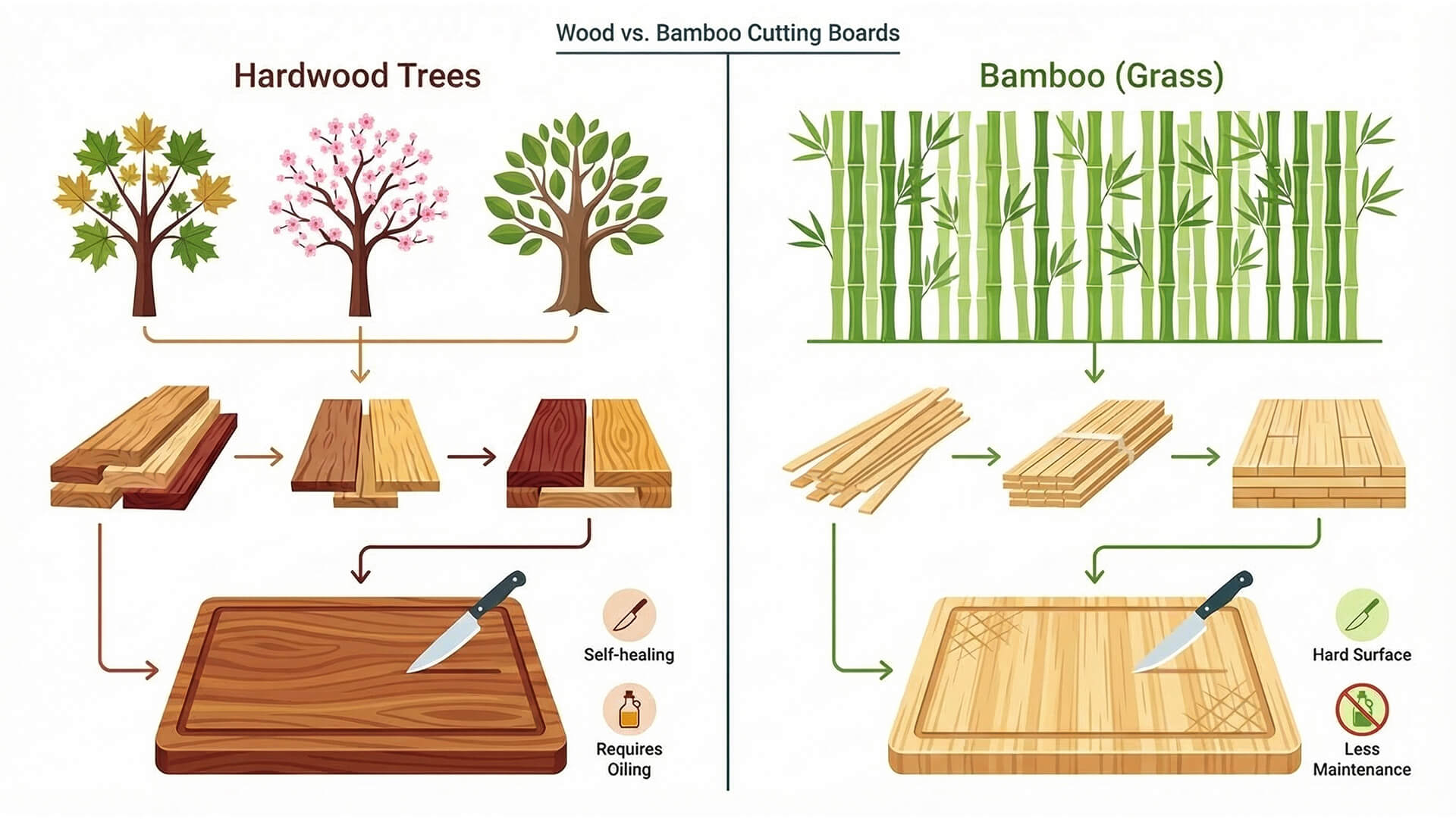
Wood cutting boards are made using hardwoods from trees like maple, cherry, and beech. Wood from these trees is processed before it is turned into a cutting board.
On the other hand, bamboo cutting boards are made using processed bamboo stalks. Bamboo isn’t exactly a wood. Rather, it is classified as a grass. Once processed, however, it forms a hard surface that provides a similar user experience as wood.
We’re going to learn a lot more about these materials further on in this post when discussing them in the context of cutting boards. For now, let’s move on to the next part of our article, i.e., the key considerations you need to make when choosing a board for your kitchen.
Key Considerations When Choosing a Cutting Board
Here is a list of the various key considerations that you should make when choosing a cutting board material:
- Durability: When choosing a board, you need to consider the level of durability that you need for your day-to-day kitchen work. Both wood and bamboo have their own levels of durability. In the case of wood, it also heavily depends on the type of tree that the wood comes from.
- Knife-friendliness: This is a measure of how easy the material is on the knife. As we will learn further on in this post, both bamboo and wood have their
- Affordability: Of course, the cost and affordability of the cutting board are important aspects to consider when making your choice.
- Hygienic aspects: It’s important to consider the hygienic aspects of the two materials. Sometimes, it is acceptable to go with a material that is less hygienic, provided that the use is sparse and allows for frequent cleaning.
- Maintenance: The ease of maintenance and upkeep is also a major factor to consider when buying a cutting board. Low-maintenance materials are often more desirable even if they lack in other aspects.
We will discuss and elaborate more on these various factors as we go further along this guide. Towards the end, we’ll also provide a table of comparison between these two materials to highlight their key differences in terms of the aforementioned factors.
Pros and Cons of Wood Cutting Boards
Let’s dive into some details and take a look at the pros and cons of wood cutting boards. (We’ll do the same for bamboo in the coming sections of this article.)
Pros of Wood Cutting Boards
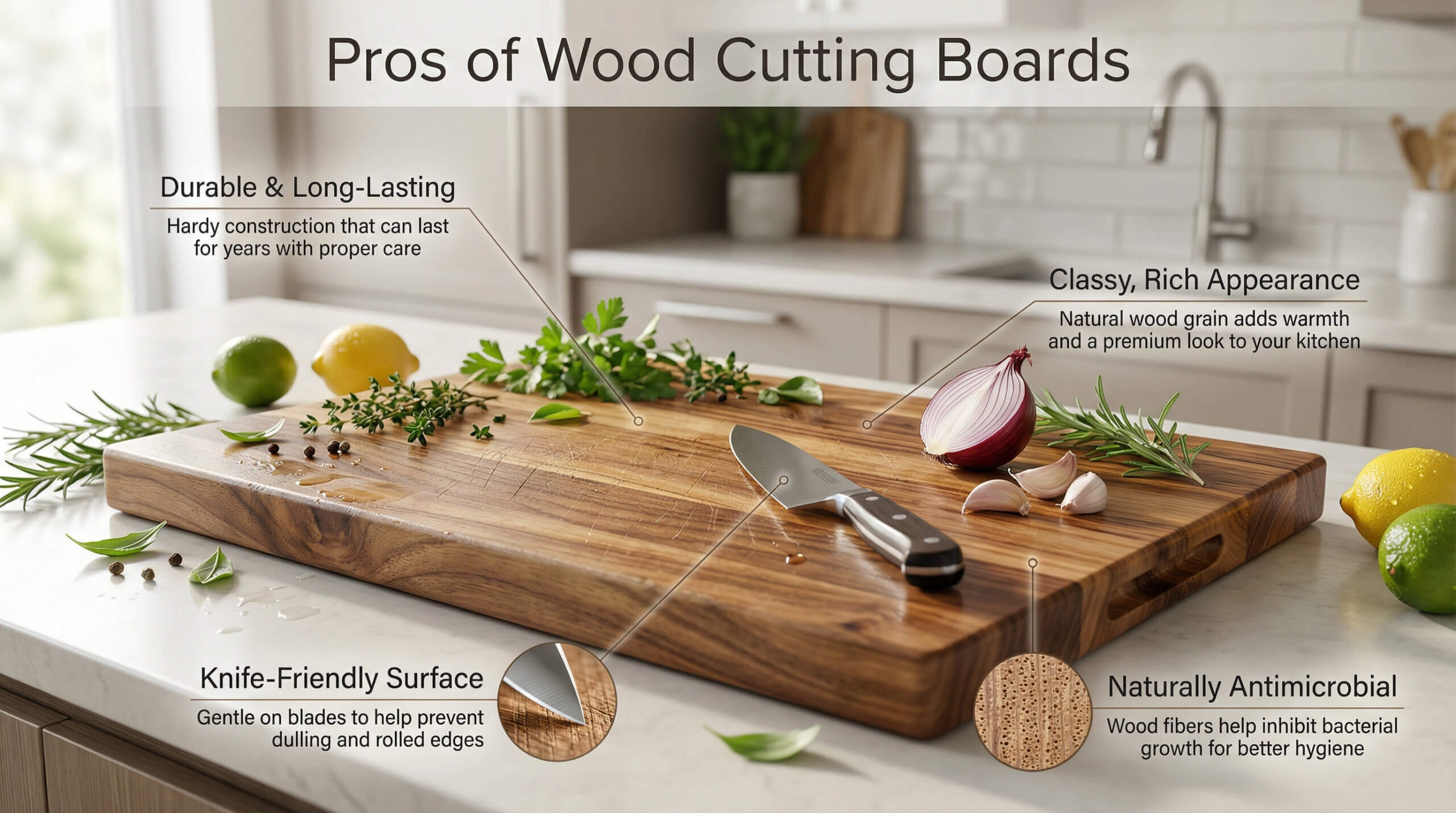
- One of the major advantages of wood cutting boards is that they are durable and hardy. They can last a long time, provided that they are well taken care of.
- Another benefit of wood cutting boards is their looks and appearance. Since they are made from genuine wood, they can give off a classy richness in your kitchen.
- Wood cutting boards are also knife-friendly. They don’t dull your knives nor cause the edges to get rolled.
- They are naturally antimicrobial, which makes them excellent in terms of hygiene.
Cons of Wood Cutting Boards
- One of the big downsides of getting a wooden cutting board is its cost. Real wood, especially from trees like beech and cherry, isn’t cheap, especially not when it is processed into a durable cutting board.
- While wood cutting boards are long-lasting and durable, they need to be treated regularly with oil. They also have to be dried after being used; otherwise, the residual water can cause the surface to crack.

How to Clean and Maintain Your Wood Cutting Board
Let’s take a look at some steps and tips that you can take to clean and maintain your wood cutting board.
(We actually wrote a full guide on how to maintain and clean a wood cutting board. You can check it out by clicking here.)
Regular Cleaning
Here are the steps that you can take to clean your board on a regular basis.
- When you’re done using the cutting board, wash it gently with warm, soapy water. Use normal dishwashing soap for this purpose. Use a soft sponge or a soft-bristled brush.
- Once the board is washed, dry it so that it doesn’t get any damage.
Plus, when washing the board, don’t submerge it in water. This can cause damage.
Deeper Cleaning
For a deeper clean, here are some steps and tips that you can follow:
- Make a paste using half part baking soda and half part water.
- Rub the paste on the board and let it sit for a while. Use a soft, partially wet sponge to scrub it into the board.
- Rinse off the paste and dry the board.
It’s also necessary to sanitize the board every now and then so that it doesn’t become a breeding ground for bacteria and start letting off a bad odour. To do that, you can use some lemon juice or vinegar. Apply the lemon juice or vinegar to the board and rinse it off after a few minutes.
Use Oil to Treat the Wood
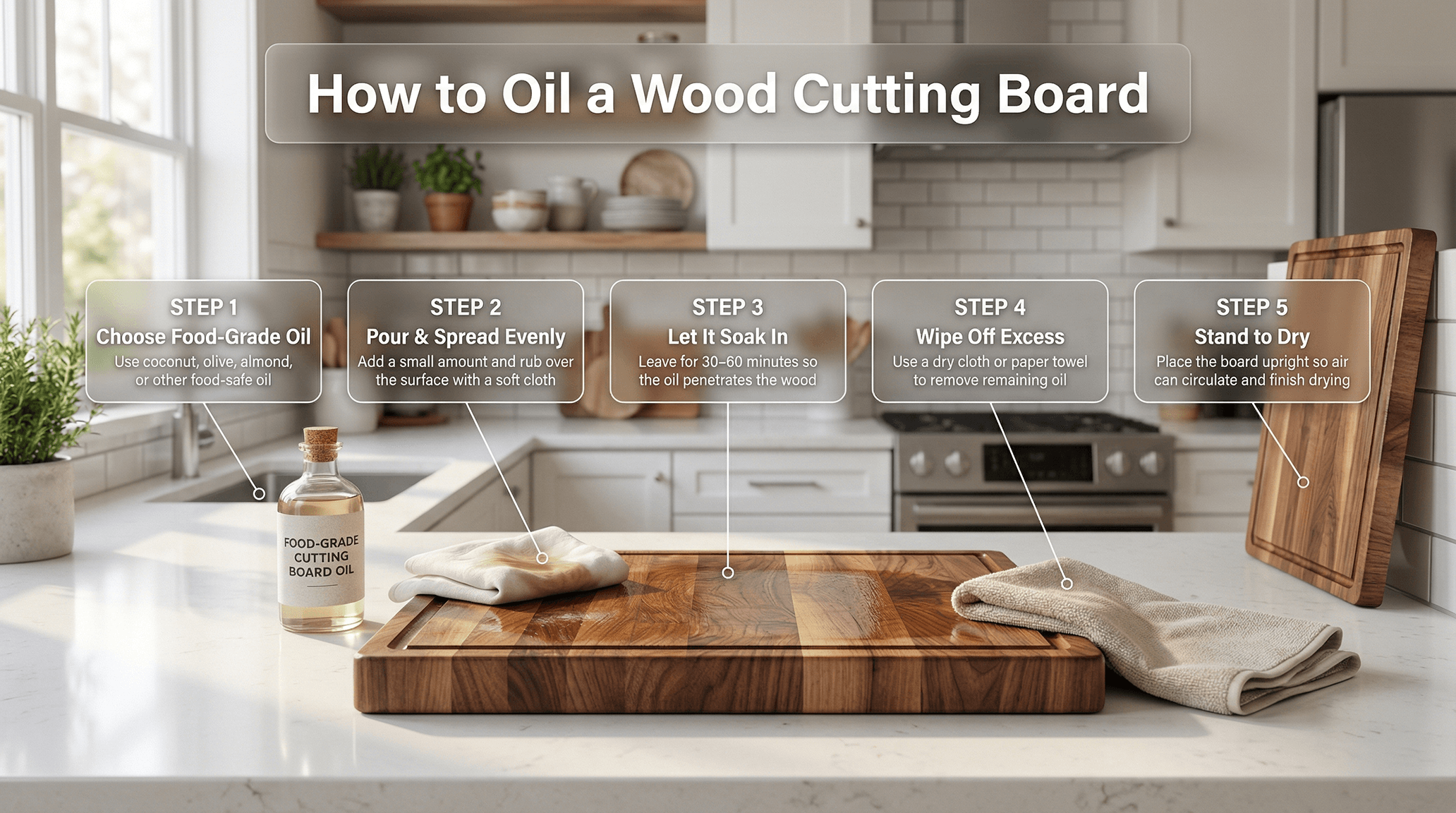
Applying oil to the wood regularly helps to seal it against bacteria. Here are the tips/steps that you can follow for this:
- First, pick a food-grade oil, such as coconut oil, olive oil, or almond oil.
- Pour a small amount of oil on the cutting board surface and spread it out evenly using a soft cloth.
- Leave for 30 minutes to one hour to allow the oil to soak in.
- Afterwards, clean up the excess oil using a dry cloth or a tissue paper.
- Stand the cutting board vertically to let it dry.
Pros and Cons of Bamboo Cutting Boards
Now that we’re done looking at wood, let’s take a look at the pros and cons of bamboo cutting boards.
Pros of Bamboo Cutting Boards
Here are the upsides and benefits of bamboo cutting boards.
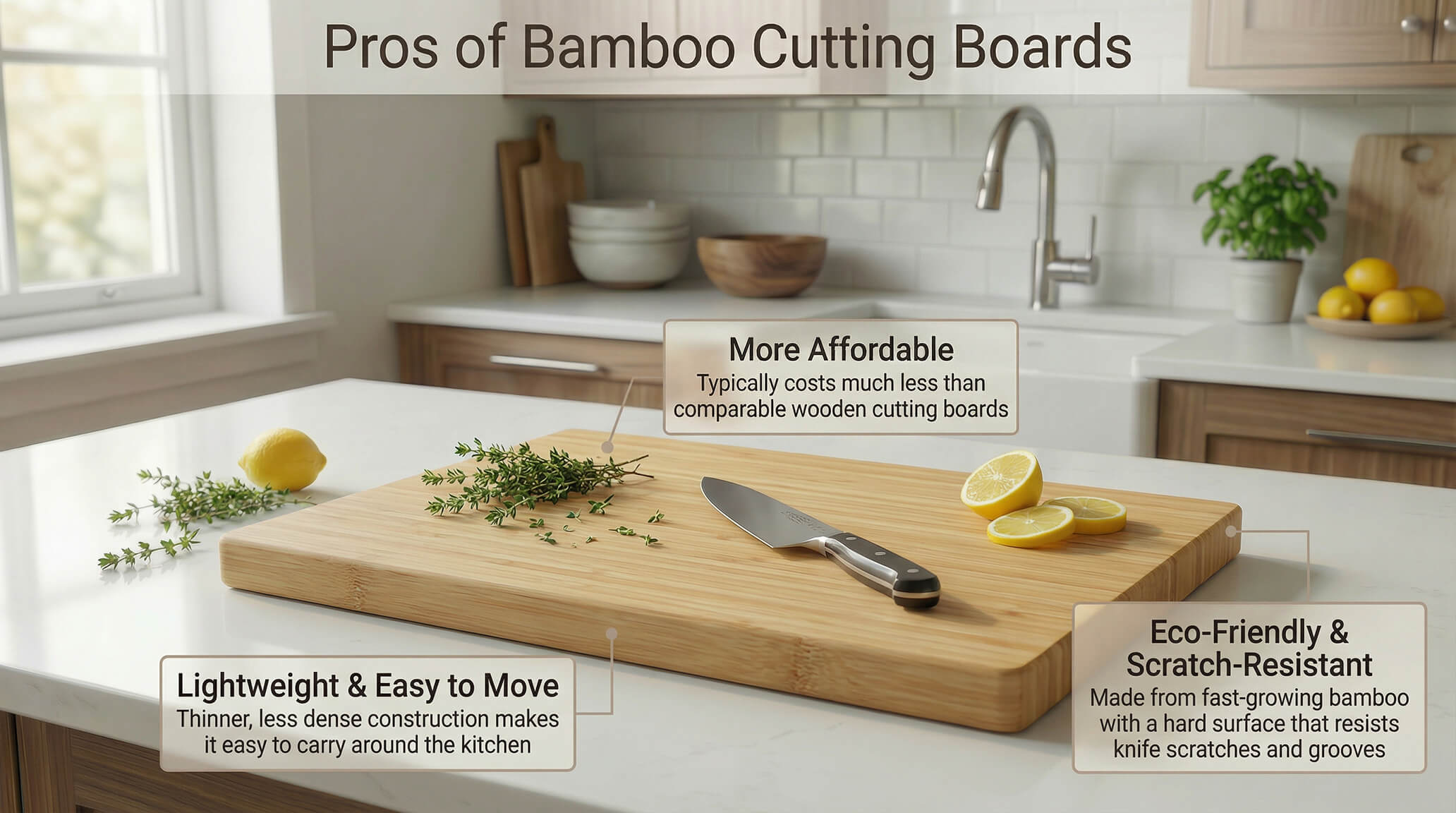
- Bamboo cutting boards are quite light. They are not as heavy as wood boards, which makes it easy to move them around the kitchen. Bamboo boards are essentially made from compressed bamboo grass, held together with adhesive materials. They lack the dense construction that is found in wooden boards.
- These cutting boards are significantly cheaper than wood boards. Normally, you don’t have to spend half as much on a bamboo cutting board as you would on a wooden board.
- Bamboo cutting boards are eco-friendly. Bamboo grows quickly, and using it is much more sustainable as compared to using wood.
These boards have a hard surface, which makes them resistant to knife scratches. Other than knife scratches, other types of grooves, marks, etc., also have a lesser chance of forming.
Cons of Bamboo Cutting Boards
Here are some downsides of bamboo cutting boards.
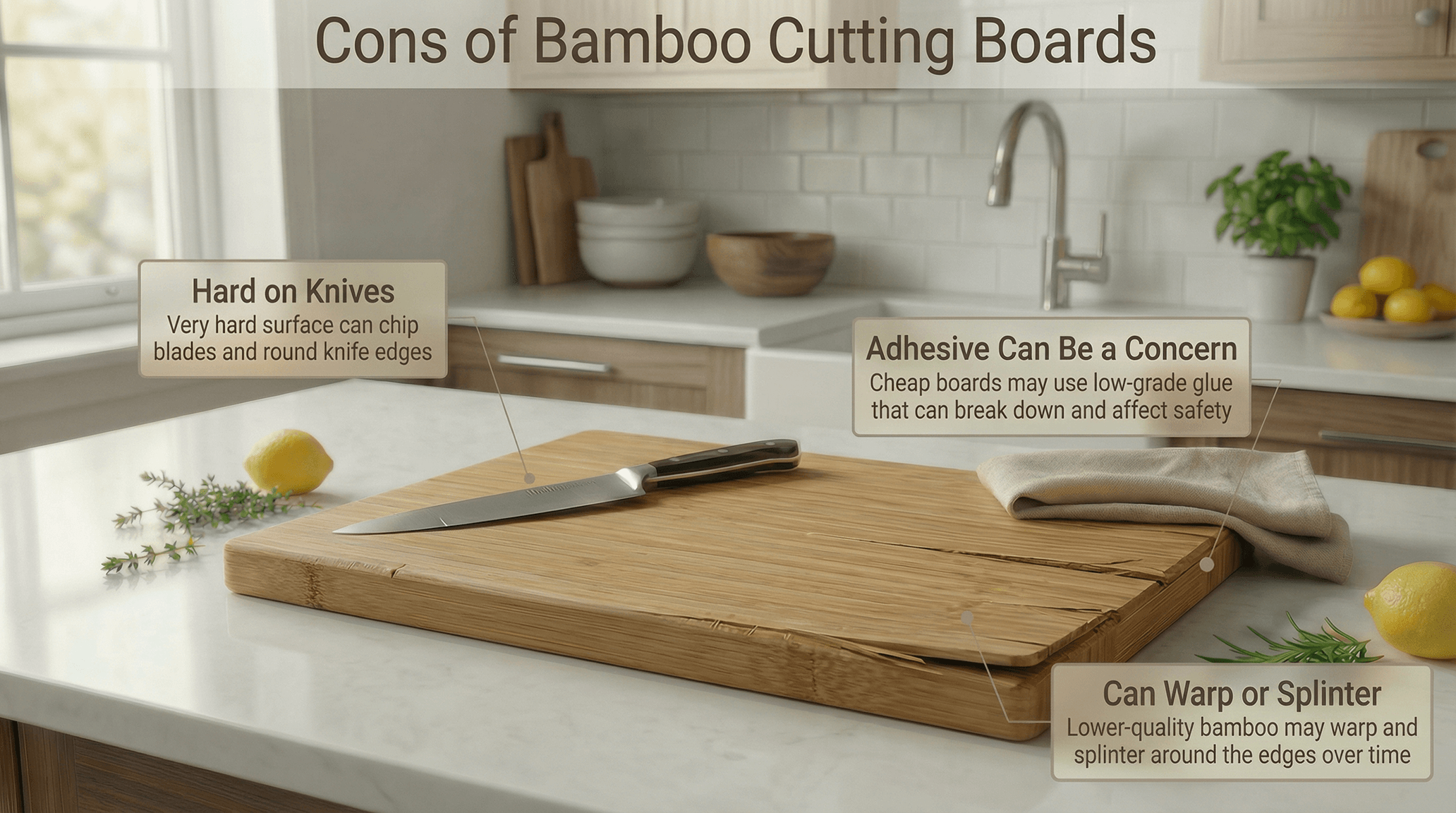
- While the hard surface has the benefit of not getting damaged by knives, it also has a paradoxical downside. It can harm the knives by chipping the blades and rounding the edges.
- Low-quality bamboo can get damaged over time in ways that wood doesn’t. For example, it can warp and splinter around the edges.
- In cheaper bamboo cutting boards, the grass fibers are held together using low-quality adhesive. Over time, the adhesive can make itself apparent and become a health concern.
How to Clean and Maintain Your Bamboo Cutting Boards
The cleaning and maintenance of a bamboo cutting board involves the same steps as those of wood boards.
Ideally, you should clean them daily using warm water and dish soap. For a deeper clean, you can use baking powder and water.
While bamboo doesn’t require the oil treatment as much as wood, it still remains a necessary step to take for maintenance purposes.
Which Cutting Board Lasts Longer: Bamboo or Wood?
Normally, wood cutting boards last much longer than wood. Wood cutting boards can become something of an heirloom if they are kept properly. They can last for years and years.
Bamboo cutting boards don’t have the same level of resilience. They can get damaged more easily, and their construction has a lot more of a “synthetic” element to it. Adhesives play a big part in making these boards. The adhesive can develop problems even before the bamboo starts to give way.
Of course, the statement that wood boards last longer than bamboo applies when both are considered to be of the same level of quality.
It’s possible for a very high-end bamboo cutting board to outlive a low-quality wood board.
Which Cutting Board is Better for Cutting Meat: Bamboo or Wood?
Bamboo boards are better for cutting meat. Bamboo is not as absorbent as wood, which is great from a hygiene perspective. The water from the meat stays on the surface and can easily be washed off.
However, bamboo boards should be used for meat cutting only if they are of high quality. If the board uses cheap adhesive for holding the grass fibers together, it can contaminate the meat and become a health concern.
While wood is great for cutting meat, it is much more absorbent. They can absorb the meat water, which can cause bacteria to form.
However, some woods, especially hardwood varieties like maple, walnut, and cherry, have natural antimicrobial properties, which protect them from harboring any bacteria.
Which Cutting Board is Better for Cutting Vegetables: Bamboo or Wood?
Wooden cutting boards are better for cutting vegetables. Vegetable cutting requires sharper, swifter strokes that drive the knife heavily into the board. The soft wooden fibers aren’t too hard on the knife, and the latter doesn’t get damaged.
The problem with meat is the water that it releases into the wood. With most vegetables, this isn’t a problem, as the “water” they release is plant juice. Plant juice doesn’t create hygiene problems the same way as the water released by raw meat.
Another aspect to remember about wood cutting boards is that the ideal type to use (for cutting and chopping purposes) is end-grain boards.
What Are End-Grain Boards?
End-grain boards are those in which the grain of the wood is facing outwards. The wood fibers open up when the knife makes contact and then close once the knife is lifted. This allows the wood to heal as it is being used.
Precautions to Take with Wood Cutting Boards
Here are some precautions to take when using wood cutting boards:
- Don’t wash wood cutting boards in a dishwasher: Wood cutting boards should not be put in a dishwasher. Staying submerged or doused for a long period of time can damage the board.
- Wash the board immediately after being used: This is an important step to take. It can decide the longevity of the board. When you are done using the board, wash it immediately afterwards. Don’t let it sit on a wet surface, nor let any residual liquid stay on the surface for too long.
Place it upright, not flat: Even when you are done drying the board, place it in a holder/rack, or against the counter wall in an upright position. This allows any remaining water to trickle off, and the board gets dry quickly.
Precautions to Take with Bamboo Cutting Boards
Here are some precautions to keep in mind regarding bamboo cutting boards.
- Away from dishwashers, as with wood: Just as is the case with wood cutting boards, you shouldn’t wash bamboo boards in the dishwasher. The damage sustained by bamboo is different from that of wood, but they both get adversely affected by prolonged exposure to moisture.
Replace if heavily damaged: You can sand wood cutting boards if they develop deep cuts and make them perfectly usable again. However, the same cannot be done with a bamboo cutting board. If they splinter or develop deep cuts/grooves, you should replace the board entirely. (The deep grooves can harbor bacteria and create hygiene problems.)
Table of Comparison: Bamboo Vs. Wood
Here is a table that shows an overview of the differences between bamboo and wood. This is essentially a recap of the points that we’ve mentioned so far:
| Feature | Wood Cutting Boards | Bamboo Cutting Boards |
|---|---|---|
| Material | Hardwoods like maple, cherry, walnut, and beech | Processed bamboo stalks (technically a grass, compressed with adhesives) |
| Durability | Very durable; can last for years (even heirloom-level with proper care) | Less durable; prone to warping, splintering, or adhesive breakdown over time |
| Knife-friendliness | Gentle on knives; does not dull edges | Hard surfaces can dull or chip knives |
| Weight | Heavier, solid construction | Lighter, easier to handle, and move around |
| Cost | More expensive due to quality hardwood and processing | Much cheaper; budget-friendly option |
| Hygiene | Naturally antimicrobial, but absorbs liquid (risk with raw meat) | Less absorbent; better for meat, but adhesives in low-quality boards may pose risks |
| Maintenance | Needs regular oiling and careful drying; never dishwasher-safe | Lower maintenance; oiling is less essential but still beneficial; not dishwasher-safe |
| Sustainability | Less sustainable (depends on hardwood harvesting) | Highly sustainable; bamboo grows very quickly |
| Best Use | Ideal for cutting vegetables and general kitchen prep | Better suited for cutting meat (if high-quality, with safe adhesives) |
| Repairability | Long-lasting if maintained properly | Cannot be sanded; must be replaced if deeply damaged |
| Longevity | Can be sanded to restore the surface | Shorter lifespan compared to quality wood |
Hardness Levels for Common Cutting Board Materials
In the graph provided below, you can see the various hardness levels of cutting board materials, including different types of woods and bamboo.
Wrapping Up
And there you have it.
Now, coming to the question that may have arisen in your mind after reading all of the details above: which cutting board is better?
The answer to that question depends heavily on a number of factors.
Bamboo is the better choice for someone who needs a light, inexpensive board with decent longevity.
Wood is the better choice for someone who needs a luxurious and durable board that is easy on the knives.
Thanks a lot for reading, and we hope you learned something new here that can help you with your next cutting board purchase.