


How are Farmhouse Sinks Different than Normal Sinks?
The main difference between farmhouse sinks and normal sinks is their shape and size.
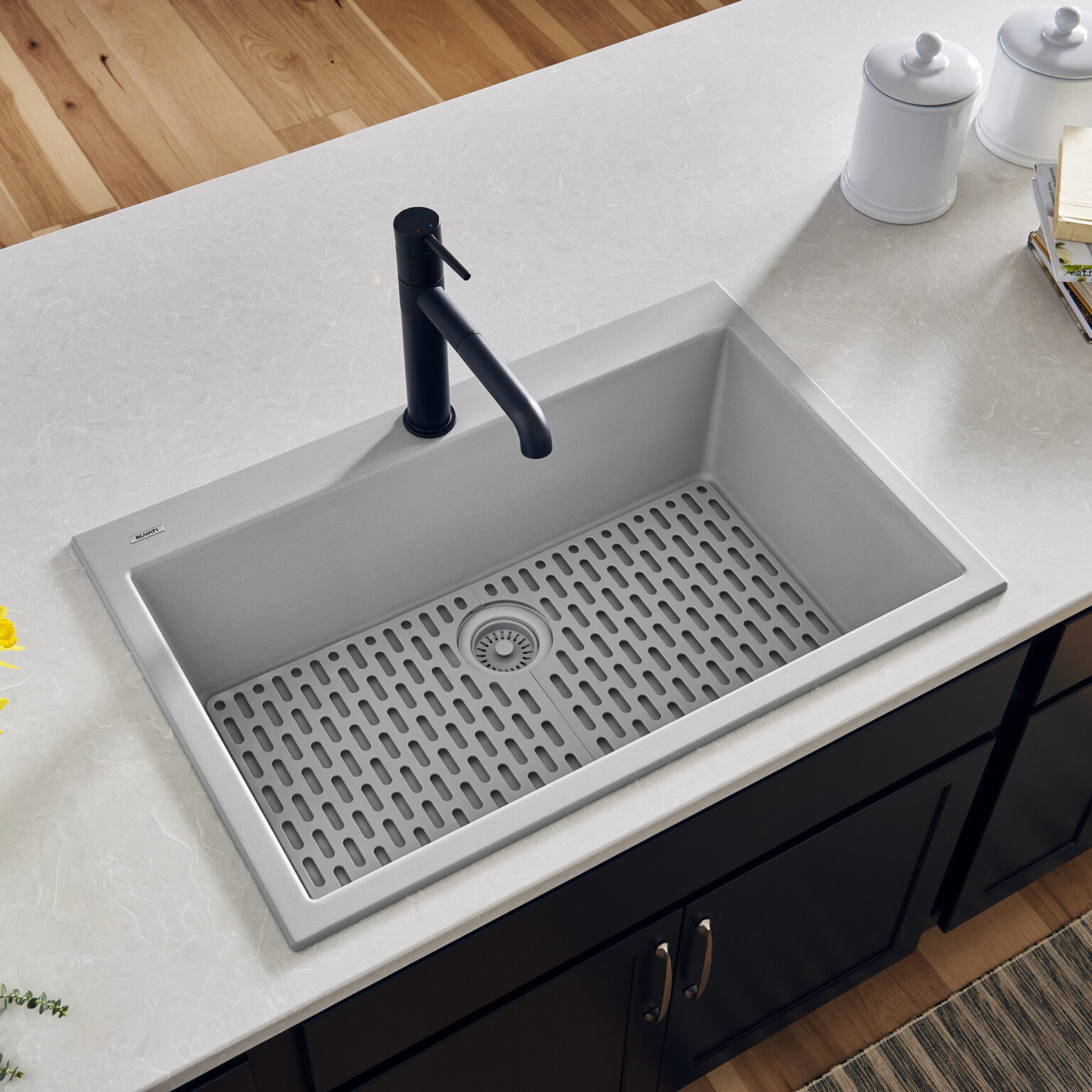
Here is what a normal sink looks like:

This is an image from our own product page.
As you can see, the sink is pretty straightforward. It’s installed a bit way into the countertop.
On the other hand, farmhouse sinks are installed to the “front” of the countertop so that their front panel is exposed. This is what they look like:

Given the size and the shape, there are a few differences in how you clean these sinks and normal ones.
- You have to spend more time scrubbing the inside, as there is typically more area to cover.
- You also have to clean the front panel, since it can show marks quite prominently depending on the material.
Other than that, however, the basic steps are the same. We’re going to detail them below.
How to Clean a Farmhouse Sink?
Here is the general list of steps that you can follow, regardless of style, material, finish, etc.
First, the materials.
- Soft-bristled brush or sponge
- Mild dish soap or baking soda
- Microfiber cloth
- Hot water
Once you have these materials at hand, you can follow these steps to clean your farmhouse sink:
- Clear the Sink: Remove any dishes or debris and rinse with hot water to clear loose dirt.
- Apply Cleaning Agent: Use baking soda or mild dish soap. For tougher stains, apply Bar Keeper’s Friend or a similar product.
- Scrub Gently: Use a soft-bristled brush or sponge in circular motions, focusing on stains.
- Rinse Thoroughly: Remove all cleaning residue with hot water.
- Dry the Sink: Use a microfiber cloth to prevent water spots.
How to Clean Stubborn Spots and Stains from Different Material Farmhouse Sinks?
As we mentioned above, the simple and straightforward method will keep your farmhouse sink generally clean. However, occasionally, you may notice stubborn stains and spots, and for those, a hardier treatment is necessary.
Below, we’ll tell you about common sink materials and what you should do and avoid when giving them the special cleaning treatment.
Fireclay and Porcelain-Enamel Sinks (Durability: High)
What to use
- Warm water and mild dish soap for routine care
- A baking soda paste or diluted vinegar soak for hard-water deposits and stains
What to avoid
Bleach, oven cleaners, and abrasive powders, unless the manufacturer permits them. They can dull the glaze.
Note for deep cleaning
A baking soda paste or a diluted vinegar soak usually handles stubborn buildup. Check the manufacturer’s guidance before reaching for anything stronger.
Enameled Cast-Iron Sinks (Durability: Moderate to High)
What to use
- Mild soap with a soft sponge
- Gentle rubbing for metal marks
- A non-abrasive cleanser such as Bar Keeper’s Friend, used sparingly on stubborn spots
What to avoid
Steel wool and scouring pads. They leave fine scratches that trap grime.
Note for deep cleaning
Keep it gentle and go easy on the cleanser. The enamel can chip, and once the coating is breached the iron underneath can rust, so look over the surface for chips as you clean.
Granite Composite Sinks (Durability: High)
What to use
Mild dish soap and a soft sponge, followed by a thorough rinse to clear soap residue and hard-water film.
What to avoid
- Abrasive pads
- Harsh acidic or bleach-based cleaners, which can dull the finish over time
Note for deep cleaning
For stubborn marks, find the manufacturer’s recommended product before trying anything stronger.
If you need a more detailed guide on a how to clean a particular material, you can refer to the other dedicated guides such as:
Farmhouse Sink Maintenance Tips
Routine care keeps a farmhouse sink looking its best and helps catch small problems early. Dry the basin after each use with a microfiber cloth, which prevents water spots and mineral film from building up. Pay particular attention to the drain and the corners, where grime and residue tend to collect.
And since a farmhouse sink sits on top of the cabinet rather than being set into the countertop, the seam between the sink rim and the counter is a spot to keep an eye on. Wipe it clean during your routine cleaning so dirt and soap residue don’t build up along the edge.
Also check the cabinet beneath the sink from time to time, too. Moisture that collects around the sink base can lead to swelling or staining in the cabinet, so look for damp spots or a musty smell, and address any leaks promptly.
FAQs
What is the best cleaner for a farmhouse sink?
Mild dish soap and baking soda are excellent for daily cleaning. For tougher stains, Bar Keeper’s Friend is highly recommended.
How do I prevent scratches on my farmhouse sink?
Use a sink grid to protect the bottom from heavy pots and pans. Avoid using abrasive cleaners or scrubbers.
Can I use bleach on my white farmhouse sink?
No, bleach can damage the finish. Instead, use baking soda and vinegar for a safe and effective clean.
Are natural cleaning agents effective for tough stains?
Yes, baking soda and vinegar are excellent for removing tough stains naturally. For more stubborn stains, Bon Ami can be used.
How often should I clean my farmhouse sink?
Clean your sink daily with mild soap and water. Deep clean once a week using baking soda and vinegar for tougher stains.