
When you start looking for a new sink to buy, you will see a whole range of different sizes available in the market. Choosing the right one for your kitchen can be difficult.
There are different factors that you have to keep in mind and various aspects to think of in terms of appearance and usage.
In this post, we’re going to guide you on those various factors and aspects so that you can make the best choice.
Why Choosing the Right Kitchen Sink Size Is Important
Here are some reasons why you need to make sure you pick the right sink size.
- The right kitchen sink size gives you the functionality that you need. For example, if your day-to-day use involves cleaning large pots and pans, a bigger sink with a deeper bowl will help you easily perform this task.
- The right kitchen sink size also complements the look of your kitchen. For example, a small sink can complement the look of a compact kitchen, while a large double-bowl sink would look right in a spacious kitchen.
- You also need to pick the right sink size so that it fits in with your kitchen countertop. For example, even if you need to wash larger pots and pans regularly and even if your kitchen is large, you can’t really go for a big sink if the countertop cannot support it.
All of these aspects highlight the importance of choosing the right kitchen sink size.
Understanding Standard Kitchen Sink Sizes
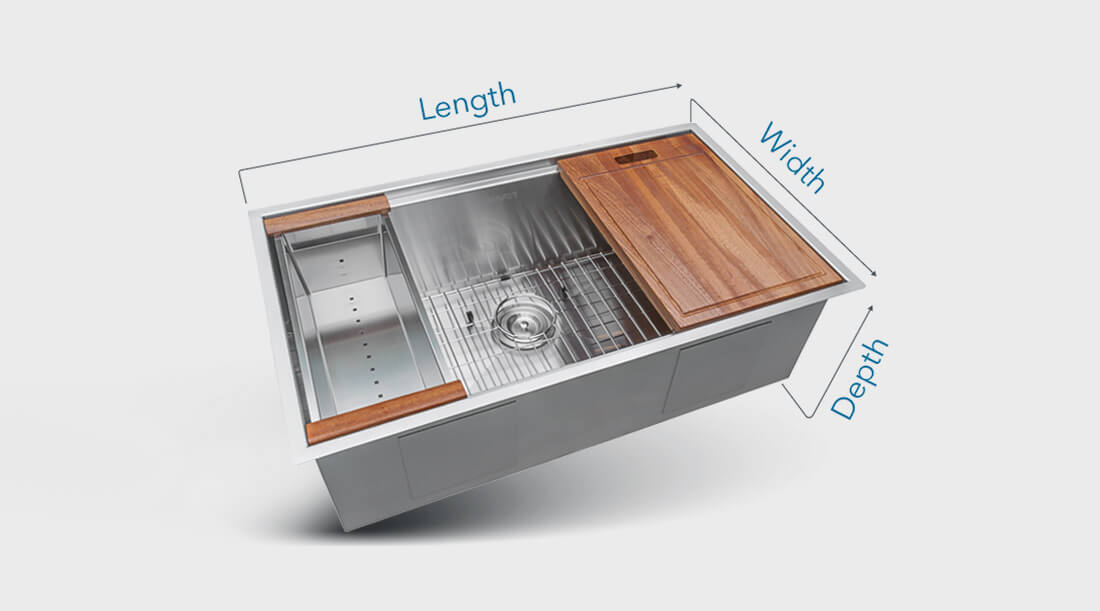
Except for in rare and unusual cases, kitchen sinks aren’t custom-made. As an end-consumer, you typically have to pick from a range of standard sizes, which include:
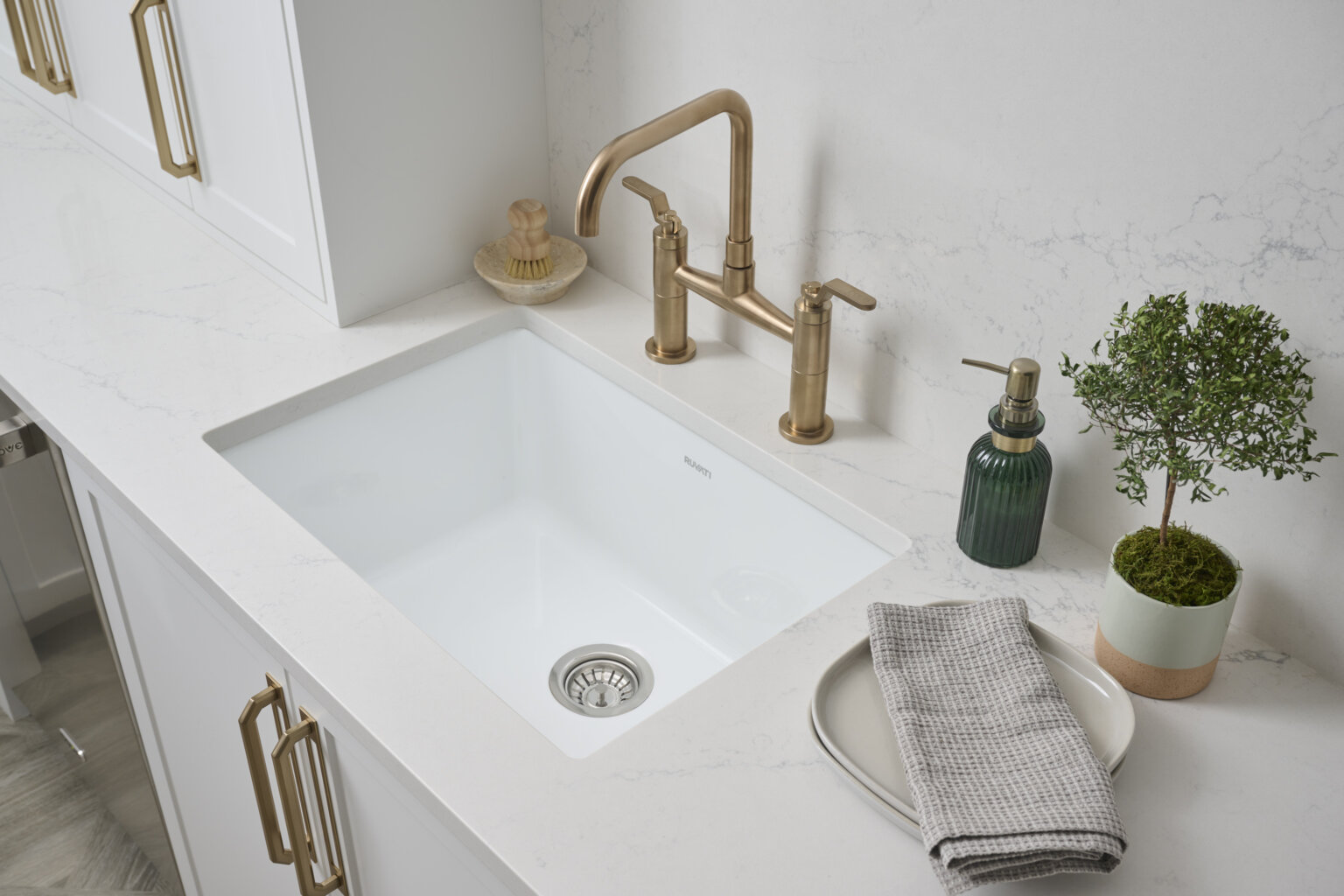
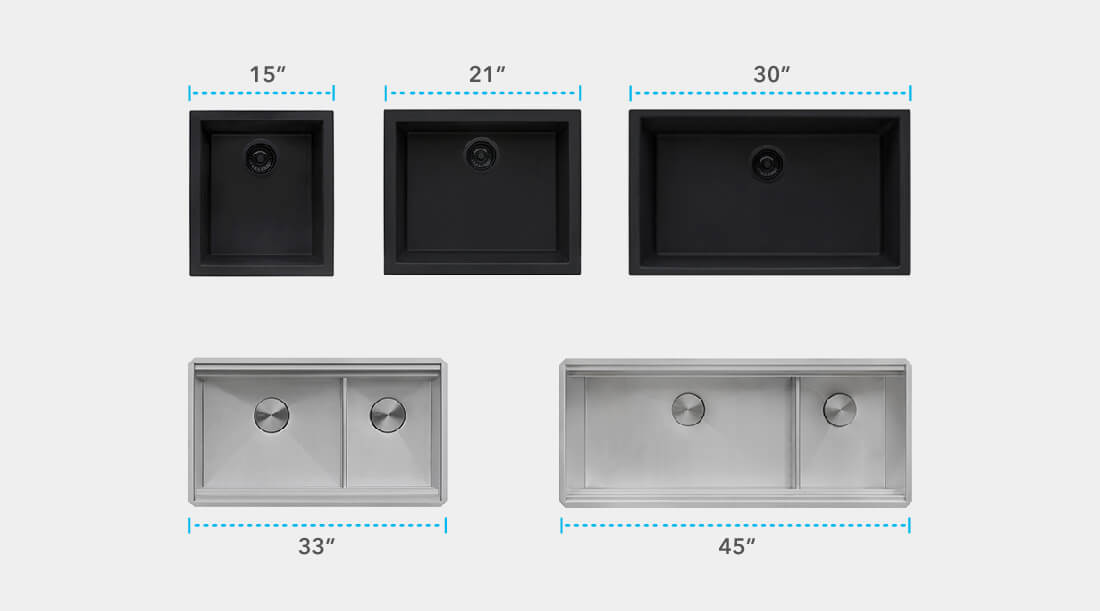
- Single bowl: 22 inches (width) x 24 inches (length) x 8 inches (depth)
- Double bowl (equal): 33 inches (width) x 22 inches (length) x 8 inches (depth)
- Double bowl (offset): 31 inches (width) x 20 inches (length) x 8 inches (depth)
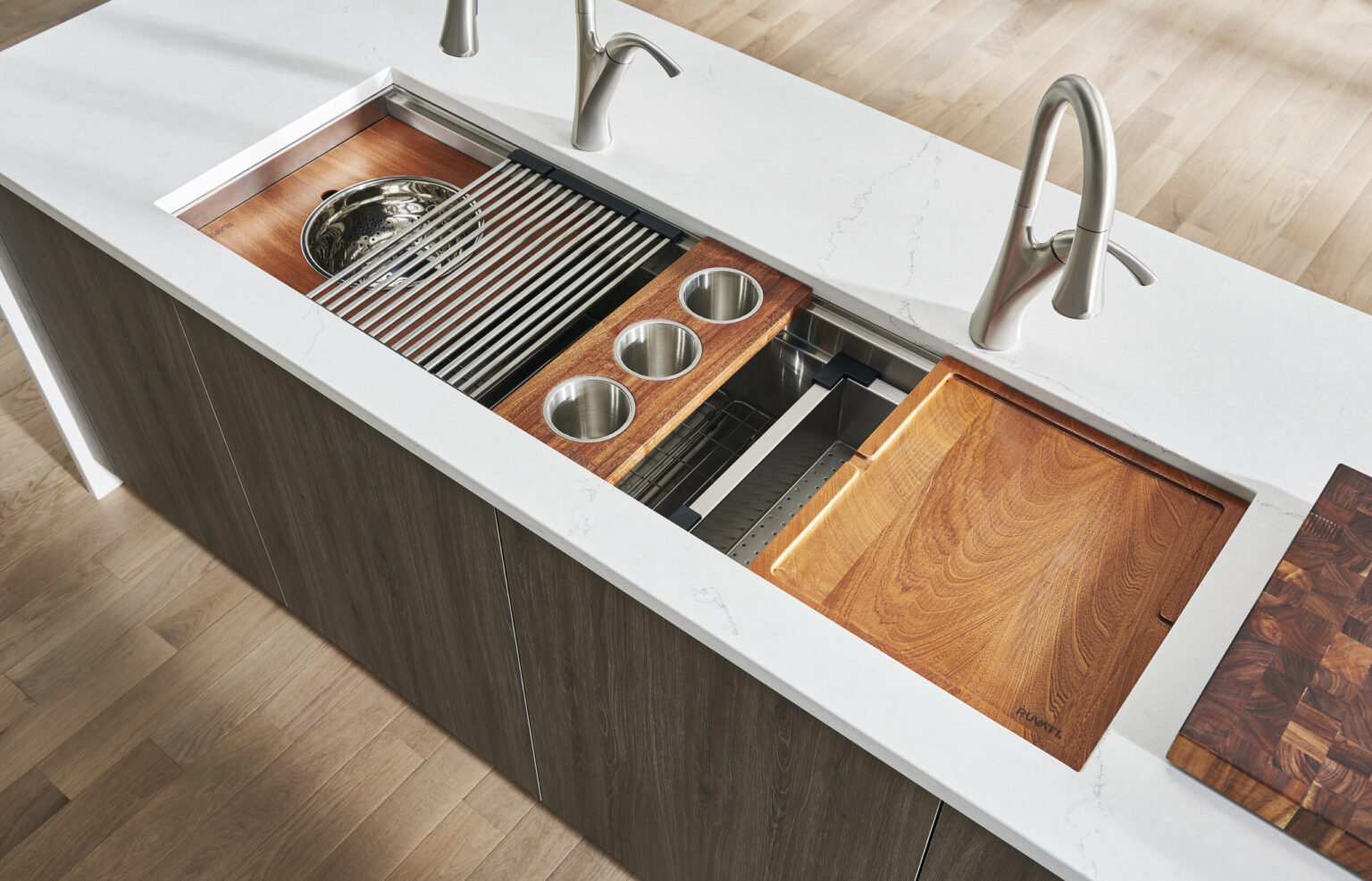
- Triple bowl: 42 inches (width) x 20 inches (length) x 8 inches (depth)
Understanding Standard Kitchen Sink Depths
In the list above, we’ve mentioned the depths as 8 inches for all sizes. However, there are other standard depths as well.
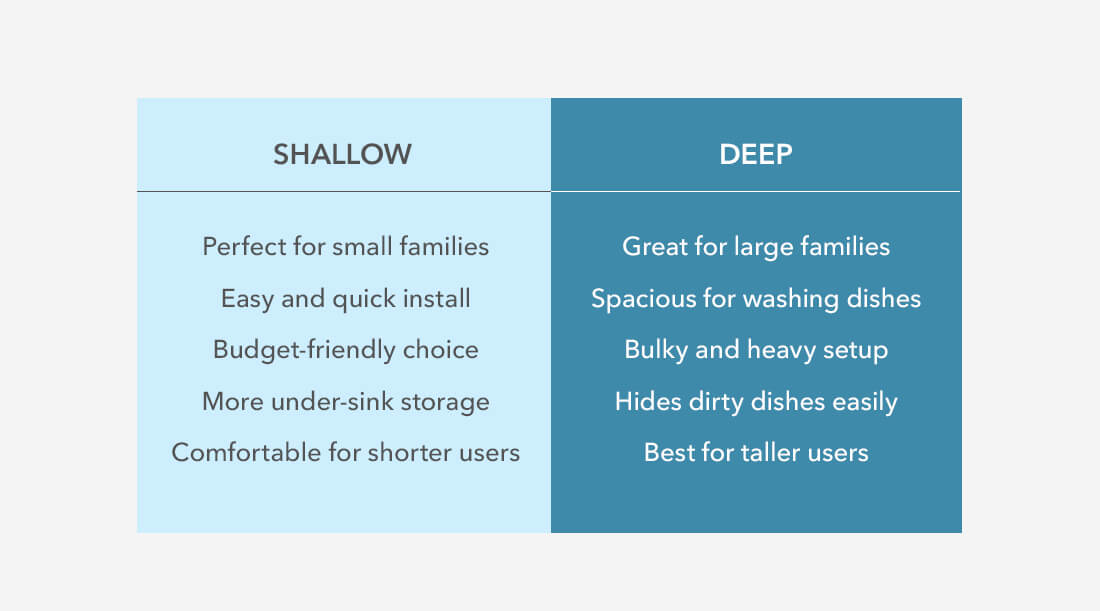
The standard sink depth depends on whether the sink in question is shallow or deep. Both shallow and deep sinks have their own respective uses and perks.
- Shallow sinks are around 6 to 8 inches deep. They leave ample room for storage space underneath the sink. Due to their shallow depth, they are great for shorter users.
- Deep sinks, on the other hand, can have a depth of around 8 to 12 inches. They are excellent for washing large pots and pans, and are suitable for kitchens that see a lot of regular use.
How to Choose the Best Kitchen Sink Size
Now that we’re done looking at the standard sizes and other bits of background info, let’s move on to discuss how you can pick the right kitchen sink size for yourself.
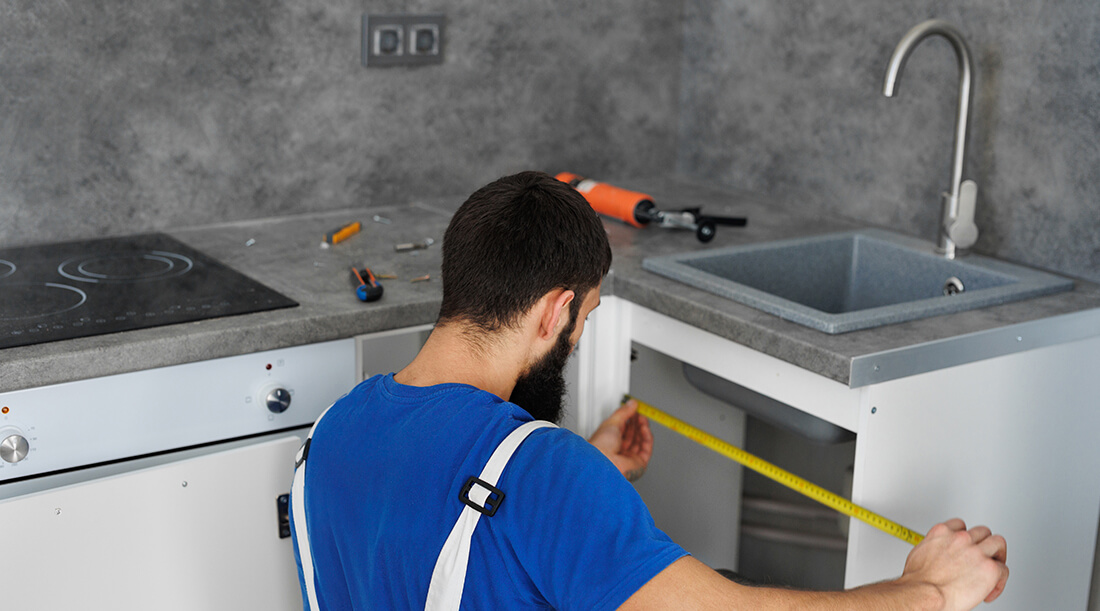
1. Measure the Space You Have Available
The first thing to consider when choosing the right sink size is the space you have available.
Ask yourself: How large is your countertop?
If it is small and compact, then you will need to go for a small and compact sink as well.
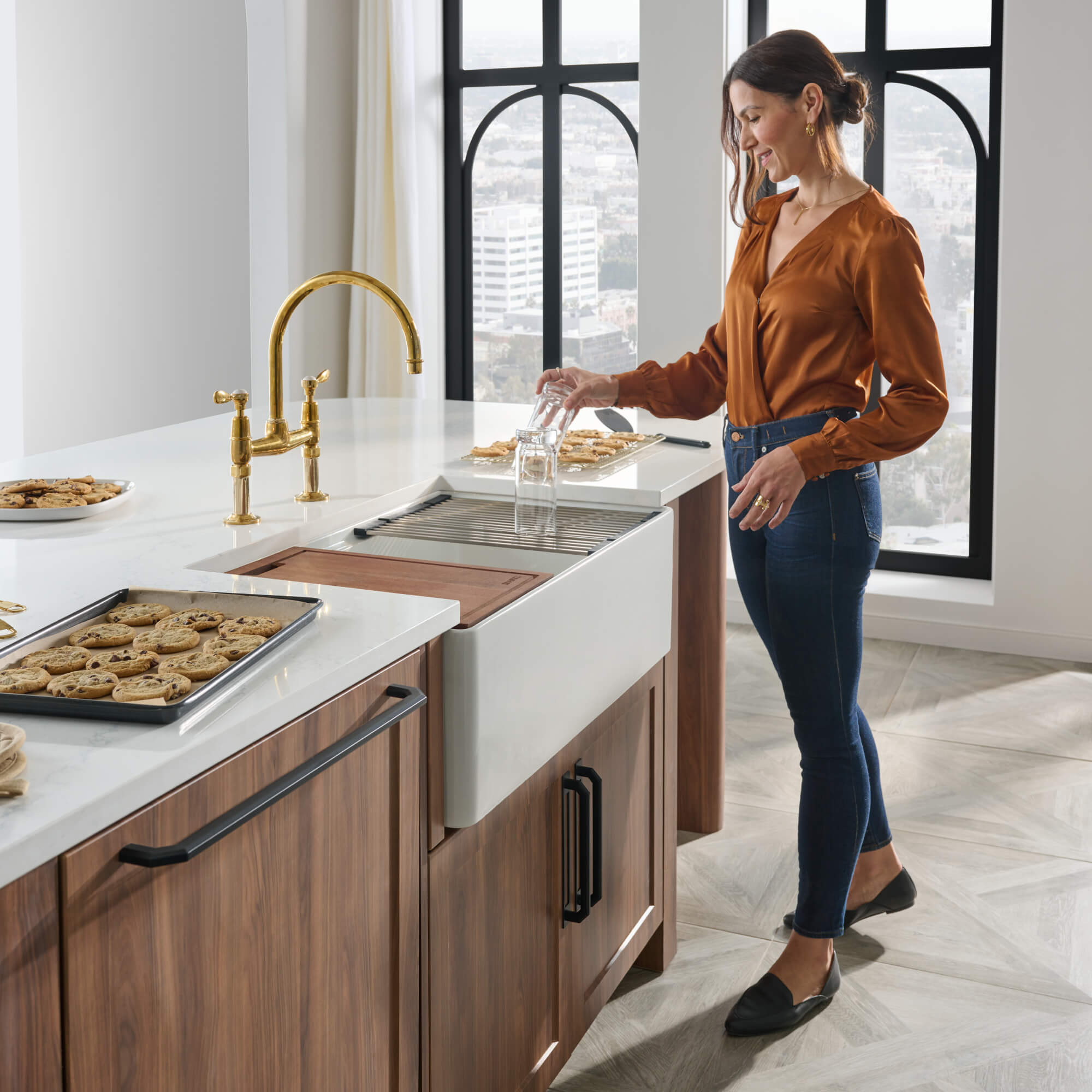
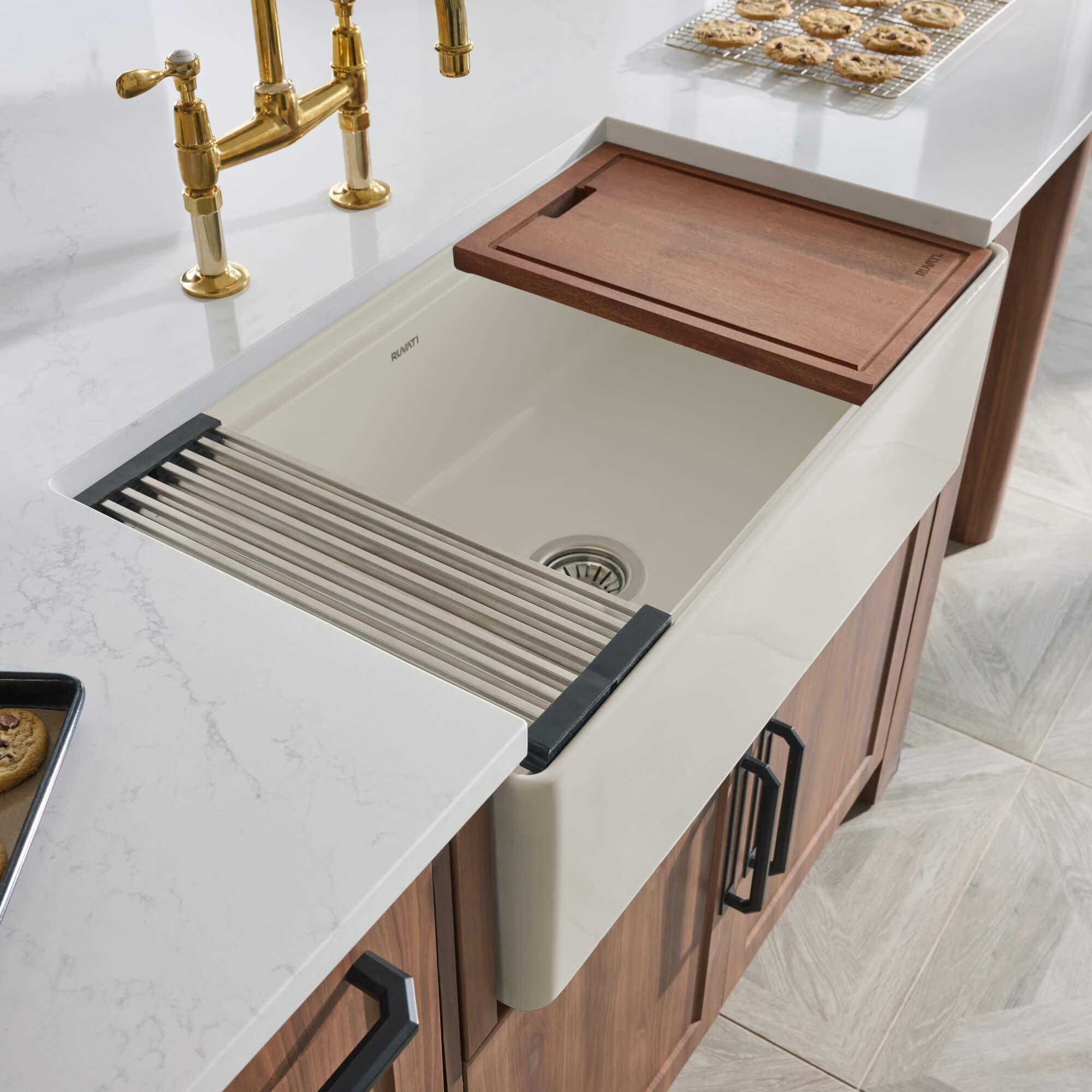
On the other hand, if it is spacious or if your kitchen has a separate kitchen island, you can easily go with a large sink.
Here are some actionable tips to keep in mind:
- Measure the counter space, length, and width.
- Leave room on the sides where you will need to place dish racks, prepare meals, etc.
- Take the remaining area as the actual space you have for the sink.
For example, if the countertop measures 50 inches by 30 inches, you can leave off 10 inches on both sides and 10 inches on the top and bottom. This would leave you 30 x 20 inches as the reference size for your sink.
2. Choose a Sink That Matches the Theme of the Kitchen
The next important thing to keep in mind is the theme of the kitchen.
If a particular moderately-sized kitchen has a maximalist theme, with large cabinet doors, large drawers, and big lights, etc., then a large sink would look suitable.
If another kitchen of the same size emphasizes minimalism in the form of small cabinets, small drawers, and sparing decorative elements, then a shallow and small sink would look right at home.
The size of the sink exudes a certain vibe that needs to go along with the overall theme of the kitchen.
3. Plan Around Your Daily Kitchen Use
Another major factor that decides the ideal kitchen sink size is the type of daily usage in your kitchen.
For a kitchen that’s barely or rarely used, a small, shallow sink can be suitable. It will be easier to clean and give better storage space underneath.
It will also be cheaper to buy and easier to install. In other words, you can trade off the small size (which wouldn’t be an issue for the sparse use) for other useful elements, such as the affordability and the storage space.
On the other hand, if your kitchen is frequently used and has a lot of daily traffic, then a bigger sink would be more suitable. The bigger sink will allow for more dishes to be washed at the same time. It will also be able to accommodate large pots and pans.
- More dishes, more usage = bigger sink
- Less use, low traffic = smaller sink
4. Pick a Sink Size That’s Easy to Maintain
Large sinks are difficult to maintain compared to compact ones.
The more area the sink has, the more stains it can pick up and the more effort it takes to clean.
Before you choose a particular sink size, consider the time and effort you can comfortably allocate to maintaining it.
If you spend a lot of time in the kitchen and can easily give a portion of it to a thorough cleaning session every now and then, you can choose a large sink without expecting any problems in the future.
On the other hand, if you have a busy daily schedule and you cannot give time to maintenance on a regular basis, it’s better to get a smaller sink that you can clean with just a few wipes and scrubs.
It is necessary to note that this factor has secondary importance. For example, if you need a large sink for a busy kitchen, you shouldn’t go for a smaller one just because you expect the maintenance to be difficult. In that case, the needs of the users will outweigh the difficulty in maintenance.
If you find yourself in a situation where both small and large sinks are suitable, and all the other aspects are balanced, then the ease of maintenance can be considered a primary factor in your decision.
5. Match the Sink Depth to the User’s Height
Deep sinks can be used easily by tall users, while shallow sinks are better for shorter users.
Make sure to consider the people who’re going to use the sink and choose a depth accordingly.
If you expect both tall and short people to use the sink, it is better to stick to a shallow bowl option. A tall user doesn’t have problems with a shallow bowl, but a short user can have trouble with a deep bowl.
FAQs
Can I replace my sink with a larger one?
Yes, you can replace your existing sink with a large one. However, you may need to make some adjustments to the countertop. If you need a simple replacement with zero adjustments/additional work, it’s better to buy a replacement sink of the exact same size.
Are deeper sinks better?
Deeper sinks are considered better than shallow sinks due to their ability to hold larger pots and pans. However, they have their downsides.
Deep sinks take up more under-counter space, which can get in the way of the storage area underneath. They can also be difficult to use for short users.
Does the number of sink bowls matter?
Yes, the number of sink bowls matters. Single sinks usually follow a standard set of measurements, which is 22 x 24 x 8 inches (width x length x depth). Double-bowl sinks are wider and need more space for installation.
Other than this, there are various functional differences in single and double-bowl sinks. Single sinks are easier to maintain and are great for simple day-to-day usage. Double sinks, on the other hand, are harder to maintain, but they allow you to multitask.
What size sink is best for a small kitchen?
A good sink size for a small kitchen is 22 x 24 x 6 inches (W x L x D). This size will help ensure that the sink doesn’t take up too much space and dominate the kitchen. Plus, 6 inches of depth makes the sink quite shallow, which is ideal for smaller kitchens.
What’s the ideal sink size for large families?
For large families, i.e., for kitchens that see regular use, a good size is 32 x 22 x 8 inches (W x L x D). Usually, double sinks have this type of width. With a wide design like this, a large family can easily get their day-to-day kitchen work done without a problem.