Introduction
A freestanding bathtub can be a great addition to your bathroom. These types of bathtubs can improve the looks of the space, and are great to use. You don’t have to shimmy around tight spaces to get in and out of these tubs. They also don’t feel cramped since, unlike normal bathtubs, they aren’t built against a wall of the bathroom.
However, with all of these perks, it’s also important to remember that these bathtubs can be on the expensive side. It’s important to know your stuff and make a purchase that you don’t regret.
This post will equip you with all the necessary information that you need to make a good purchase.
The “What is a Freestanding Bathtub” requires addition. Here is the full section that you can paste.
What is a Freestanding Bathtub?
A freestanding bathtub is one that stands separately in the bathroom without being attached to any wall or fixture. It is not connected to a shower unit, as is the case with normal bathtubs.
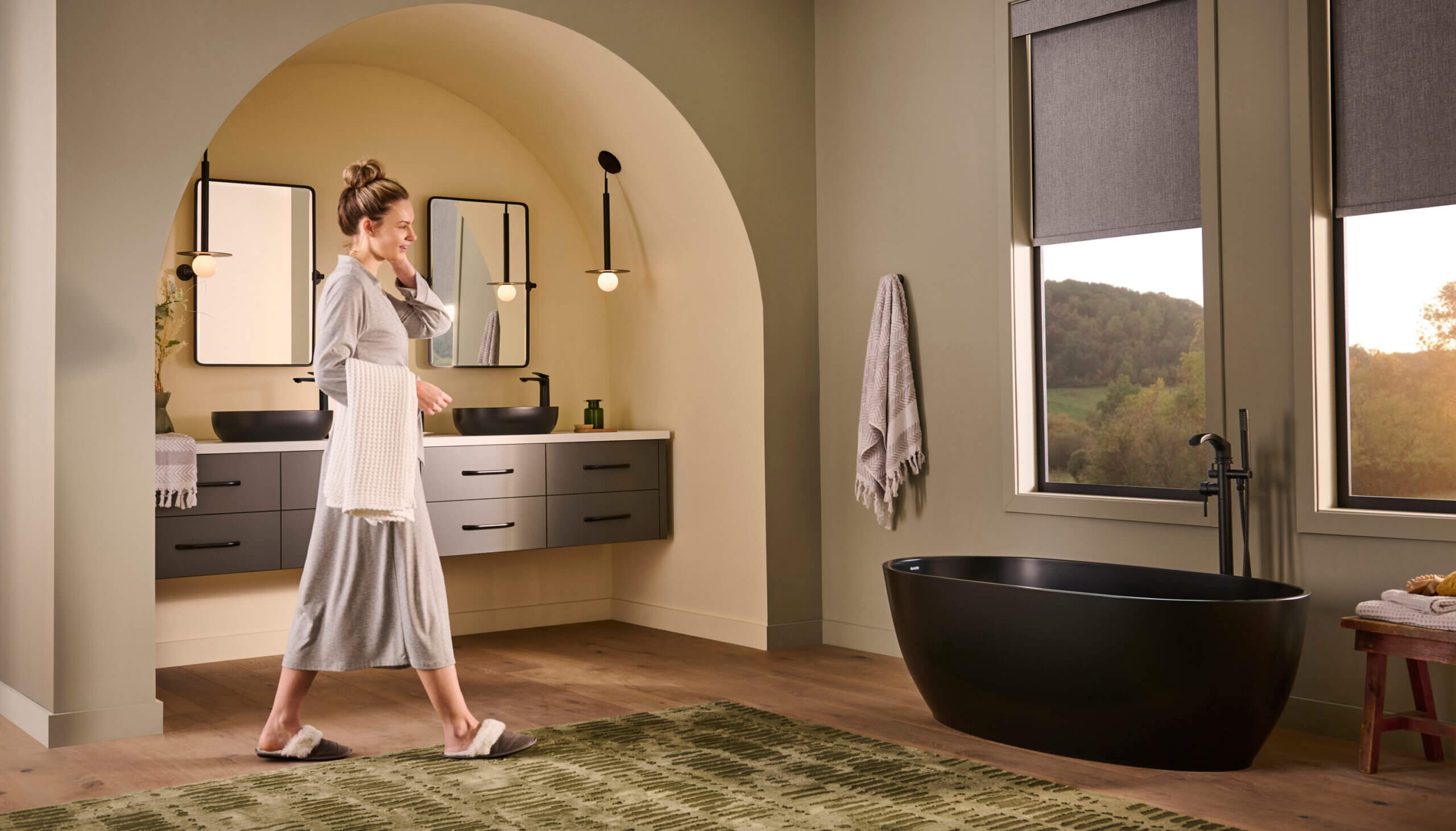
These types of bathtubs are usually found in modern, luxurious bathrooms. They are used to draw attention to the sheer size of the room, which allows the bathtub to be placed in such a “centric” way.
Here are some of the benefits of a freestanding bathtub:
- Design impact. A freestanding tub is often the first thing people notice in a bathroom. It functions as a focal point in a way that built-in tubs simply can’t.
- Easier installation. No wall surround or tile work required. You need a drain connection and a faucet supply, and that’s largely it.
- Cleaning access. With open space on all sides, there are no grout lines or wall junctions to scrub around.
- Resale appeal. A well-chosen freestanding tub tends to photograph well and reads as a luxury feature to buyers.
How do you know if a freestanding bathtub is the right choice for your bathroom?
The most important thing to honestly assess is space. Freestanding tubs need room to breathe. Not just enough floor area to fit the tub itself, but clearance around it so the bathroom still feels open and functional. A tub crammed into a tight corner loses most of its appeal.
That said, “enough space” doesn’t mean you need a master suite. Bathrooms of a modest but reasonable size can absolutely accommodate a freestanding tub, as long as you measure carefully and choose a size that fits the room rather than fighting it. Compact freestanding models exist precisely for this reason.
A few honest questions worth asking yourself:
- Can you walk comfortably around the tub with other fixtures in place?
- Will the tub fit through your hallways and bathroom door during delivery?
- Does the floor feel solid? Heavier materials like cast iron or stone resin require a floor that can handle the weight, especially when filled with water.
If you can answer yes to all three, a freestanding tub is almost certainly workable for your bathroom.
Buyers’ Guide: Detailed Steps to Choose the Best Freestanding Tub
Now that we’ve looked at what freestanding bathtubs are and what benefits they provide, let’s move on to the steps that you can follow to choose the best one for yourself.
Measure the space and area that you have available
The first thing that you need to do is measure the space and area that you have available. This will help you make sure that you pick the right bathtub size when browsing through the various options.
If you’re replacing a freestanding tub (say you moved into a new home and don’t like the one there), and the size works for you, just use that as your reference when shopping for a new one.
However, if you’re looking to buy one for a bathroom that doesn’t currently have it, here are some tips that you should follow:
- When measuring the area for your bathtub, leave some space around it so that you can easily move around the bathroom.
- If you have any storage units around the bathtub area, such as a vanity or a cabinet, etc., factor that in with your measurements.
- Measure the hallways and corridors in your home, as well as the door to the bathroom, to make sure that the bathtub with be able to fit through.
Pick a bathtub color that suits your existing color theme
There isn’t a particular order to picking the color first, then the style, then the material. The purpose of mentioning this step/tip here is simply to point out that choosing the right color is important. You ultimately have to find the bathtub that has the right color, style, and material altogether.
Here are some actionable steps that you can follow to make sure that your bathtub color suits your existing theme.
1. Examine your bathroom’s dominant colors
Look at the walls, tiles, flooring, and fixtures. Identify the two or three colors that stand out the most.
2. Decide whether you want contrast or harmony
If your bathroom is light, you can choose a bathtub that blends in (soft neutrals) or one that stands out (a darker shade). Pick the direction that fits your style.
3. Compare finishes under your actual lighting
Colors can look different under warm, cool, or natural light. Check samples—or photos from the manufacturer—against your bathroom lighting conditions.
4. Match the tub color to long-term elements, not short-term décor
Rugs and towels change easily; tile and cabinetry don’t. Let the lasting elements guide your color choice.
5. Consider how the material affects the color
Acrylic, enamel, stone resin, and cast iron can all display color differently. Make sure the shade you like works well with the material you’re choosing.
6. Visualize it in context
Use a mockup tool, tape a printout to the wall, or simply hold the color sample in place to get a real sense of how it fits.
7. Double-check maintenance and aging
Some colors show scratches, stains, or water marks more clearly. Pick something that stays good-looking with reasonable upkeep.
Pick a bathtub style that complements the style of your bathroom
Other than the colors, the overall style and architecture of the bathroom should also be considered when you’re choosing a bathtub. You should pick a bathtub style that complements the style of the rest of the bathroom.
Here are some of the common styles that you can find when browsing freestanding bathtubs.
-
Clawfoot
These tubs sit on decorative feet, giving them a classic, timeless look. They work well when you want a bit of old-school charm in the room.
-
Pedestal / Skirted
A pedestal tub rests on a solid base instead of feet, so it looks clean and grounded. It fits nicely in bathrooms that lean modern or traditional.
-
Single-Slipper
One end is raised and sloped, making it easy to settle in and relax. It adds a soft, elegant shape without feeling overly formal.
-
Double-Slipper
Both ends rise and slope, so you can recline from either side. The symmetrical design also gives the tub a balanced, eye-catching look.
-
Single-Ended
You get one sloped end for lounging and one straight end that usually holds the faucet. It’s simple, practical, and suits almost any bathroom style.
-
Double-Ended
Both ends slope gently, creating a comfortable shape no matter where you sit. With the faucet and drain centered, the design stays clean and easy on the eyes.
-
Soaking
These tubs are deeper than standard models, so you can fully immerse yourself. They’re great when you want a calm, spa-like experience at home.
-
Whirlpool / Air-Jetted
Jets or air systems are built right into the tub for therapeutic soaking. They’re perfect if you enjoy a bit of extra comfort and relaxation in your bath.
These styles can appear in a variety of shapes, including oval, rectangular, round, or compact deep designs. The construction style describes how the tub functions and looks, while the shape simply adds another layer of visual personality.
Below, we’ve created a table that mentions typical bathroom styles as well as the type of freestanding bathtub style that goes along with it. You can use this as a reference for your particular bathroom.
| Material | Characteristics | Bathtub Styles That Fit Well | Reason |
|---|---|---|---|
| Traditional | Warm finishes, classic trim, balanced details | Clawfoot, Pedestal, Single-Ended, Double-Ended | These tubs echo classic forms and gentle curves that suit traditional detailing. |
| Modern | Straight lines, smooth surfaces, minimal decoration | Pedestal, Soaking, Single-Slipper, Rectangular freestanding | Their clean shapes reinforce the streamlined, uncluttered look. |
| Contemporary | Updated styling, mixed materials, flexible design | Soaking, Double-Slipper, Pedestal, Compact deep tubs | Contemporary rooms welcome sculptural silhouettes and fresh takes on classic shapes. |
| Transitional | Blend of modern simplicity and traditional warmth | Pedestal, Single-Ended, Double-Ended, Soaking | Transitional spaces benefit from pieces that are graceful but not ornate, keeping harmony between old and new. |
| Farmhouse | Rustic textures, vintage touches, homey character | Clawfoot, Single-Slipper, Soaking | Clawfoot and gently curved tubs echo the charm of older rural homes while still feeling inviting. |
| Industrial | Exposed materials, bold structure, utilitarian feel | Rectangular freestanding, Soaking, Clean-edged Pedestal | Strong lines and simple geometry complement the raw, structural nature of industrial design. |
| Minimalist | Calm palette, open space, simplified forms | Soaking tubs, Slim oval tubs, Subtle pedestal styles | Minimalist bathrooms rely on pieces that feel light, quiet, and uncomplicated in shape. |
| Spa Inspired | Natural textures, serene atmosphere, wellness focus | Deep soaking tubs, Double-Slipper, Whirlpool/Air-jetted | These options enhance relaxation and support the immersive, restorative feel of spa-like rooms. |
| Victorian / Vintage | Historical detail, ornate accents, rich finishes | Clawfoot, Single-Slipper, Double-Slipper | Period-influenced tubs mirror the decorative styling and graceful, romantic shapes of vintage spaces. |
Select the bathtub material according to your needs and preferences (detailed table below)
Moving on, let’s talk about the materials.
There are a few different materials that you will find when browsing freestanding bathtubs. Below, you’ll find a table that describes them along with their salient characteristics. We’ll also include a section that details the type of use and maintenance they are ideal for, so that you can make the perfect choice for yourself.
| Material | Key Characteristics | Ideal Use & Maintenance |
|---|---|---|
| Acrylic | Lightweight, warm to the touch, wide range of shapes, generally affordable | Great for everyday use and families. Easy to clean with mild soap; avoid abrasive cleaners. Good if you want a low-maintenance, versatile option. |
| Fiberglass (FRP) | Very lightweight, budget-friendly, simple construction | Works well in secondary baths or low-traffic spaces. Surface can scratch more easily and may require occasional refinishing. Best for cost-conscious buyers. |
| Cast Iron | Extremely durable, excellent heat retention, heavy and solid | Ideal for long, hot soaks and high-use bathrooms. Requires strong flooring and professional installation. Surface is easy to maintain; just avoid harsh abrasives. |
| Solid Surface (Stone Resin / Composite) | Dense, smooth, premium appearance, excellent heat retention | Perfect for spa-like bathrooms and users who want a modern, sculptural centerpiece. Non-porous and easy to maintain; periodic gentle cleaning keeps it pristine. |
| Natural Stone (Marble, Granite, etc.) | Luxurious, unique veining, very heavy, exceptional presence | Great when you want to go fancy. Requires sealing and attentive maintenance to prevent staining. Best for low-abrasion use and owners comfortable with upkeep. |
| Steel (Enamel-Coated Steel) | Durable, thinner than cast iron, cool to the touch compared to acrylic | Good for standard use where durability matters. Easier to install than cast iron. Avoid dropping heavy items to prevent chipping |
| Copper | Antimicrobial, excellent heat retention, develops a natural patina | Ideal for rustic, artisan, or farmhouse spaces. Requires gentle cleaning and, if you prefer a bright finish, occasional waxing. Very long-lasting when cared for properly. |
| Wood (Cedar, Teak, Hinoki) | Warm aesthetic, natural aroma, custom craftsmanship | Suited for luxury or ritual bathing. Needs regular oiling and diligent drying after use. Not ideal for heavy daily use unless you commit to maintenance. |
Some Products to Consider When Purchasing a Freestanding Bathtub
If you want to make sure that you buy a reliable and durable product, the freestanding bathtubs we offer here at Ruvati are excellent choices to consider.
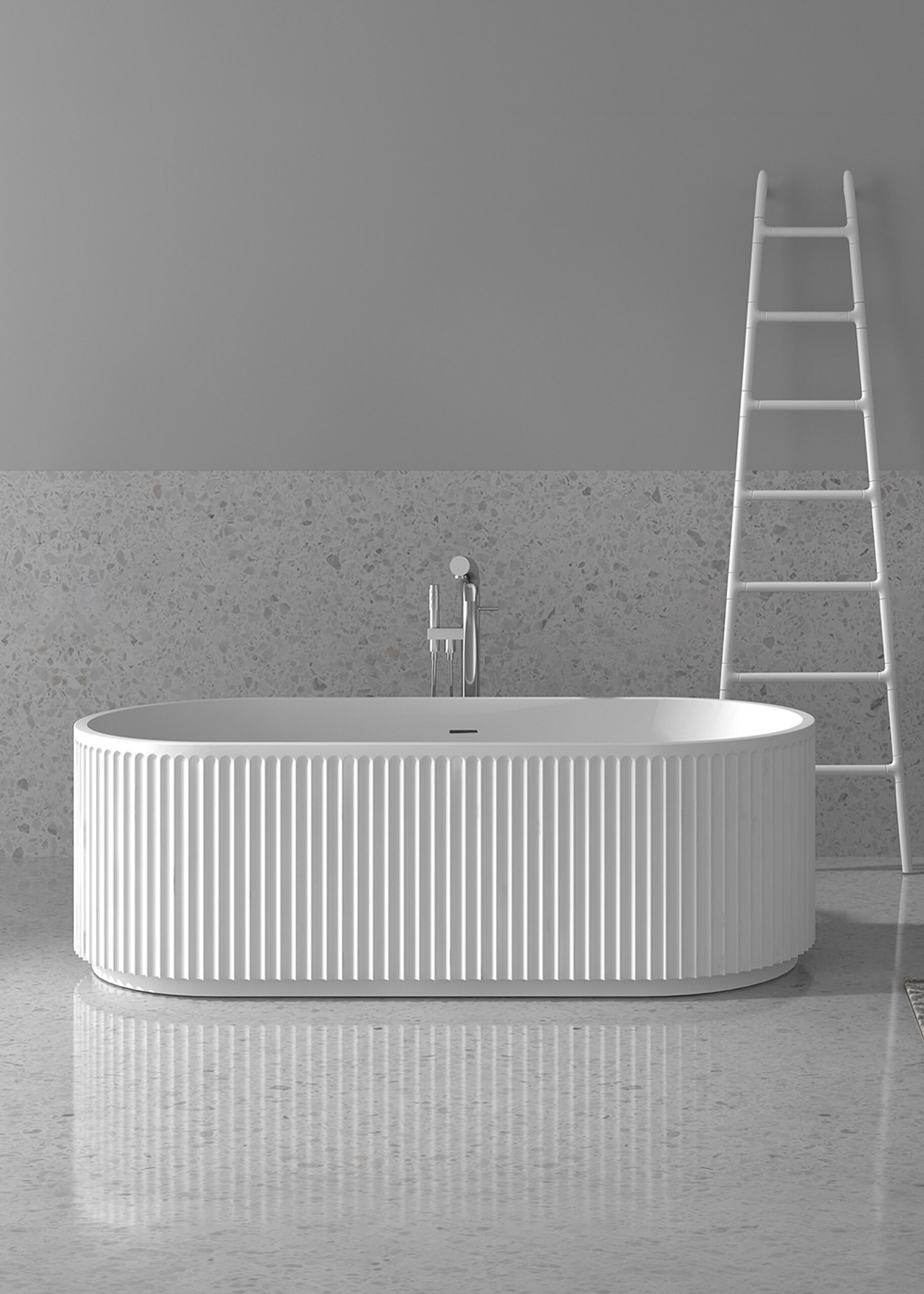
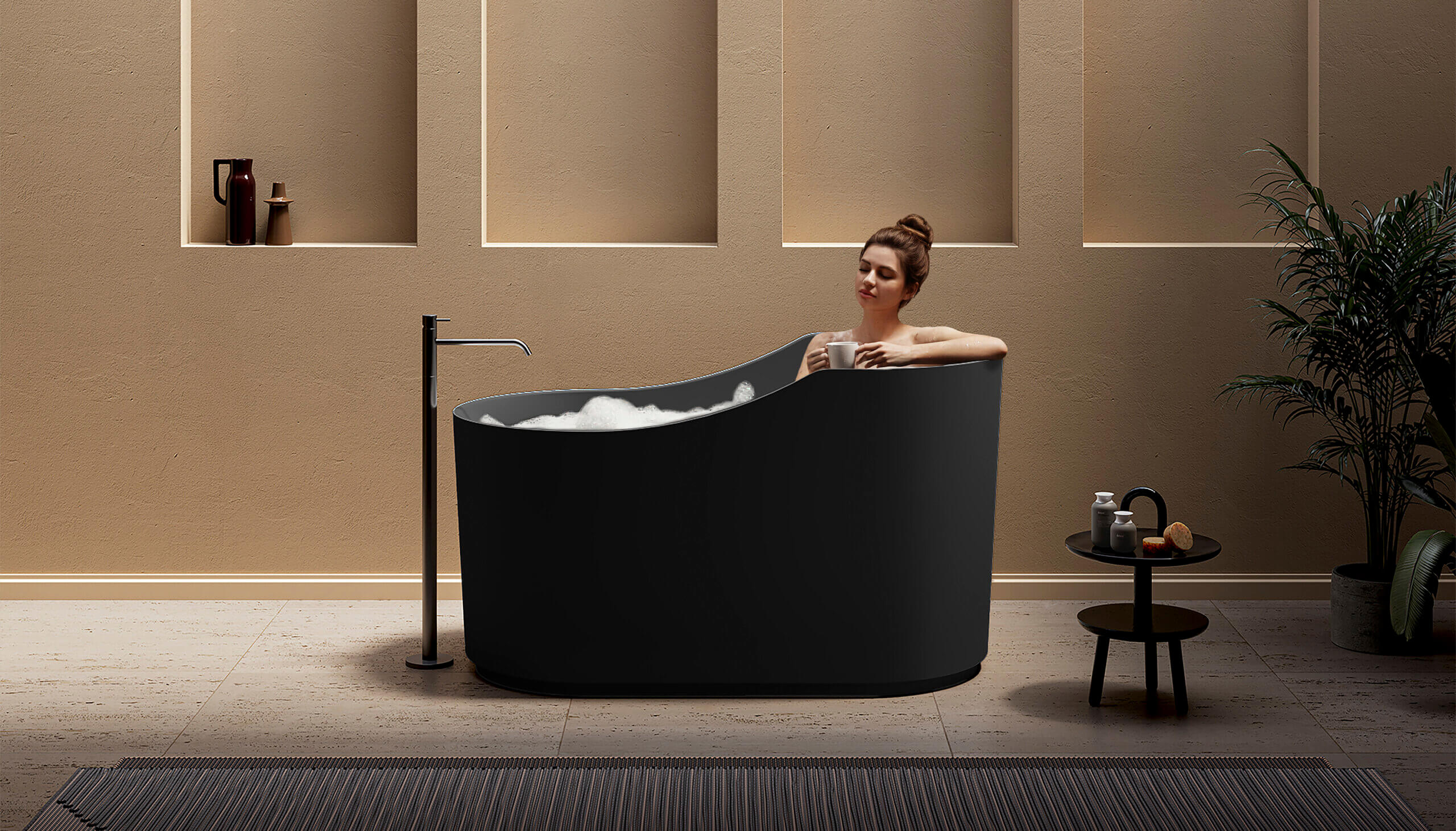
1. Ruvati Canali. 59-inch Oval Freestanding Tub in Matte White (RVB6744WH)
The Canali is a clean, double-ended oval tub made from Ruvati’s epiStone material, an engineered stone composed of 70% crushed natural stone bonded with a proprietary resin. Handcrafted in Italy, it has a satin matte finish that looks and feels like natural stone without the maintenance demands. At 59 inches, it fits well in most bathroom renovations without overwhelming the space.
- epiStone solid surface, made in Italy
- Double-ended oval shape, comfortable from either end
- Satin matte powder finish, silky to the touch
- Right drain placement, matching drain kit included
- Naturally sound-absorbing due to thick solid construction
- Exterior: 59″ x 27½” x 19½”
- Limited lifetime warranty
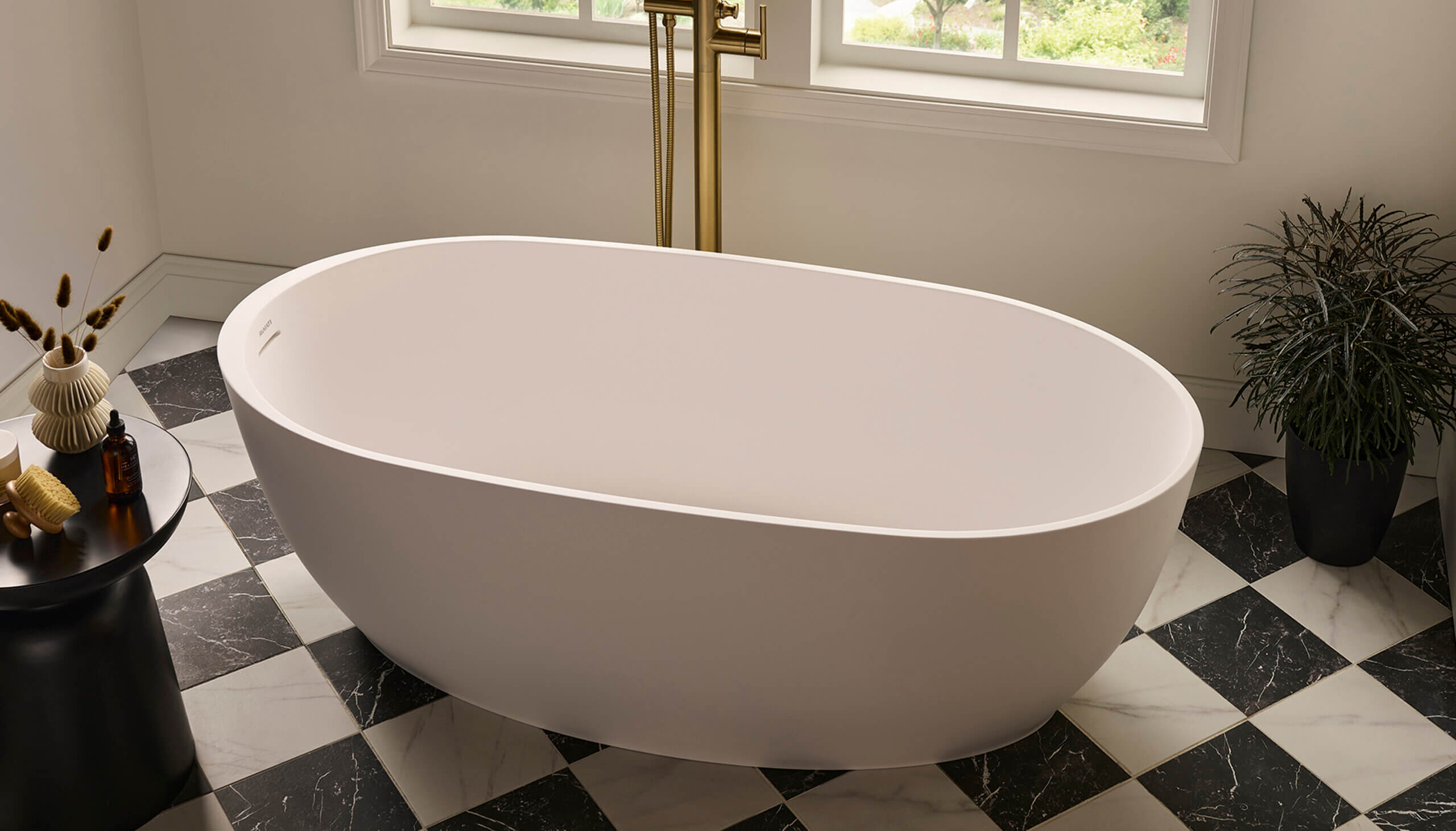
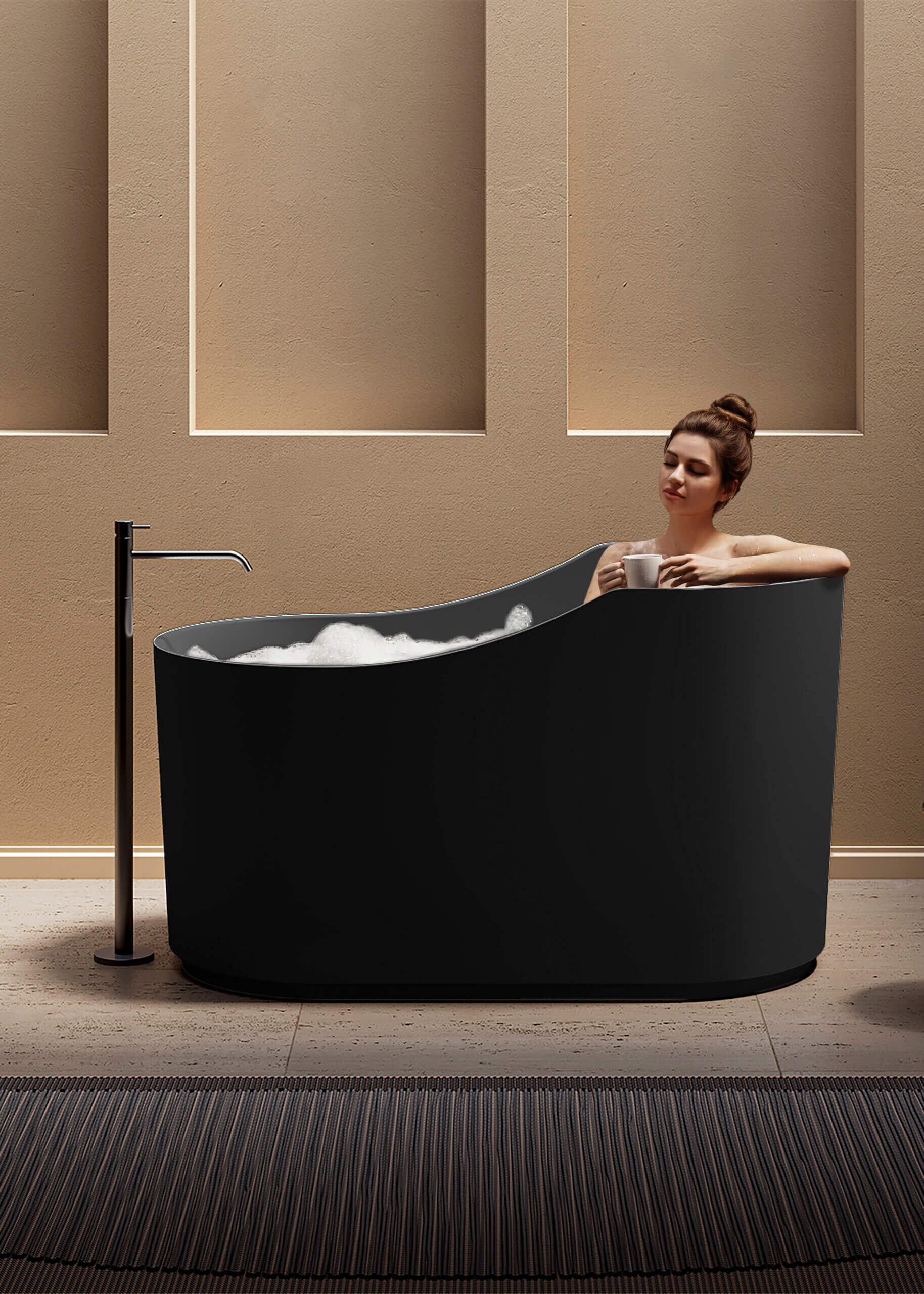
1. Ruvati Ofuro. 55-inch Japanese Soaking Tub in Matte Black (RVB6740BK)
The Ofuro takes a different approach entirely. Inspired by the traditional Japanese soaking tub, it prioritizes depth over length. At nearly 30 inches deep, it allows for full-body immersion in a compact footprint. A built-in elevated seat lets you settle in comfortably, and the tall, upright silhouette makes it a striking piece in any modern or spa-inspired bathroom. Also made in Italy from epiStone.
- Japanese Ofuro-style deep soaking design
- Built-in elevated seat for comfortable lounging
- epiStone solid surface, made in Italy
- Compact footprint (55″ x 29½”) with exceptional soaking depth (27″ interior)
- Satin matte finish, sound-absorbing construction
- Matching drain kit included
- Limited lifetime warranty
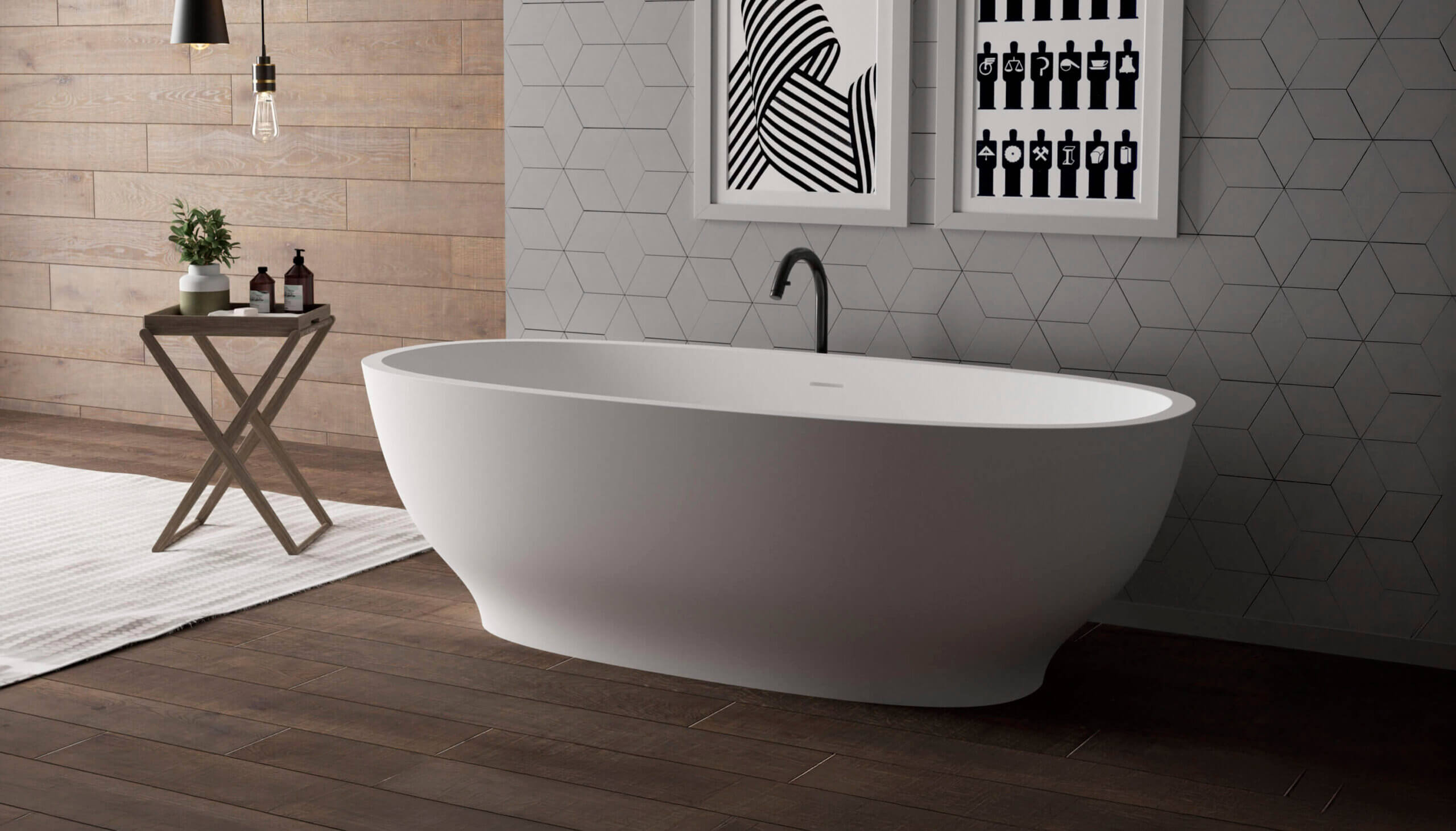
3. Ruvati Viola. 69-inch Oval Freestanding Tub in Matte White (RVB6732WH)
The Viola is the largest of the three, a generous 69-inch oval that suits bathrooms where the tub is meant to be the centerpiece. Like the Canali, it’s double-ended with a centered drain, but the extra length and wider proportions (31½ inches across) give it a more commanding presence. Same epiStone construction, same Italian craftsmanship, just scaled up for those who want room to stretch out.
- epiStone solid surface, made in Italy
- Double-ended oval with center drain placement
- Satin matte powder finish
- Exterior: 69″ x 31½” x 22″
- Sound-absorbing thick solid construction
- Matching drain kit included
- Limited lifetime warranty
Conclusion
Choosing the right freestanding tub comes down to a handful of honest decisions: how much space you’re working with, what style fits the room, and which material suits your priorities for durability and maintenance. Take the measurements seriously, consider the weight, and match the tub’s proportions to the bathroom rather than picking a size in the abstract.
If you’ve made it this far, you likely already know a freestanding tub is the direction you want to go. The good news is that once the space and sizing questions are answered, the rest of the process tends to fall into place. There’s no wrong choice among well-made options. It’s mostly a matter of finding the tub that feels like it belongs in your bathroom.
At Ruvati, every freestanding tub is crafted in Italy from epiStone, our engineered solid surface material built for long-term durability and easy care. If you’d like to explore the full collection, you can browse all of our freestanding tubs here.

Stainless steel is one of the most durable materials for kitchen sinks. For almost a century, stainless steel sinks have been the sink of choice for American kitchens.