
Short Answer of the question: Fireclay vs Procliean sink.
Fireclay sinks use molded clay fired at extreme heat, creating a dense, chip-resistant surface. Porcelain sinks feature a metal or ceramic base coated with porcelain enamel, making them more prone to chipping and staining. Fireclay offers greater durability, while porcelain provides a classic, glossy finish.
As you envision your perfect kitchen, every detail matters, from the sleek countertops to the sink that becomes the heart of your culinary space. At Ruvati, we understand that the right sink can transform your kitchen into a haven of both style and functionality. When it comes to choosing between fireclay and porcelain sinks, the decision can be daunting. Both materials offer unique benefits, but which one aligns best with your vision?
In this comprehensive guide, we’ll explore the difference between fireclay and porcelain sinks, delving into their durability, maintenance needs, and aesthetic appeal. Whether you’re drawn to the timeless elegance of fireclay or the versatility of porcelain, we’ll help you navigate the Fireclay vs Porcelain Sink debate to find the perfect sink material for your kitchen design.
Introduction to Fireclay and Porcelain Sinks
- Fireclay Sinks: Made from a mixture of clay and glaze fired at extremely high temperatures (typically over 1600°F), fireclay sinks are renowned for their exceptional durability and resistance to scratches and stains. They offer a classic, timeless look that adds elegance to any kitchen.
- Porcelain Sinks: These sinks feature a porcelain enamel coating over a base material like a cast iron sink or steel. Porcelain sinks are celebrated for their versatility in design, affordability, and ease of installation.
What is a Fireclay Sink?
A fireclay sink is a type of ceramic sink crafted from a blend of clay and glaze, fired at extremely high temperatures, typically between 1,600 to 2,200 degrees Fahrenheit. This intense heat process results in a sink that is incredibly durable and resistant to common kitchen hazards like scratches, stains, and heat. Fireclay sinks are celebrated for their rustic charm and are often associated with the farmhouse style of interior decorating.
Their robust construction and timeless appeal make them a popular choice for kitchen renovations, offering both unique style and practical functionality. Whether you’re aiming for a traditional or modern kitchen design, a fireclay sink can be a stunning centerpiece that stands the test of time.
What is a Porcelain Sink?
A porcelain sink is another type of ceramic sink, made from a mixture of clay, Kaolin, and other materials. Unlike fireclay sinks, porcelain sinks are fired at lower temperatures, making them more susceptible to stains, scratches, and chips. While they are often recommended for bathroom sinks and toilets due to their less durable nature, porcelain enamel-coated cast iron and stainless steel sinks are popular choices for kitchens.
These enamel-coated sinks offer a durable and resistant surface, combining the classic look of porcelain with the strength of cast iron or stainless steel. This makes them a versatile option for those seeking a blend of aesthetic appeal and practical durability in their kitchen sink.
Pros and Cons of Fireclay Sinks vs Porcelain
Fireclay Sinks:
- Pros: Durable, low maintenance, elegant look.
- Cons: Heavy, expensive, limited color options.
Porcelain Sinks:
- Pros: Affordable, versatile design options, easy installation.
- Cons: Prone to chipping, less heat-resistant.
Fireclay vs Porcelain Sink: Key Differences
| Feature | Fireclay Sinks | Porcelain Sinks |
|---|---|---|
| Durability | Highly durable, resistant to chips and cracks. | Durable but prone to chipping and scratching. |
| Maintenance | Low maintenance, easy to clean. | Easy to clean but may require more frequent touch-ups. |
| Design Options | Limited color palette but offers a unique, handcrafted look. | Wide range of colors and styles available. |
| Cost | Generally more expensive due to artisanal craftsmanship. | More affordable compared to fireclay. |
| Cast Iron Options | Fireclay sinks are generally more affordable compared to cast iron options, which start at a higher price point and may have increased installation costs due to their heavier weight. | N/A |
| Heat Resistance | Excellent heat resistance, suitable for placing hot pans directly. | Less resistant to high temperatures, may damage the enamel. |
Enamel Coating: What You Need to Know
Enamel coating is a specialized finish applied to cast iron sinks, stainless steel sinks, and other sink materials to create a durable and resistant surface. This coating is made from a mixture of glass and metal oxides, fired at high temperatures to produce a hard, glossy finish. Enamel coating is highly resistant to scratches, stains, and heat, making it a popular choice for kitchen sinks. However, it can chip or crack if a sharp or heavy object is dropped on it, potentially exposing the metal beneath and leading to rust.
It’s important to note that enamel coating differs from ceramic glaze, which is used on fireclay sinks. While enamel coating is durable, it can be more prone to chipping and cracking compared to ceramic glaze. When selecting a sink with an enamel coating, consider the quality of the coating and the manufacturer’s warranty to ensure long-lasting performance.
Maintaining an enamel-coated sink is relatively straightforward. Clean it with mild cleaners and a soft cloth, and wipe the surface down after each use to prevent spotty buildup. Avoid using abrasive cleaners or scrubbers, as they can damage the enamel coating.
Overall, enamel coating provides a durable and heat-resistant surface for kitchen sinks, but it’s essential to choose a high-quality product and follow proper maintenance practices to keep it looking its best.
Fireclay Sink Advantages Compared to Porcelain Sinks
When comparing fireclay sinks to porcelain sinks, several advantages of fireclay become apparent:
- Exceptional Durability: Fireclay sinks outshine porcelain in terms of durability. They are more resistant to chips and cracks due to their dense, non-porous material, making them ideal for high-traffic kitchens. Porcelain sinks, while durable, are more prone to chipping and cracking over time.
- Low Maintenance: Both fireclay and porcelain sinks have low maintenance requirements due to their smooth surfaces. However, fireclay sinks tend to be more resistant to stains and scratches, requiring less frequent touch-ups compared to porcelain.
- Aesthetic Versatility: While fireclay sinks offer a classic, timeless look that complements various kitchen styles, porcelain sinks provide a wider range of color options and designs. However, the elegance and sophistication of fireclay often make it a preferred choice for those seeking a traditional aesthetic.
- Environmentally Friendly: Fireclay sinks are made from natural materials, making them an eco-conscious choice. Porcelain sinks, although also made from natural materials, often involve additional processes that might impact their environmental footprint.
In summary, fireclay sinks excel in durability and low maintenance, while porcelain sinks offer more design flexibility. The choice between the two ultimately depends on your priorities: durability and classic style with fireclay, or versatility and affordability with porcelain.
Sink Maintenance: Fireclay vs. Porcelain
Both fireclay and porcelain sinks require regular maintenance to ensure they remain in excellent condition. Here’s how to care for each:
Fireclay Sink Maintenance
- Easy Cleaning: Fireclay sinks are incredibly easy to clean. Use a soft cloth and mild dish soap with warm water to remove dirt and grime. This gentle approach is effective because fireclay is non-porous and resistant to stains1.
- Stain Prevention: Regular cleaning prevents the buildup of dirt and grime. For tougher stains, a mixture of baking soda and water or vinegar can be used without damaging the surface.
- Preventing Water Spots: Dry the sink after use to prevent water spots. Applying a thin layer of wax monthly can also help maintain the sink’s finish and make cleaning easier.
Porcelain Sink Maintenance
- Easy Cleaning: Porcelain sinks have a smooth, glossy finish that resists most household stains. Regular cleaning with mild soap and water keeps them looking new.
- Stain Prevention: Regular cleaning is essential to prevent discoloration from substances like coffee or wine. Promptly wiping down spills helps maintain the sink’s appearance.
- Heat Sensitivity: Avoid placing extremely hot items directly into the sink to prevent enamel damage. This precaution ensures the longevity of the sink’s finish.
Choosing Between Fireclay and Porcelain Sinks
When it comes to choosing between a fireclay sink and a porcelain sink, several factors come into play. Both types of sinks can add a touch of elegance to your kitchen, but they differ significantly in terms of durability, design flexibility, and overall aesthetic appeal.
Fireclay Sinks
- Durability and Strength: Fireclay sinks, like those from Ruvati, are crafted from true Italian fireclay, fired at extremely high temperatures (up to 2900°F), making them incredibly resistant to chips, cracks, and abrasions. This durability ensures they can withstand the rigors of a busy kitchen.
- Timeless Aesthetic: Fireclay sinks offer a classic, timeless look that complements both traditional and modern kitchen designs. Ruvati’s Fiamma collection, for example, brings a blend of traditional craftsmanship and contemporary style to your kitchen.
- Design Versatility: Ruvati fireclay sinks often feature reversible designs, allowing you to choose between a smooth flat front and a decorative fluted finish, offering flexibility in installation and aesthetic preference.
Popular Ruvati Fireclay Sinks
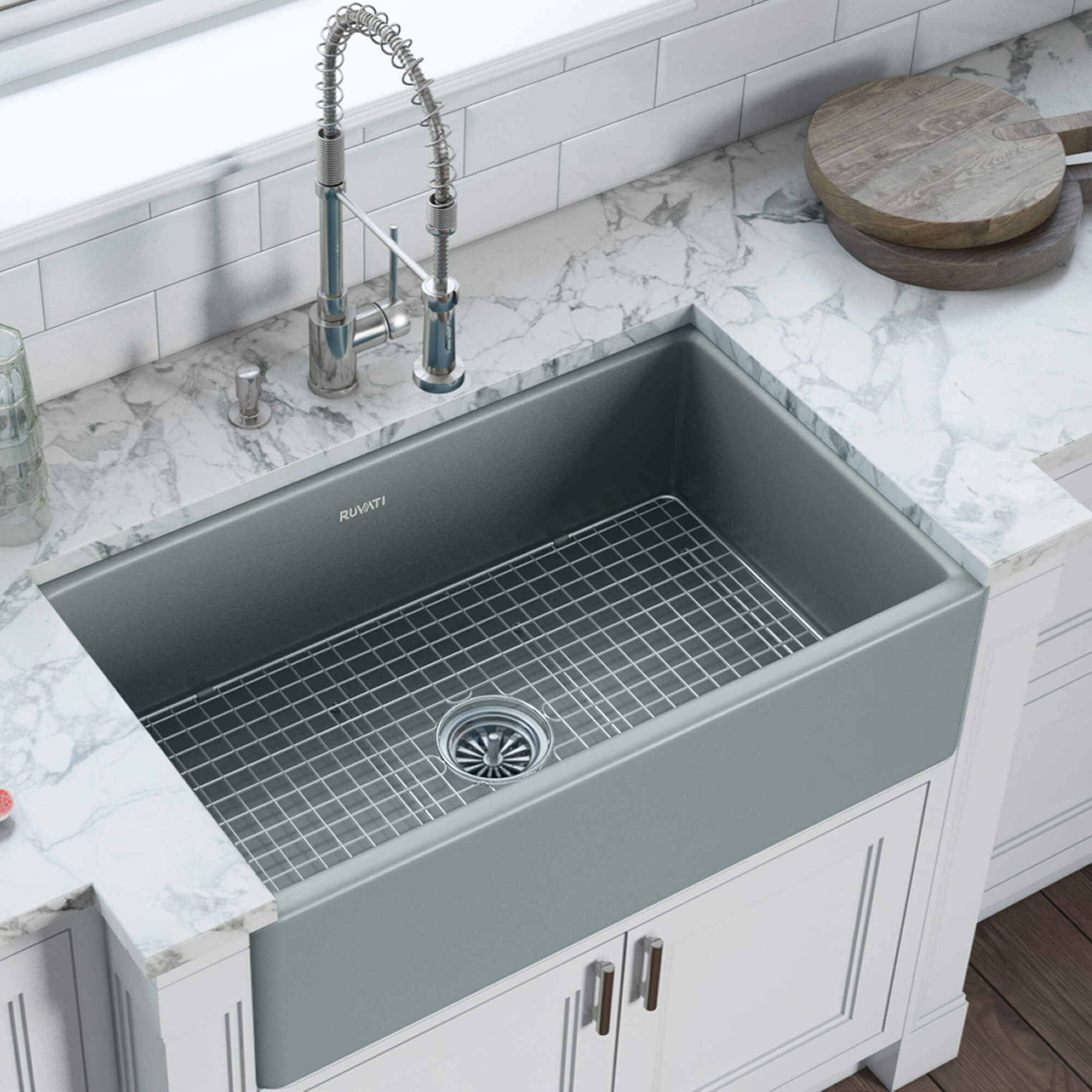
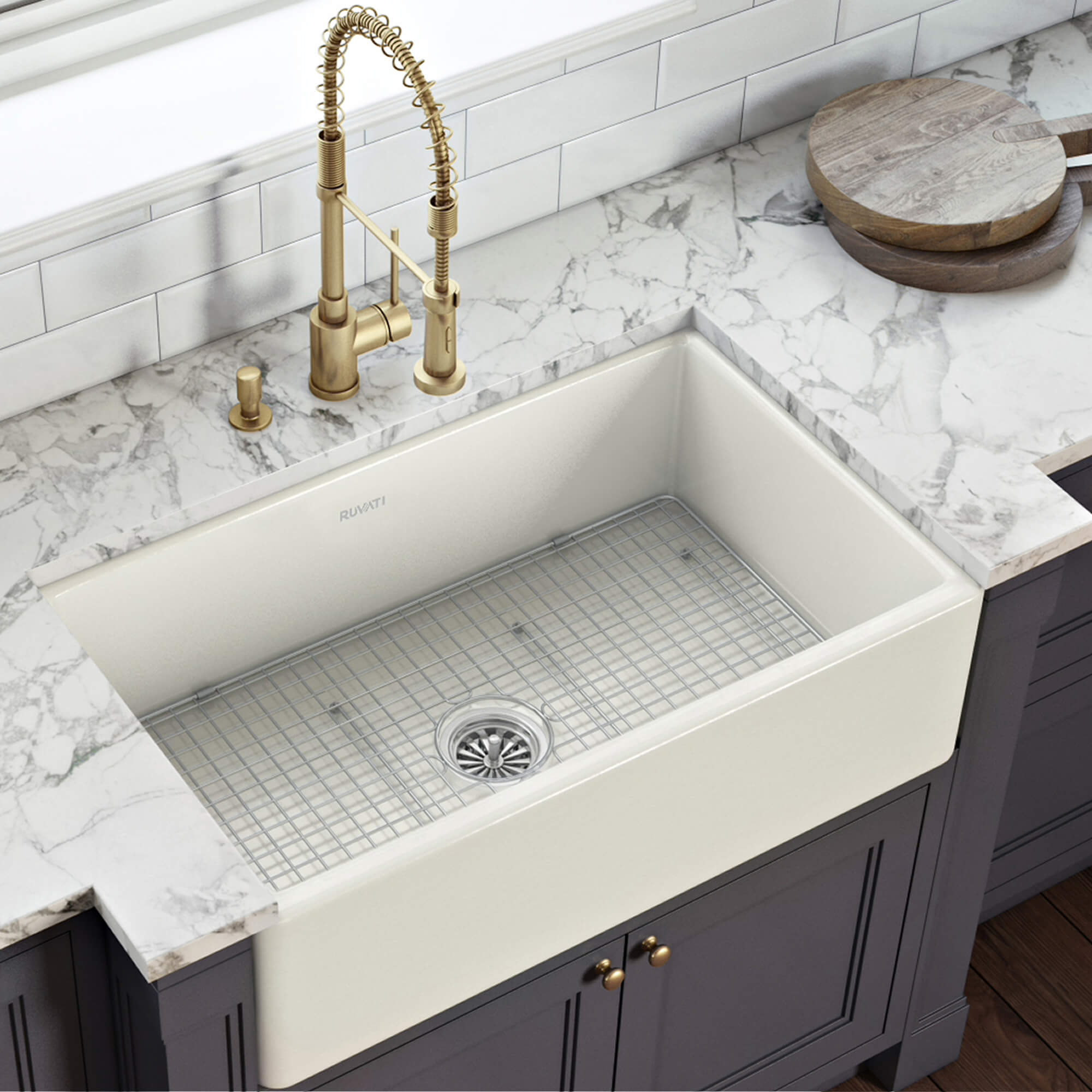
- Ruvati 30″ x 20″ Fireclay Reversible Farmhouse Apron-Front Sink (RVL2100WH): This sink combines modern functionality with traditional design, featuring a reversible fluted or flat front and a generous 9-inch bowl depth.
- Ruvati 33″ x 20″ Fireclay Reversible Farmhouse Apron-Front Sink (RVL2300WH): Ideal for larger kitchens, this sink offers ample space with its 33-inch width and 9-inch depth, while its reversible design allows for customization.
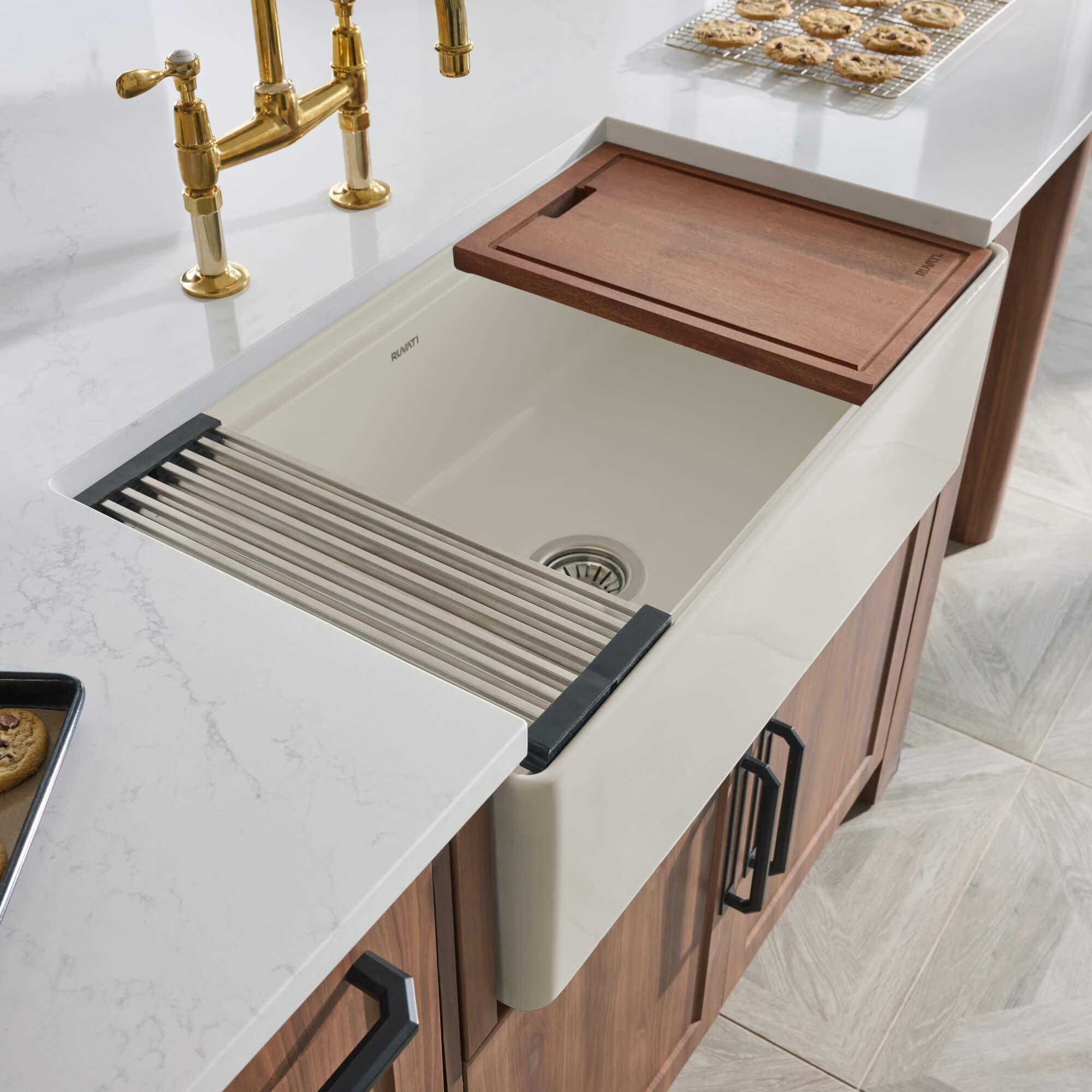
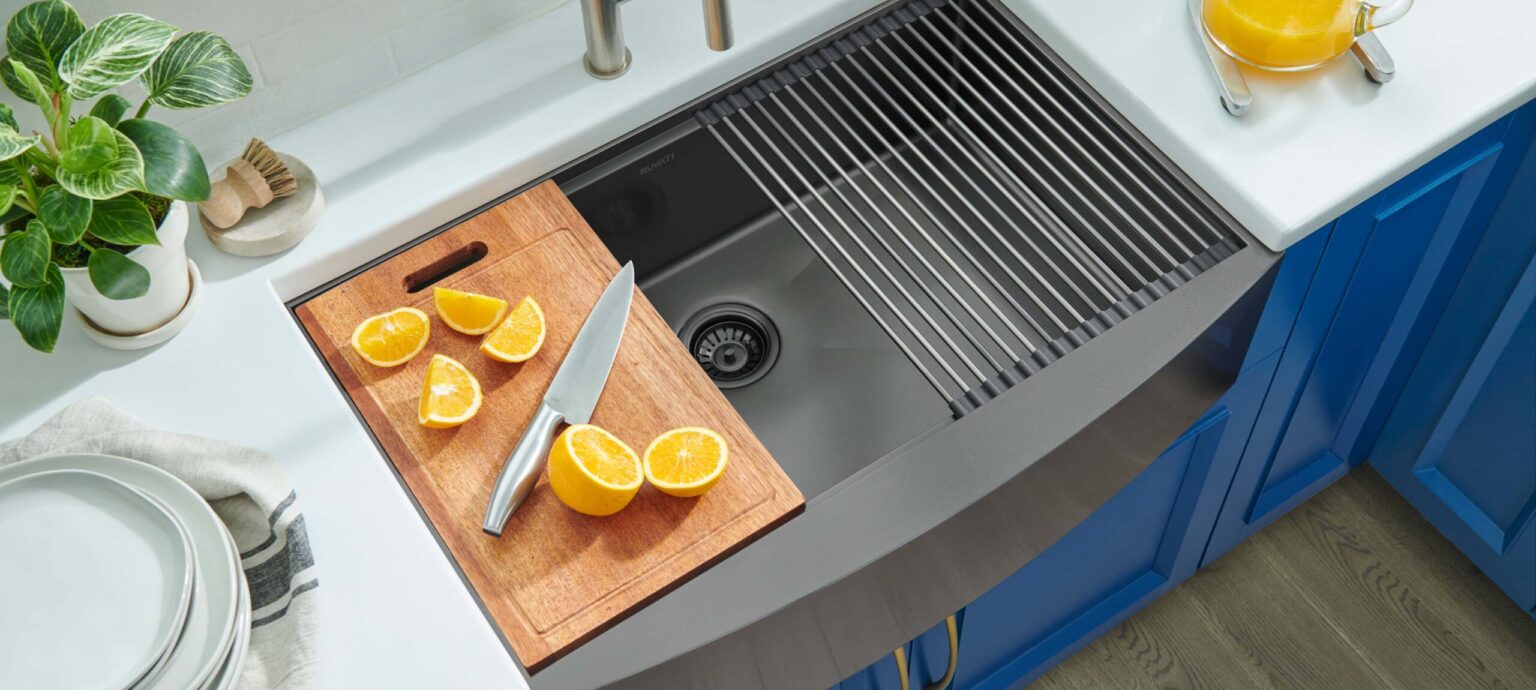
- Ruvati Fiore 33″ Fireclay Workstation Apron-Front Farmhouse Sink (RVL2387WH): This innovative sink integrates a workstation design with built-in accessories like a foldable drying rack and solid wood cutting board, maximizing kitchen functionality while maintaining the elegance of fireclay.
Porcelain Sinks
- Affordability and Design Flexibility: Porcelain sinks are generally more affordable and offer a wider range of color options, making them suitable for those seeking a budget-friendly solution with design versatility.
- Ease of Installation: Porcelain sinks are often lighter and easier to install compared to fireclay sinks, which can be heavier due to their thickness.
While porcelain sinks provide affordability and design flexibility, fireclay sinks excel in durability and aesthetic appeal. Ruvati’s fireclay sinks, with their exceptional craftsmanship and timeless design, are a compelling choice for those seeking a kitchen centerpiece that combines elegance with robust functionality. Whether you opt for the classic look of the Fiamma collection or the innovative design of the Fiore workstation sink, Ruvati fireclay sinks are sure to elevate your kitchen’s style and functionality.
Best Material for Kitchen Sinks
Ruvati fireclay sinks stand out in both design and functionality due to several key features:
Design
- Handcrafted in Italy: Each Ruvati fireclay sink is meticulously crafted by skilled Italian artisans, ensuring a level of craftsmanship that is both artistic and precise.
- Timeless Aesthetic: Ruvati fireclay sinks bring a classic farmhouse charm to modern kitchens, blending traditional elegance with contemporary style.
- Reversible Designs: Many models offer reversible designs, featuring both fluted and flat front options, allowing homeowners to choose the look that best suits their kitchen style.
- Versatile Color Options: While traditional white is a staple, Ruvati also offers other color choices, such as striking black and brushed gold infused with genuine 24K gold, providing flexibility in design.
Functionality
- Exceptional Durability: Constructed from true Italian fireclay fired at 2900°F, these sinks are incredibly resistant to chips, cracks, and abrasions, ensuring they withstand heavy use.
- Easy Maintenance: The smooth enamel finish is non-porous, making it resistant to stains and easy to clean with simple wiping.
- High Heat Resistance: Ruvati fireclay sinks can handle high temperatures and hot water without damage, making them ideal for busy kitchens.
- Generous Bowl Depth: With depths of up to 9 inches, these sinks provide ample space for large pots and pans, enhancing kitchen workflow efficiency.
Additional Features
- Compatibility with Garbage Disposals: Ruvati fireclay sinks are designed to fit standard garbage disposal units, although an extended flange may be required due to the thick fireclay bottom.
- Lifetime Warranty: Backed by Ruvati’s limited lifetime warranty, these sinks are not just a purchase but an investment in your home’s future.
Overall, Ruvati fireclay sinks combine artisanal craftsmanship, timeless design, and robust functionality, making them a standout choice for homeowners seeking both style and durability in their kitchen.
FAQs
Are fireclay sinks more durable than porcelain sinks?
Yes, fireclay sinks are generally more durable due to their dense, non-porous material, which makes them resistant to chipping and cracking.
What are the main differences between fireclay and porcelain sinks?
The main differences include durability, maintenance, style options, and cost. Fireclay sinks offer greater durability and are easier to maintain, while porcelain sinks provide more design versatility and are typically more affordable.
How do I choose between a fireclay and porcelain sink for my kitchen?
Consider factors such as your kitchen’s design, budget, and how much use the sink will get. Fireclay is ideal for those seeking durability and a classic look, while porcelain is better for those looking for a budget-friendly option with more design choices.
Which is better, fireclay or porcelain sink?
It depends on your priorities. If you value durability and a timeless aesthetic, fireclay is better. For affordability and design flexibility, porcelain is preferable16.
What are the pros and cons of fireclay sinks vs porcelain?
Fireclay sinks are durable and low maintenance but heavy and expensive. Porcelain sinks are affordable and versatile but prone to chipping and less heat-resistant.
As you conclude your journey through the Fireclay vs Porcelain Sink comparison, remember that the perfect sink is not just a functional element, but a statement piece that reflects your personal style and enhances your kitchen’s ambiance. Whether you’re captivated by the timeless elegance of fireclay or the versatility of porcelain, Ruvati is committed to providing you with high-quality sinks that meet your unique needs.
Our Ruvati Fireclay sinks, crafted with precision and passion, offer exceptional durability and aesthetic appeal, while our porcelain options provide a blend of affordability and design flexibility.
When deciding between fireclay and porcelain sinks, consider your kitchen’s design, your lifestyle, and the look you want to achieve. Both materials have their advantages, but with Ruvati, you can trust that you’re investing in a sink that will be the heart of your kitchen for years to come. Explore our collection today and discover how the right sink can transform your culinary space into a haven of both beauty and functionality.