For homeowners and designers seeking to elevate their kitchen’s functionality and style, corner sinks offer a compelling solution. By leveraging often-wasted space, these innovative fixtures can transform your kitchen into a more efficient and visually appealing hub. Whether you’re renovating a small kitchen or simply looking to optimize your layout, a corner sink can be a game-changer.
At Ruvati, we understand the importance of maximizing space while maintaining aesthetic appeal. In this comprehensive guide, we’ll explore the corner sink pros and cons, provide corner sink installation tips, and highlight the best materials for corner kitchen sinks to help you make an informed decision that suits your unique needs.
Corner Sink Pros and Cons
Pros:
- Efficient Space Utilization: Corner sinks make excellent use of dead space, providing more room for countertops and enhancing the overall kitchen layout.
- Design Flexibility: They offer a unique design element that can add visual interest to your kitchen, making them ideal for small or oddly shaped spaces.
- Storage Efficiency: The cabinet under a corner sink can be customized to store cleaning supplies and plumbing pipes efficiently.
- Unbroken Countertops: They allow for longer stretches of unbroken countertop space, which can be beneficial for food preparation.
Cons:
- Size Limitations: Corner sinks are generally smaller and may not accommodate large or heavy sinks unless custom cabinetry is used.
- Limited Elbow Room: They can make it difficult for multiple people to work side by side comfortably.
- Cleaning Challenges: The deep recess of a corner sink can be hard to clean, especially for shorter individuals.
- Appliance Placement: Adjacent appliances like dishwashers can create cramped zones when their doors are open, especially if the dishwasher door is too close to the sink.
Best Corner Sinks for Kitchen
Choosing the right corner sink for your kitchen can elevate both its functionality and aesthetic appeal. With a variety of styles and materials available, selecting the perfect sink involves considering your kitchen’s layout, personal style, and specific needs. Here are some of the most popular and innovative corner sink options:
Corner bowls are versatile and functional, offering the same features as standard multipurpose sinks while being available in a variety of materials. They enhance the overall look of kitchens, especially in styles like European and Old World, while also providing practicality in terms of space-saving.
Benefits of Bar and Prep Sinks
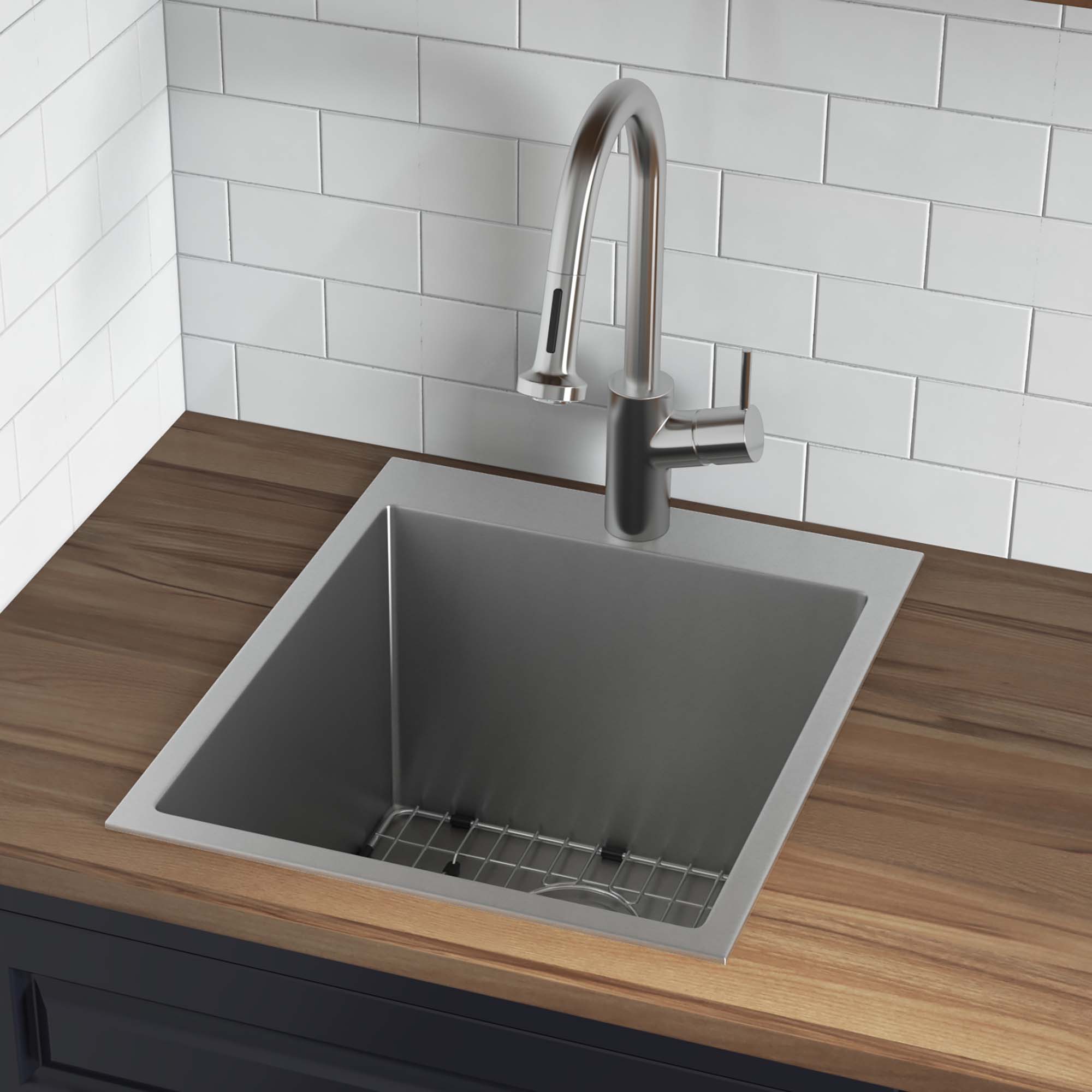
Bar sinks and prep sinks offer numerous benefits that can significantly improve your kitchen’s efficiency and convenience:
- Convenience: These secondary sinks provide a dedicated space for hand washing, food preparation, and cleanup, making it easier to manage dirty dishes and utensils without crowding the main sink.
- Efficiency: By having an additional sink, you can streamline your kitchen workflow, allowing multiple people to work together more efficiently, whether it’s during meal prep or entertaining guests.
- Flexibility: Bar sinks and prep sinks are versatile and can be used in various settings, from compact kitchens to expansive entertainment areas, adapting to your specific needs.
- Space-saving: Their smaller size makes them ideal for kitchens with limited counter space, ensuring you have the functionality you need without sacrificing valuable workspace.
- Style: With a wide range of styles and materials available, you can choose a bar sink or prep sink that complements your kitchen decor, adding both functionality and aesthetic appeal.
Stainless Steel Corner Sinks
Durability and Versatility: Stainless steel is a popular choice for its durability, ease of cleaning, and compatibility with various kitchen styles. It’s ideal for modern and industrial-inspired kitchens. Modern corner sinks offer the same features as standard multipurpose kitchen sinks, with various materials available, while noting their effectiveness for specific tasks like handwashing and food preparation.
Ruvati Gravena (RVH8400): This 44-inch corner butterfly undermount double bowl sink is made from 16-gauge stainless steel, featuring tight radius corners and a sound guard undercoating. It’s perfect for modern kitchens needing a double-bowl configuration in a corner layout.
Matte Black Corner Sinks
Modern Elegance: Modern corner sinks are a versatile choice that can offer the same functionality as standard sinks while being available in various materials. A matte black corner sink adds sophistication to small kitchens while providing a deep basin for washing larger items.
Compact Efficiency: Smaller compartments can be used for rinsing produce or soaking utensils without taking up the entire sink.
Granite Composite Corner Sinks
Luxurious Feel: Granite composite sinks provide a luxurious look and are compatible with most countertop appliances. They are durable and resistant to scratches and stains.
Ruvati’s EpiStage Series: The EpiStage series offers granite composite sinks that add a high-end touch to your kitchen while being practical and easy to maintain.
Undermount Corner Sinks
Seamless Integration: Undermount sinks create a smooth transition between the sink and countertop, enhancing the overall aesthetic and making cleaning easier. They are available in various materials, including stainless steel and granite composite.
Ruvati’s undermount collection: Ruvati’s undermount sinks feature a spacious single or double basins with exceptional sound deadening and a wear-resistant brushed finish, combining functionality and beauty.
Corner Sinks with Drainboards
Additional Functionality: Sinks with integrated drainboards offer extra space for drying dishes or prepping food, making them highly practical for busy kitchens.
Butterfly Kitchen Sink: Also known as a dual-basin corner sink, this design maximizes corner space while offering the versatility of a double sink.
Workstation Corner Sinks
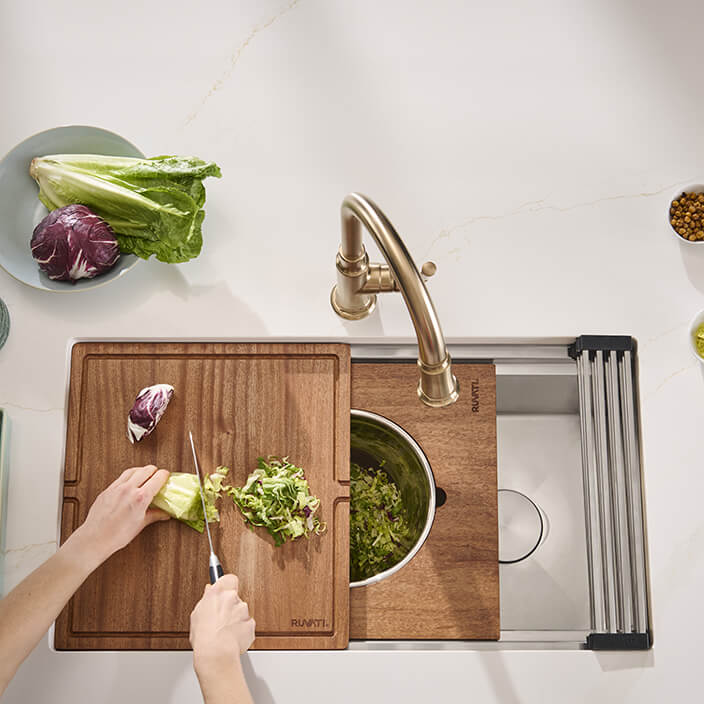
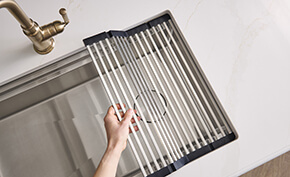
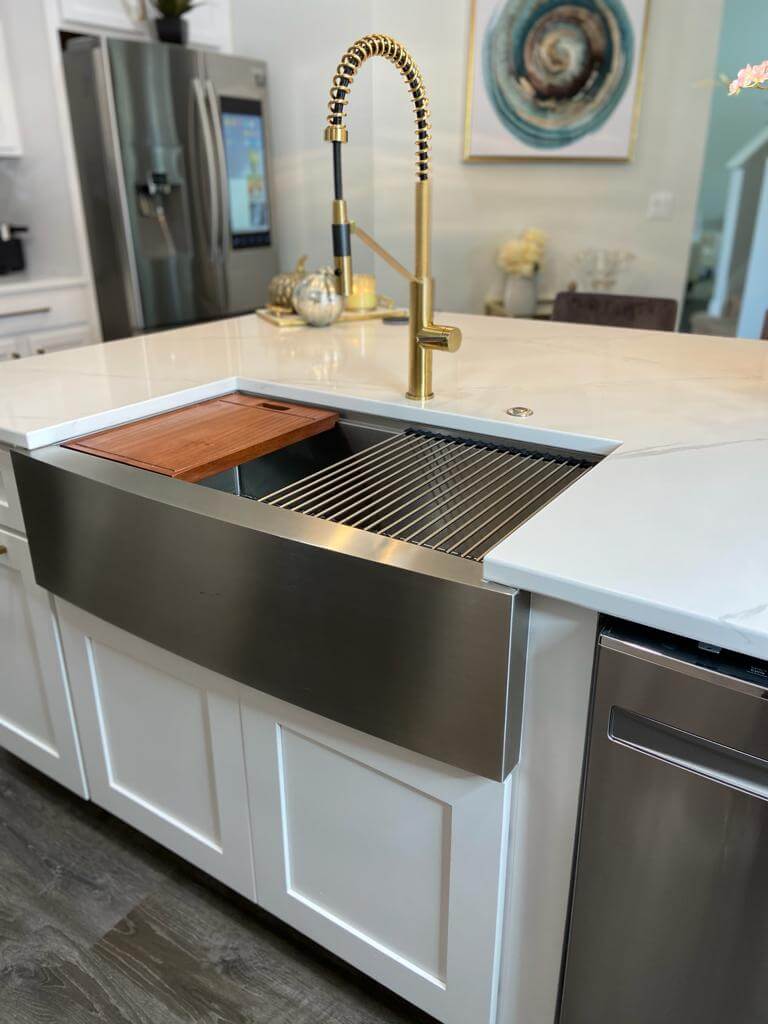
Efficient Workspace: Workstation sinks, like the Ruvati Siena (RVH8030), come with integrated accessories such as drying racks and cutting boards, enhancing the kitchen’s workflow and functionality.
When selecting a corner sink, be sure to consider factors such as size, material, and design style to so that it complements your kitchen’s layout and meets your specific needs. Whether you’re aiming for a modern look or a traditional feel, there’s a corner sink that can transform your kitchen into a more efficient and stylish space.
Corner Sink Installation Tips
- Measure Carefully: Ensure that your corner cabinet is the right size for the sink you choose. Standard corner cabinets come in sizes like 36″ and 42″.
- Customize the Cabinet: If you need a larger sink, consider customizing your cabinet to accommodate it.
- Use Proper Mounting: For wall-mounted sinks, use sturdy brackets and ensure they are securely fastened to the wall to prevent stress on the sink.
Is a Corner Sink a Good Idea?
Corner sinks are excellent for small kitchens or those with unique layouts, as they maximize space and create a functional area. However, they might not be ideal for larger kitchens where traditional sinks offer more flexibility.
Kitchen Corner Sink Advantages
- Space-Saving: Corner sinks are perfect for small kitchens, utilizing space that would otherwise be wasted. Utilizing a corner of the kitchen as a sink area can maximize space and create a functional area.
- Aesthetic Appeal: They can add a unique touch to your kitchen design, making it stand out.
Disadvantages of Corner Sinks
- Limited Sink Size: Corner sinks are often smaller, which can be a drawback for those who need to wash large pots and other large dishes.
- Difficulty in Cleaning: The recessed area can be challenging to clean thoroughly.
Small Kitchen Corner Sink Ideas
- Stainless Steel Double-Basin Corner Sink: Ideal for traditional or modern kitchens, offering the convenience of two separate basins.
- Minimalist Round Corner Sink: Perfect for minimalist designs, providing ample countertop space for food preparation.
- Corner Sink with a View: Placing the sink near windows can add natural light and create a beautiful focal point.
- Corner Sink With Drainboard: A corner sink with an integrated drainboard provides extra space for drying dishes or prepping food without sacrificing countertop space. This setup is particularly useful in compact kitchens where every inch matters.
- Diagonal Corner Sinks: These sinks offer better utilization of corner space and improved counter access, making them a practical choice for small kitchens. They also add a unique aesthetic appeal, though they may present some cleaning challenges.
Tips for Enhancing Your Small Kitchen Corner Sink
- Under-Cabinet Lighting: Install lighting above the sink to brighten the area and improve visibility during tasks.
- Decorative Touches Behind the Sink: Use the space behind the sink for plants, soap dispensers, or decorative trays to add personality without clutter.
- Custom Cabinets: Opt for diagonal or diamond-shaped cabinets to maximize storage under the sink while maintaining accessibility.
- Utilize Wasted Counter Space: Use the area behind the corner sink for plants or herbs to maximize otherwise underused areas in small kitchens.
Are Corner Sinks Practical for Small Kitchens?
Yes, corner sinks are highly practical for small kitchens as they utilize dead space effectively and provide more countertop area for food preparation.
How Can I Maximize Kitchen Space With a Corner Sink?
Maximizing space with a corner sink involves strategic planning and design choices. Here are some tips to help you optimize your kitchen layout:
Optimize Corner Space
- Corner Sink Placement: Positioning a corner kitchen sink in a corner frees up linear counter space for food preparation and serving, making it ideal for small kitchens.
- Use Corner-Friendly Appliances: Consider appliances designed for corners, such as corner stoves or refrigerators, to maintain a sleek look and maximize space.
Enhance Storage
- Corner Larder Unit: Install a corner larder unit with pull-out shelves and adjustable racks to store groceries and kitchen essentials efficiently.
- Customize Cabinet Space: Use pull-out shelves or rotating trays in the cabinet under the sink to keep cleaning supplies organized and accessible.
Utilize Vertical Space
- Floating Shelves: Add floating shelves above the sink to store frequently used items and enhance the area’s functionality.
- Lighting and Accessories: Use under-cabinet lighting to highlight the design and improve visibility. Add stylish faucets and soap dispensers to enhance functionality and aesthetics.
Streamline Workflow
- Proper Appliance Placement: Place a small cabinet between the sink and dishwasher to create more space and improve workflow.
- Single Bowl Sinks: Consider a single bowl sink to save counter space and maintain a minimalist look.
Design Considerations
- Corner Sink Cabinet Dimensions: Ensure the cabinet fits snugly into the corner, providing ample room for plumbing and storage.
- Sink Size and Type: Choose a sink that fits comfortably within the cabinet, considering plumbing and installation needs. Consider a diagonal corner sink for better utilization of corner space and improved counter access.
By implementing these strategies, you can effectively maximize space with a corner sink and create a functional, stylish kitchen layout.
Corner Sink vs Traditional Sink – Which is Better?
Corner sinks are better for small or uniquely shaped kitchens where space is limited. Traditional sinks offer more flexibility in terms of size and placement, making them suitable for larger kitchens.
Best Materials for Corner Kitchen Sinks
- Stainless Steel: Durable and easy to clean, making it a popular choice.
- Ceramic: Offers a stylish look and is resistant to scratches.
- Granite Composite: Provides a luxurious feel and is durable.
Common Problems with Corner Sinks and How to Fix Them
- Cleaning Difficulty: Use a step stool or recess the corner cabinet slightly to improve accessibility.
- Appliance Placement Issues: Place a small cabinet between the sink and dishwasher to create more space.
How to Install a Corner Sink
- Assess Your Layout: Determine if a corner sink fits your kitchen’s layout and available space.
- Choose the Right Cabinet: Ensure the base cabinet is designed for corner sinks, possibly with angled doors.
- Secure Mounting: Use appropriate screws and brackets to secure the sink firmly in place.
Corner Sink FAQs
Are corner sinks suitable for all kitchen layouts?
Corner sinks are ideal for kitchens with L-, U-, or G-shaped layouts, where they can effectively utilize dead space. However, they might not be the best choice for larger kitchens with ample space.
How do I choose the right size for my corner sink?
Measure your corner cabinet carefully and choose a sink that fits comfortably within it. Consider the depth and width of the sink to ensure it doesn’t overwhelm the space.
What are the best materials for corner sinks?
Stainless steel, ceramic, and granite composite are popular choices due to their durability and aesthetic appeal.
Can I install a corner sink myself?
While it’s possible to install a corner sink yourself, it’s recommended to hire a professional if you’re not experienced with plumbing and cabinetry work.
How do I maintain my corner sink?
Regularly clean your sink with non-abrasive cleaners and polish it periodically to maintain its shine and durability. Our care and maintenance guides will have your sink looking Home and Garden ready for years to come.
As you explore the world of corner sinks, remember that this innovative design can be a game-changer for your kitchen. Whether you’re a homeowner seeking to optimize space in a small kitchen or a designer looking to add a unique touch to a client’s layout, corner sinks offer a blend of functionality and style that’s hard to beat.
At Ruvati, we understand the importance of combining aesthetics with practicality. Our range of corner sinks, crafted from high-quality materials like stainless steel and granite composite, is designed to enhance your kitchen’s workflow while adding a touch of sophistication. From the sleek lines of our undermount models to the versatility of our workstation sinks, every Ruvati corner sink is built to make the most of your kitchen’s potential.
As you embark on your kitchen renovation journey, consider how a corner sink can transform your space. With its ability to maximize space, provide unique design opportunities, and streamline your workflow, a corner sink is more than just a fixture—it’s a solution that can elevate your entire kitchen experience.
Key Takeaways:
- Space Optimization: Corner sinks are perfect for small kitchens, utilizing dead space effectively.
- Design Flexibility: They offer a unique aesthetic that can enhance your kitchen’s style.
- Practicality: Corner sinks are ideal for kitchens where workflow efficiency is crucial.
Get Started with Ruvati:
- Explore Our Collection: Browse our range of corner sinks to find the perfect fit for your kitchen.
- Consult with Experts: Reach out to our team for personalized advice on choosing and installing your corner sink.
- Transform Your Kitchen: Experience the difference a Ruvati corner sink can make in your home.
By choosing a Ruvati corner sink, you’re not just selecting a product—you’re investing in a kitchen that’s both beautiful and functional. Let us help you unlock your kitchen’s full potential today!