Quick Overview
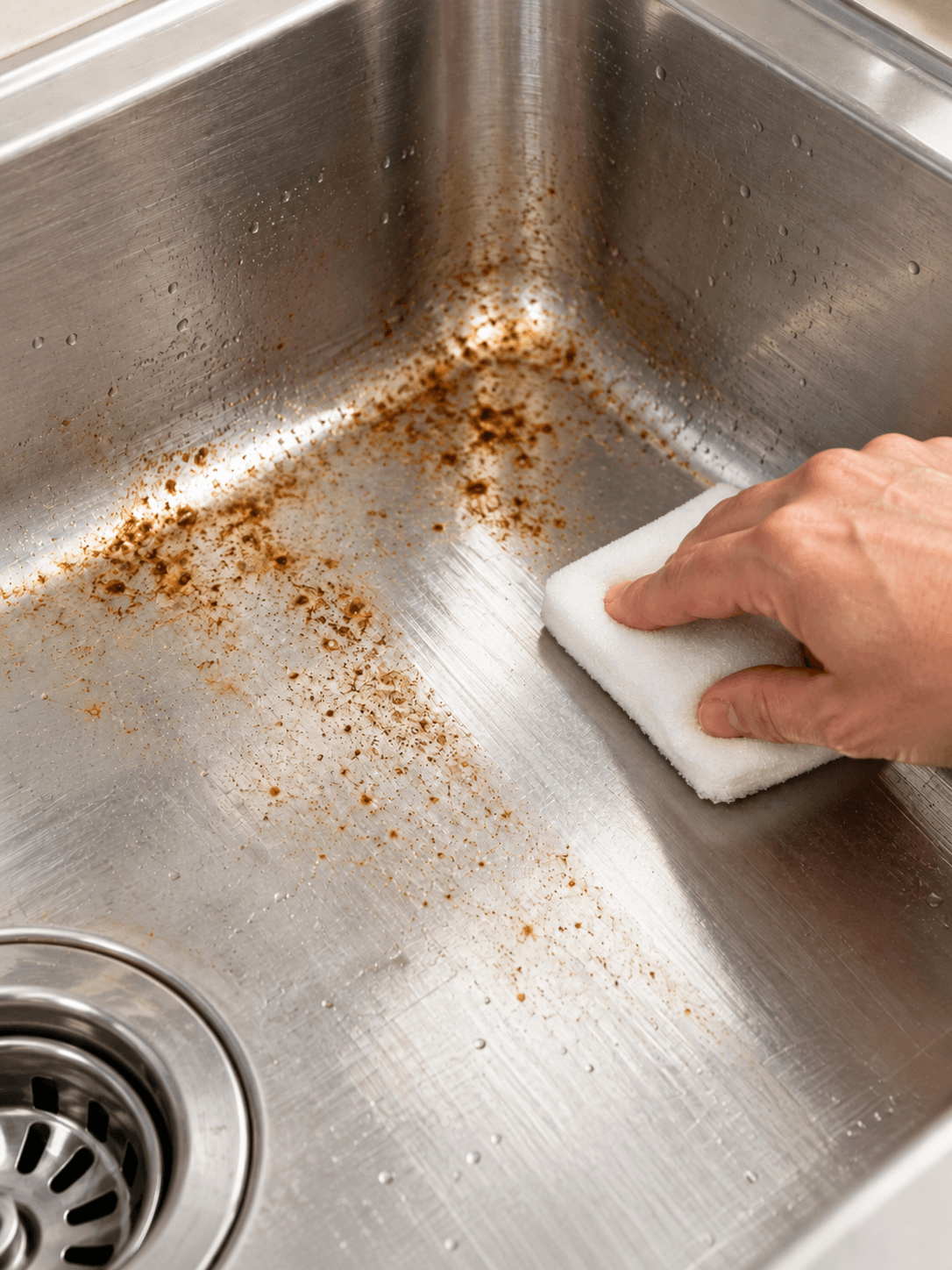
Stainless steel sinks do not rust on their own under normal circumstances. When you spot rust in your sink, it is almost always coming from an external source, such as cast iron cookware, metal utensils, or iron particles in your water.
The good news is that this kind of rust sits on the surface and can be fully removed with the right approach.
The only scenario where rust becomes a more permanent problem is when the sink’s protective chromium layer is physically damaged, which is rare and almost always the result of exposure to harsh chemicals.
Introduction
Finding rust in a stainless steel sink can be alarming, especially if you have been taking care of it. It looks like something has gone wrong, and the instinct is to wonder whether the sink itself is failing.
In most cases, it is not. Stainless steel is one of the most durable materials used in kitchen sinks, and its resistance to rust is real. What you are likely seeing is surface contamination from something that came into contact with your sink, not a sign that the sink itself is corroding. Understanding the difference matters, because it changes how you approach the problem and what you can reasonably expect to fix.
Do Stainless Steel Sinks Actually Rust?
The short answer is: not really, and certainly not under normal use.
Stainless steel gets its resistance to rust from chromium, which makes up at least 10.5% of the alloy by composition. Ruvati sinks are built from T-304 grade stainless steel with an 18/10 chromium/nickel ratio, which sits at the higher end of corrosion resistance. When the steel is exposed to oxygen, the chromium reacts to form a thin, invisible layer of chromium oxide on the surface. This layer is what protects the steel underneath. It is also self-repairing to a degree, meaning minor surface wear does not automatically compromise it.
Under normal kitchen conditions, this layer holds up well. It handles water, food, and regular cleaning without breaking down. So if you are seeing rust in your sink, the chromium layer is most likely intact and the rust is coming from somewhere else entirely.
So Where Does the Rust Come From?
This is the part most people do not expect: more than 90% of rust found in stainless steel sinks comes from external sources, not from the sink itself.
There are two situations where this tends to happen.
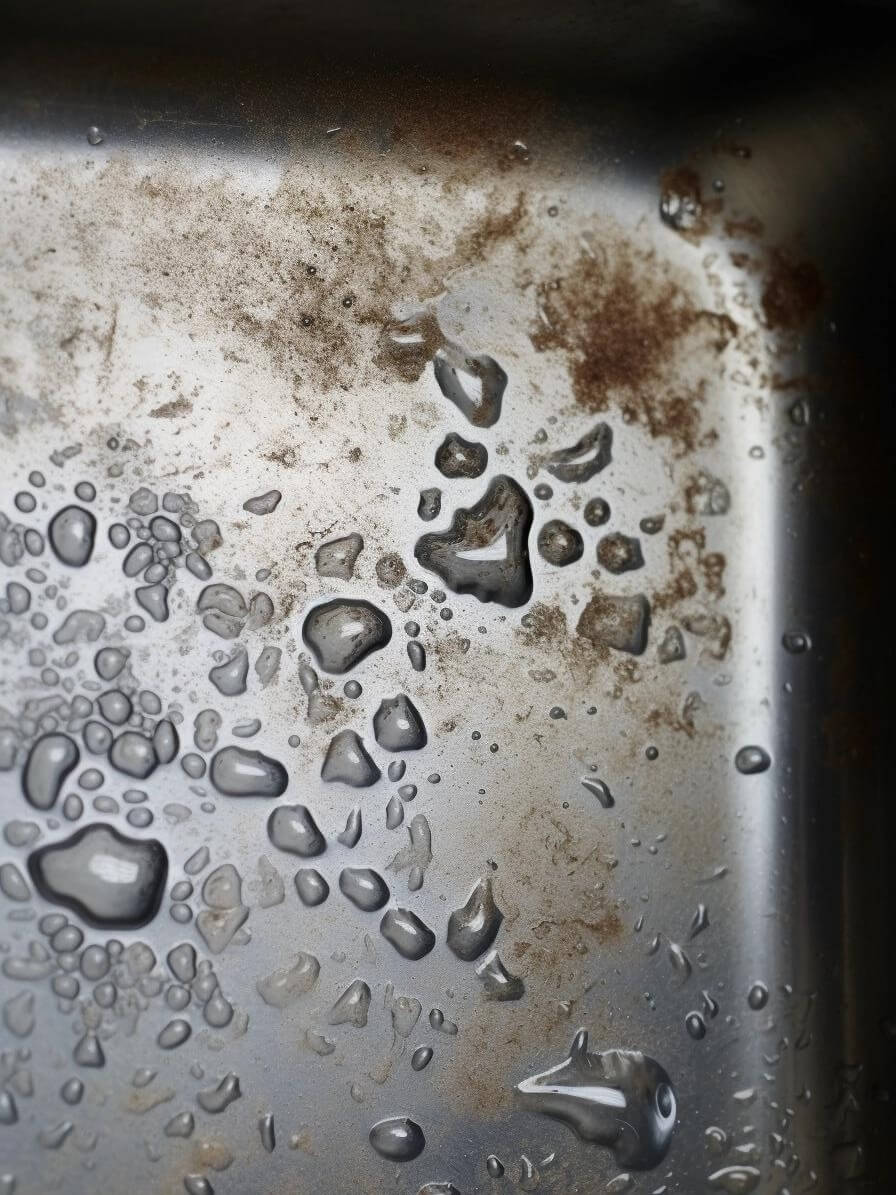
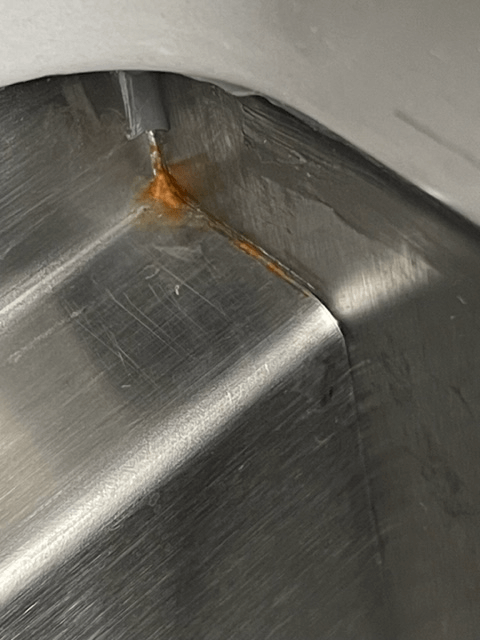
New construction or recent renovation. If rust appears within days of a new sink being installed, the likely cause is metal dust and particles from nearby construction work settling on the surface. These particles are often invisible at first but begin to oxidize quickly, showing up as rust spots scattered across the basin or concentrated in corners and edges. Keeping the sink covered during any renovation work is the simplest way to prevent this.
After months of regular use. Rust that develops over time is typically traced back to cast iron cookware or iron-rich well water. Cast iron pans are the most common culprit. When a cast iron pot or pan sits in the sink, it transfers iron particles onto the stainless steel surface. Over time, those particles rust, leaving stains that can look like ring-shaped outlines or general surface discoloration. Hard water with a high iron or chloride content can produce a similar effect.
In both cases, the rust is sitting on top of the sink’s surface, not coming from within it. That distinction is important because it means the staining is fully removable with the right cleaning approach.
The Exception: When the Chromium Layer Is Damaged
This scenario is worth understanding, even though it is uncommon.
If the chromium oxide layer is stripped away, the steel underneath loses its protection and begins to corrode from within. Unlike surface rust from external contaminants, this kind of damage cannot be fully reversed. You can clean the surface and slow further deterioration, but the protective layer does not regenerate once it has been significantly compromised.
The most common cause is prolonged exposure to harsh chemicals, particularly bleach and ammonia-based cleaners. These strip the chromium layer over time, especially if left to sit on the surface rather than being rinsed off promptly. Steel wool and highly abrasive scrubbing pads can also cause physical damage to the surface that makes it more vulnerable.
In rare cases where rust has been left untreated for a long time, pitting can occur. Pitting is cosmetic damage to the steel surface itself and is not fully removable, though regular care can prevent it from getting worse.
The practical takeaway is straightforward: avoid bleach, avoid harsh abrasives, and deal with rust spots promptly rather than letting them sit.
How to Remove Rust from Stainless Steel Sinks
For the vast majority of rust cases, meaning surface contamination from external sources, the staining is fully removable. The method you need depends on how severe the rust is.
Method 1: Homemade Remedies (Light Rust)
For fresh or light rust spots, everyday kitchen ingredients are often enough.
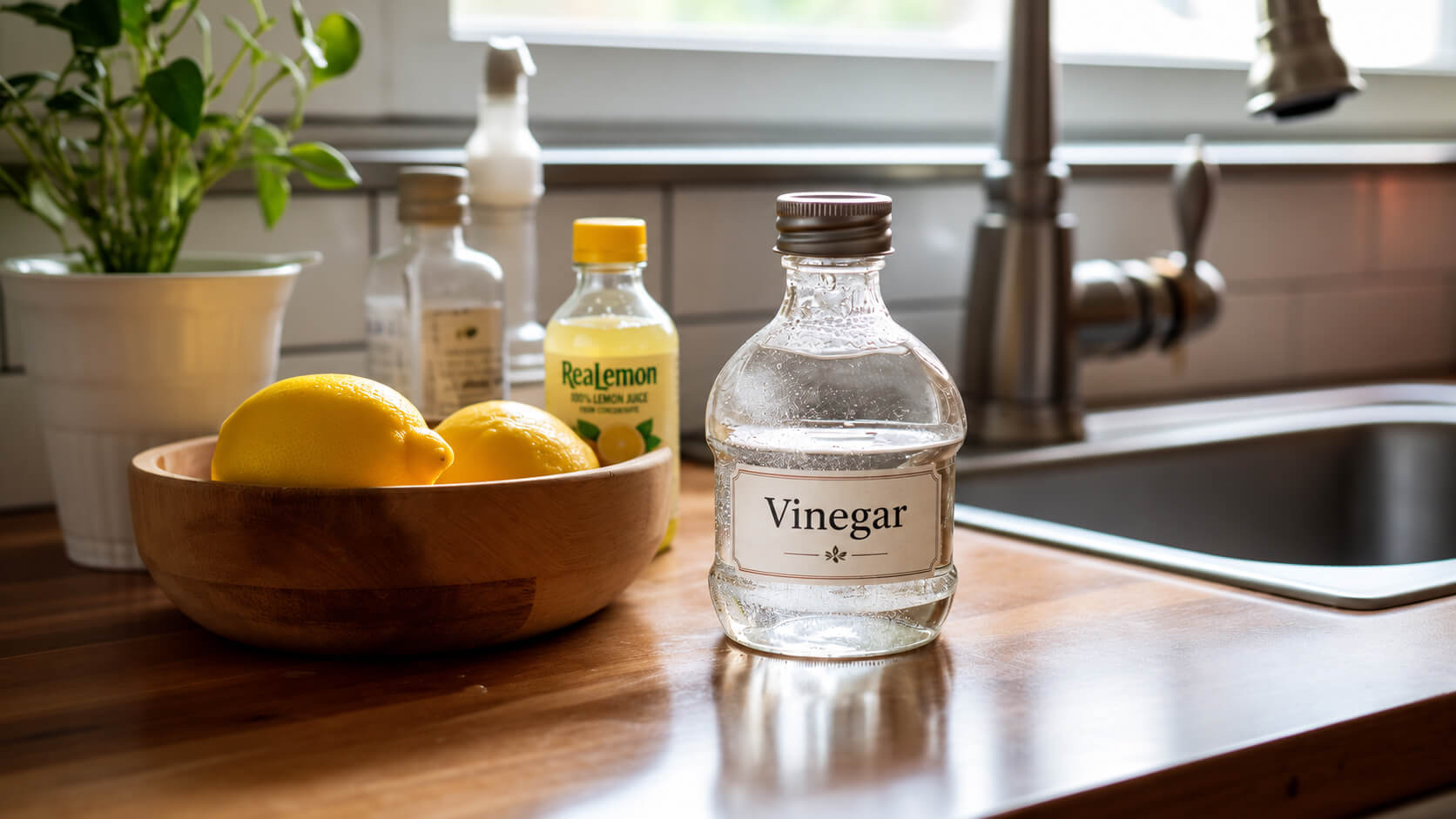
Start by applying white vinegar or lemon juice directly to the affected area and letting it sit for 30 minutes. The mild acidity helps loosen the rust and makes it easier to lift. After soaking, scrub gently with a soft cloth or non-abrasive sponge, always working in the direction of the grain. Rinse thoroughly with warm water and dry the sink completely.
For slightly more stubborn spots, make a paste from baking soda and water and apply it to the rust. Let it sit for 30 minutes, then scrub with a soft cloth in the direction of the grain. Baking soda is mildly abrasive enough to work through light rust without scratching the surface. Rinse and dry once done.
Do not use steel wool or bleach at any stage. Both will cause more damage than the rust itself.
Method 2: Use an Oxalic Acid Cleaner Like Bar Keepers Friend (Moderate Rust)
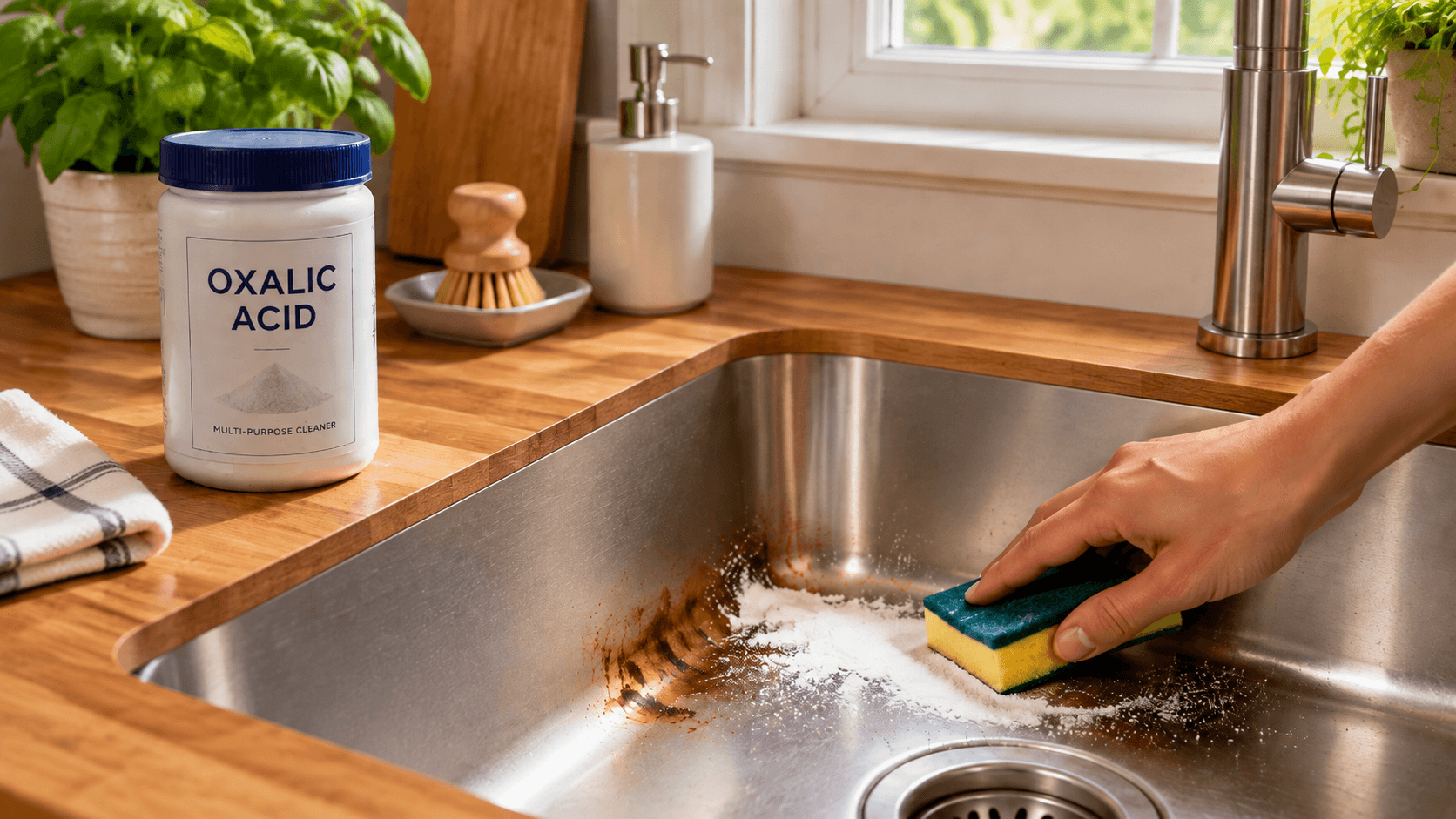
When homemade remedies are not cutting through, Bar Keepers Friend is the right step up. It contains oxalic acid, which breaks down rust effectively without damaging stainless steel when used correctly.
Make sure the sink is completely dry before you start. Use the original powder format rather than the liquid version for this application. Sprinkle it generously over the rusted area and let it sit for a few minutes to allow the formula to work into the staining. Then scrub with a non-abrasive pad, following the grain of the steel throughout.
If the rust is particularly stubborn, a medium-grade scrubbing pad can be used, but keep the pressure gentle. Once the rust has lifted, rinse the sink thoroughly to remove all traces of the cleaner, as any residue left on the surface can cause damage over time. Dry the sink completely after rinsing.
Method 3: Repeat Treatment for Heavy or Set-In Rust
For rust that has been sitting for a while or covers a larger area, a single pass may not be enough. In this case, repeat the Bar Keepers Friend treatment two or three times rather than increasing the abrasiveness of your scrubbing. Each pass will lift more of the staining without risking scratches to the surface.
If pitting is visible alongside the rust, the pitting itself cannot be removed, but cleaning away the rust thoroughly will prevent it from worsening. After treatment, applying a stainless steel polish helps seal and protect the surface going forward.
How to Prevent Rust from Forming on Stainless Steel Sinks
Most rust on stainless steel sinks is preventable with a few consistent habits.
Rinse and dry after every use. Water left sitting in the sink, particularly hard water with high mineral or iron content, accelerates surface contamination. A quick rinse followed by drying with a soft cloth takes less than a minute and makes a significant difference over time.
Do not leave cast iron in the sink. Cast iron pans should be hand washed and dried immediately rather than left sitting in the basin. Even a short period of contact is enough to transfer iron particles onto the surface.
Keep metal objects out of the sink when not in use. Wet sponges, steel utensils, and metal cans left sitting in the sink create the conditions rust needs to take hold.
Avoid bleach and ammonia-based cleaners entirely. For everyday cleaning, mild dish soap and warm water are sufficient. For deeper cleaning, baking soda or Bar Keepers Friend are the right choices.
During renovations, cover the sink. If any construction or remodeling work is happening nearby, keep the sink covered to prevent metal dust and particles from settling on the surface.
Conclusion
Rust on a stainless steel sink is almost always a surface problem, not a structural one. The sink itself is not failing. What you are seeing is contamination from cast iron, metal particles, or hard water minerals sitting on top of a surface that is otherwise doing its job. With the right cleaning approach, it comes off completely.
The only situation that warrants real concern is damage to the chromium layer, and that is something you largely control by avoiding harsh chemicals and abrasive cleaning tools. Keep bleach away from the sink, deal with rust spots when you notice them rather than letting them sit, and the surface will hold up well for years.
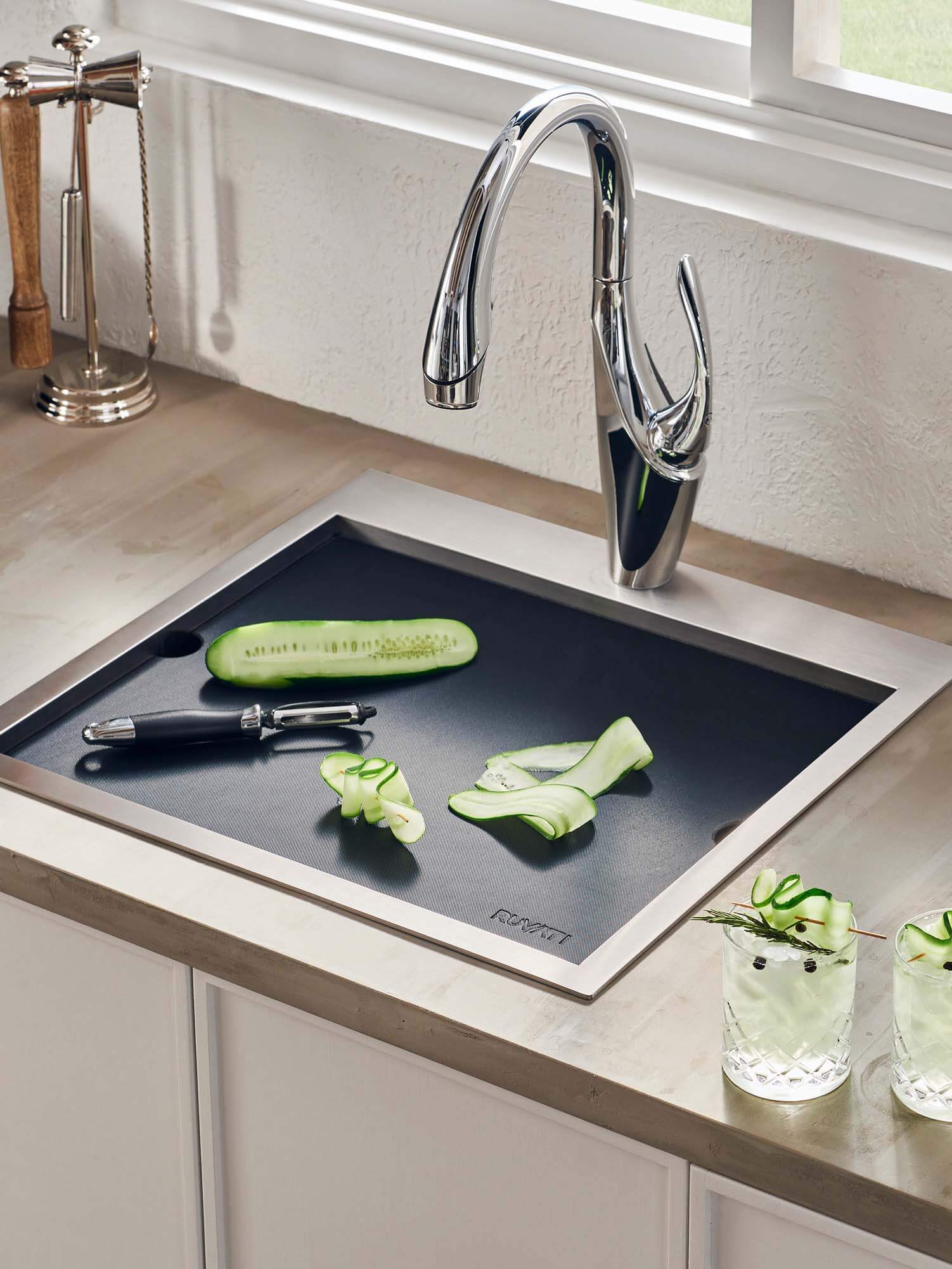


Stainless steel is one of the most durable materials for kitchen sinks. For almost a century, stainless steel sinks have been the sink of choice for American kitchens.