What is a Slope Bottom Sink?
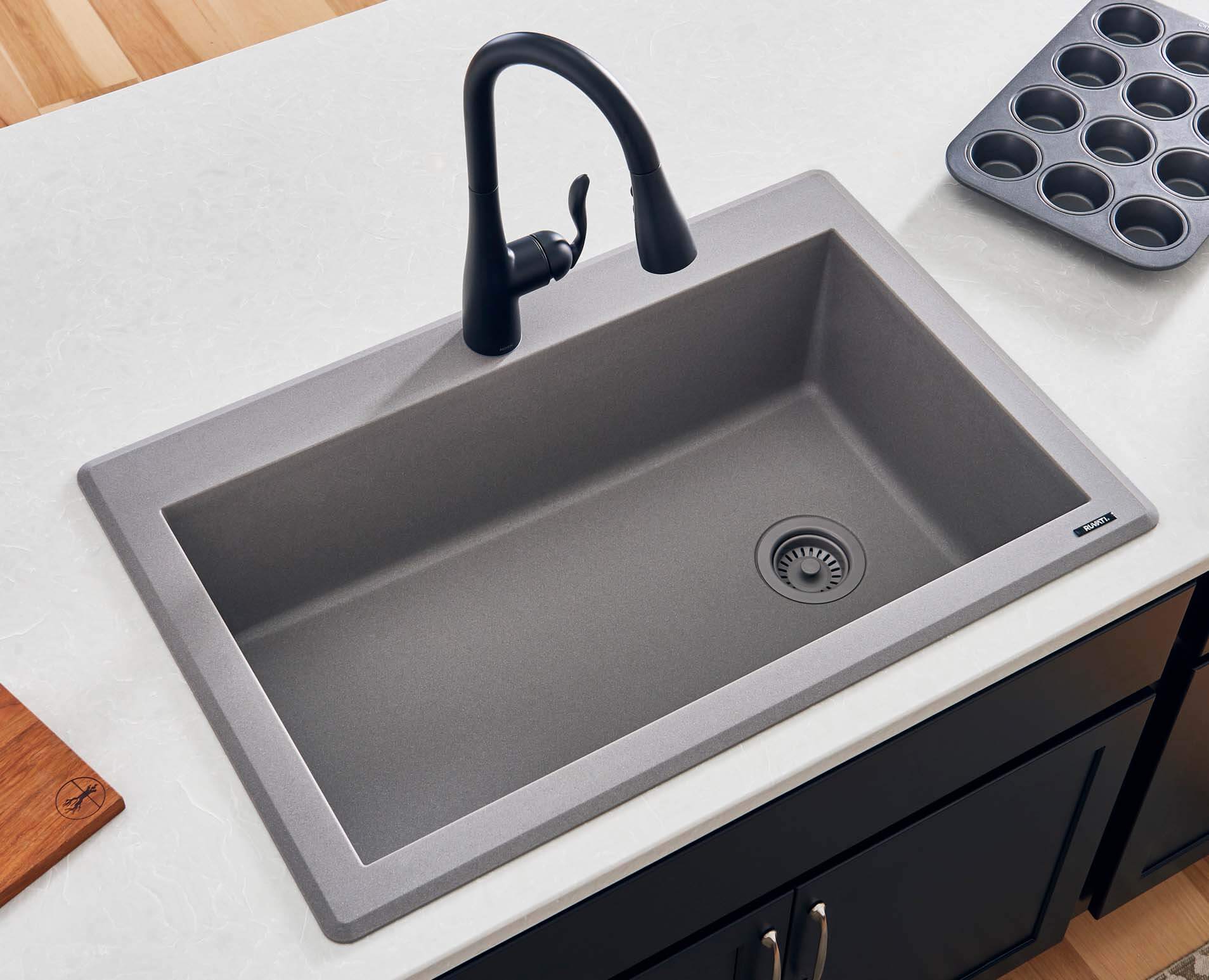
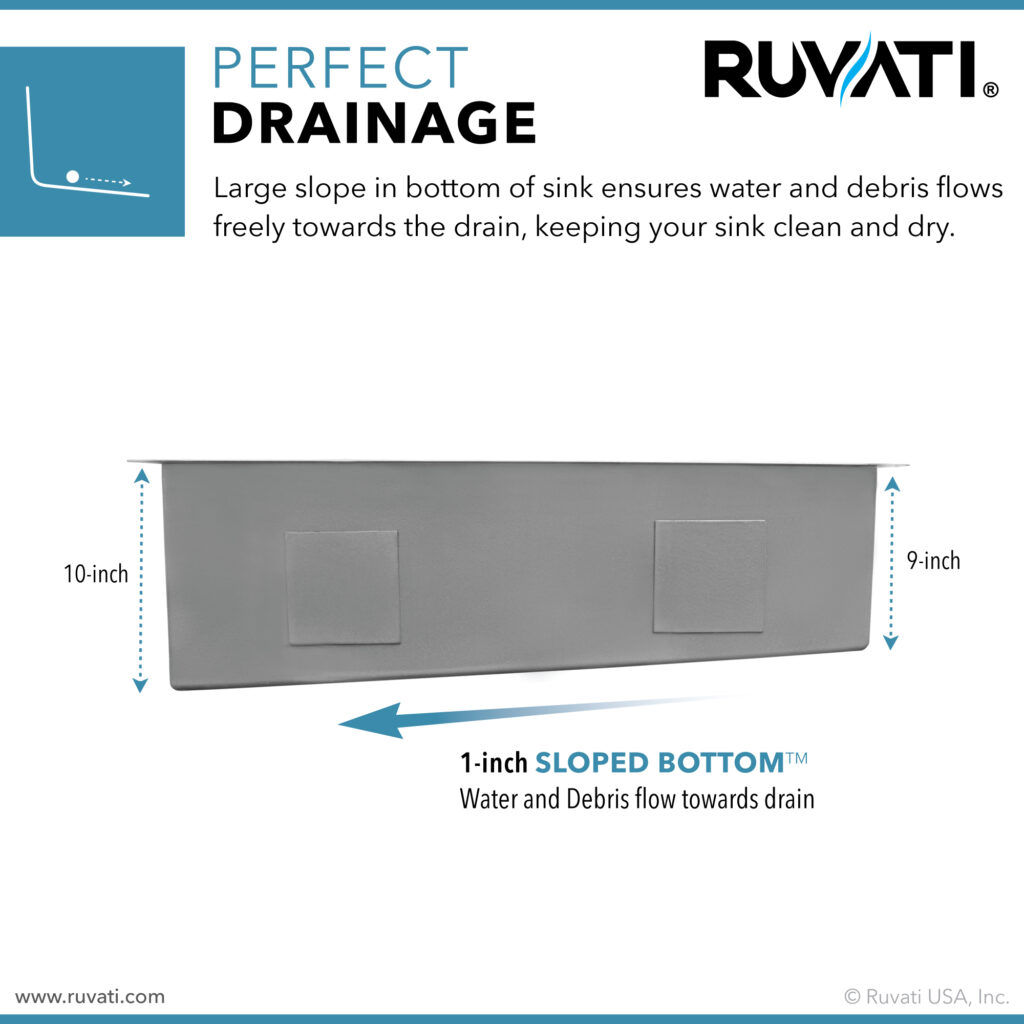
Slope-bottom sinks are special sinks by Ruvati USA that have a sloped bowl. The bowl starts high at one end and dips into a slope towards the other end, where the drain is situated.
Unlike slanted sinks (in which the slope extends from the near edge to the far end), slope bottom sinks have their incline from left to right.
Slope Bottom Sinks | Special Offerings by Ruvati
Our slope bottom sinks are unique and one-of-a-kind. We blend our expertise and quality with uniqueness to present sloped sinks in various sizes and finishes.
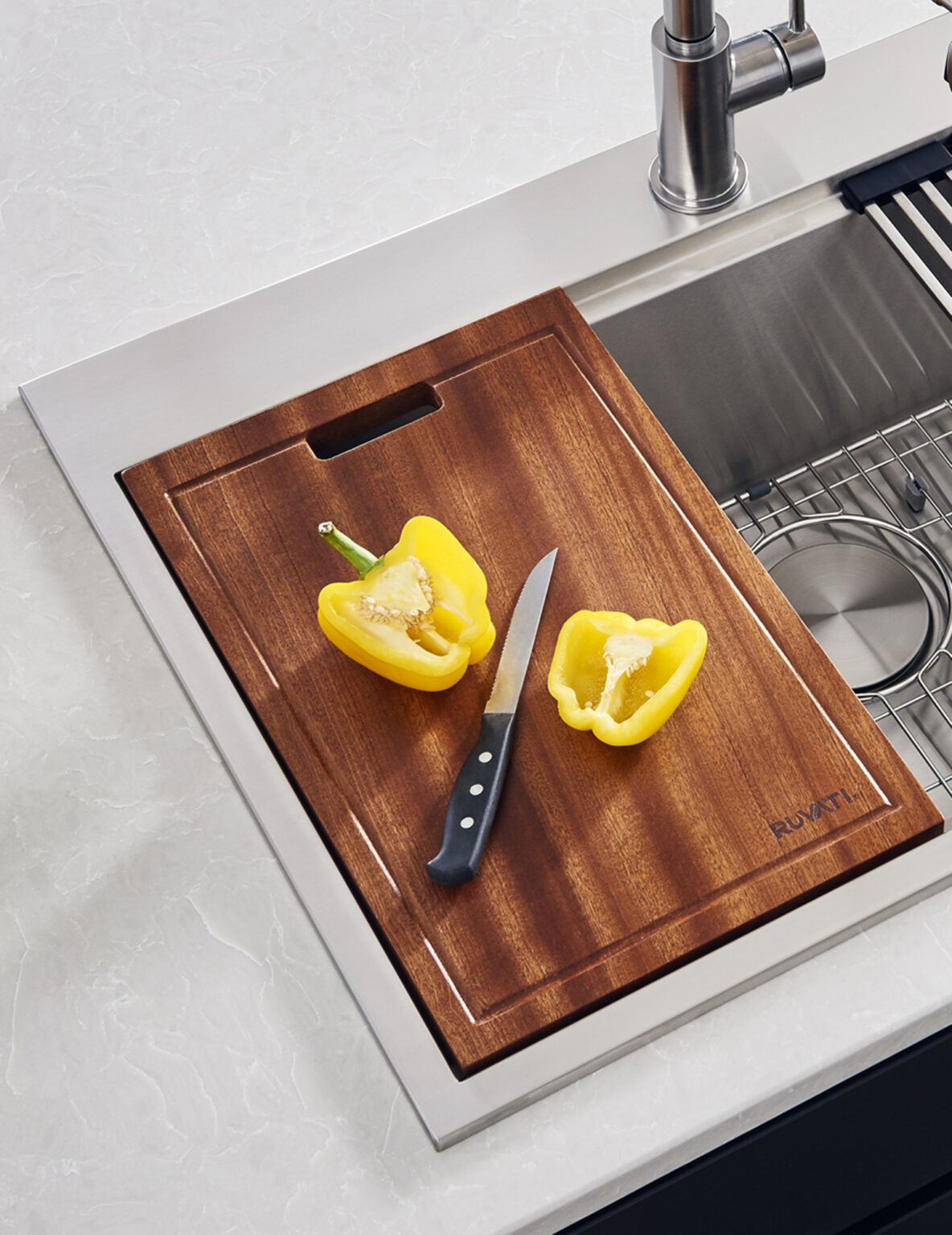
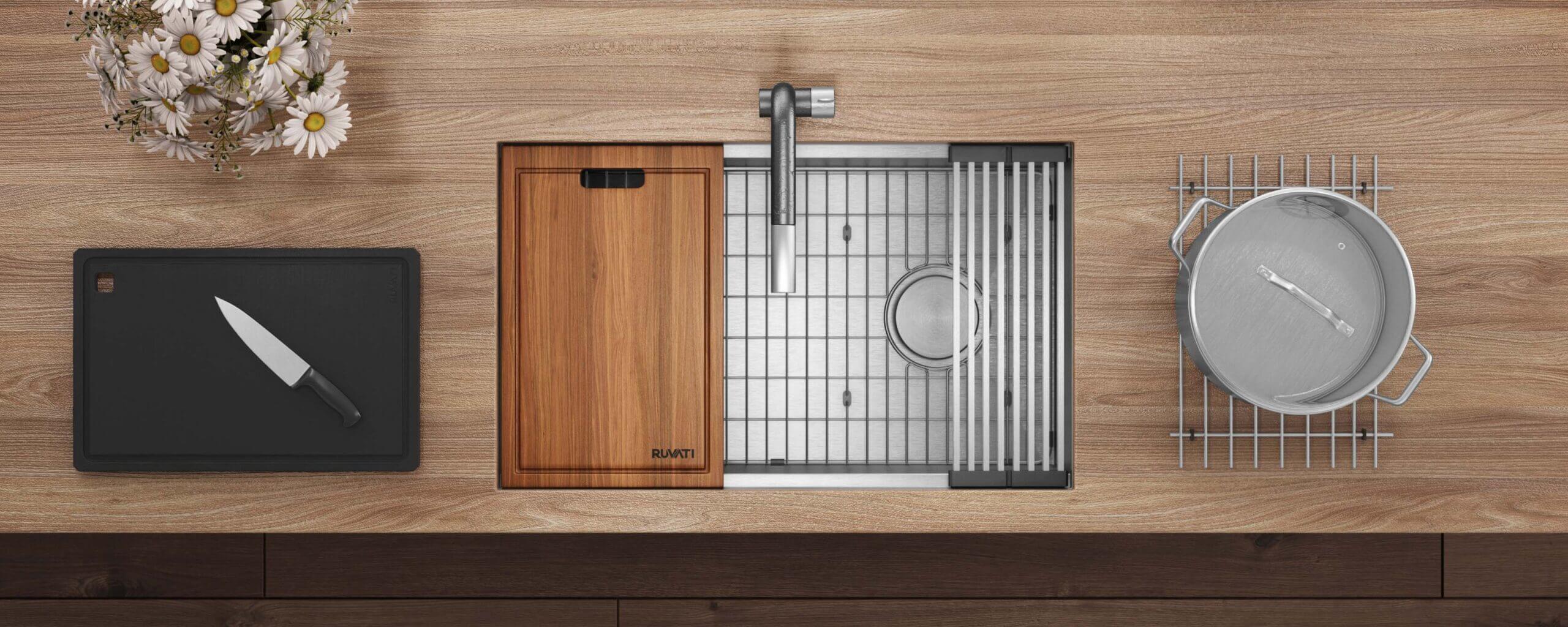
In our range of slope bottom sinks, you’ll find both normal bowl sinks as well as workstation designs that let you use compatible accessories such as cutting boards and steel grids.
What Are the Benefits of a Slope Bottom Sink?
There are a lot of different benefits that you can enjoy with a slope bottom sink, such as:
-
Improved Drainage
The main purpose of the sloped sink is to improve drainage. The water from the faucet quickly rushes to the offset drain due to the incline. There is no accumulation of water anywhere else (as can sometimes happen with a flat-bottom sink).
With water running smoothly into the bowl and straight into the drain, you can perform your tasks easily. You can do the dishes and wash ingredients for meal prep without worrying about slow drainage causing unnecessary holdups.
-
Less Grime and Build-Up
Since the sloped design forces the water into the deep end, towards the drain, there is no accumulation that can cause grime and scum to build up. This keeps the sink clean for longer. You also don’t have to clean it as intensely as a normal sink since there is less scrubbing required.
Used water from washing dishes and produce contains residue that hardens/clings to the bowl surface to become the dreaded buildup. However, for this to happen, it’s necessary for the water to stand still for some time.
A sloped sink doesn’t allow this to happen.
-
More Hygienic
Standing water in a sink becomes a hygiene concern. A sloped sink eliminates this problem as well. You don’t have to place your dishes in the sink just to have them submerged in the water that has made contact with food remains, grease, or soap scum.
-
Less Water Consumption
When using a normal sink, you often have to turn the faucet on and guide the water flow to the edges/corners of the bowl to rinse off bits and debris from it. A lot of water is used in this process.
However, with a sloped sink, this problem doesn’t exist. The water automatically flows to one end and takes everything with it. As a result, you don’t have to spray water into every inch of the surface just to clean it.
-
Less Wear on Sink Finish
When there is no standing water in the sink, it means there is less stuff to erode the finish on the bowl. You can enjoy a lustrous look on your sink for much longer due to the sloped design.
Factors to Consider About Slope Bottom Sinks
Although there are a lot of benefits and perks to these sinks, there are also some not-so-favorable factors that you should consider as well. Of course, no product is perfect, and it helps to have a good idea of both sides of the equation: the upsides and the downsides.
-
Sloped Design Can Cause Dishes to Slide
The sloped design causes water to slide towards the drain, sure. But it also causes other things placed in the bowl to slide as well.
If you’re washing dishes, for example, and you place a somewhat delicate plate in the bowl, it could slide down and hit the other end. Although the impact won’t be significant, it can still damage fragile items.
It can take some time before you get used to these sinks enough to avoid these types of mistakes on instinct. But until that time comes, you have to be very careful.
-
Not Ideal for Placing Stuff
Sinks are often used as a “mess-able” place in the kitchen where you drain pasta, cool utensils off, fill pots, and so on.
In a normal flat bowl, it’s very easy to do these types of tasks. However, a sloped design doesn’t allow things to be placed steadily in the bowl.
If you rest a pot in the bowl to fill it with water, you might have to hold it with one hand so that it doesn’t start moving down the slope.
A cutting board or colander placed in the sink may end up sliding down, too.
A lot of things that you usually do in a normal sink without a second thought aren’t going to be as easy in a sloped sink because of this particular caveat.
-
Particular Wear/Dirt Around the Drain
We mentioned in the “Benefits” part of this article that there is less accumulation in the bowl, which causes less wear to the sink surface and reduced buildup.
However, there’s one place in the sloped sink bowl where this benefit doesn’t apply, and that is the drain area.
When the water rushes down to the drain, it can swirl in place for a little bit before going down the drain. This can cause scum to build up, along with white mineral deposits.
In essence, while you don’t have to worry about cleaning much of the sink bowl’s surface, you do have to pay attention to the area around the drain.
-
Cost
Sloped-bottom sinks are something of a prestige item. They are not very common and are sold somewhat rarely. Ruvati USA is one of the few brands that sell it.
Because of this, they can be quite expensive. They’re not ideal for someone who’s looking to replace or upgrade their sink on a budget.
For example, the Ruvati Veniso 27-inch Slope Bottom sink comes with a retail price of $400+.
How to Get the Most Out of Your Sloped Sinks
Here are some tips that you can follow to get the most out of your sloped-bottom sinks:
- Use a sink grid. A sink grid is a mesh-like structure made to sit at the bottom of the sink to offer protection to both the bowl and the items that are placed inside it. With a grid, you will also be able to prevent the items placed inside from sliding to the deep end and getting damaged.
- Make use of accessories. Many of the sloped-bottom sinks from Ruvati come with fitted accessories. These accessories include a steel grid, condiment bowls, and cutting boards. The inconvenience of having to place items inside the sloped bowl is eliminated if you simply use the accessories instead (which are all perfectly straight and snugly fitted in place).
- Have regular cleaning sessions. During the cleaning sessions, focus particularly on the drain area, as that is where the water usually collects for a short while before going down.
- When you’re done using the sink, always wipe down the surface and dry it if you can. This will help to further protect the finish.
- When washing dishes or produce, hold them over the raised part of the sink bottom. This will allow the water to flow naturally towards the steep end and carry away all the debris by itself. (The benefit of “less water consumption” that we mentioned earlier is only applicable if you use the sink in this manner.
Top Ruvati Products to Consider
Let’s take a look at some of the top Ruvati products that you can consider buying if you’re looking for a sloped-bottom sink.
Ruvati Veniso
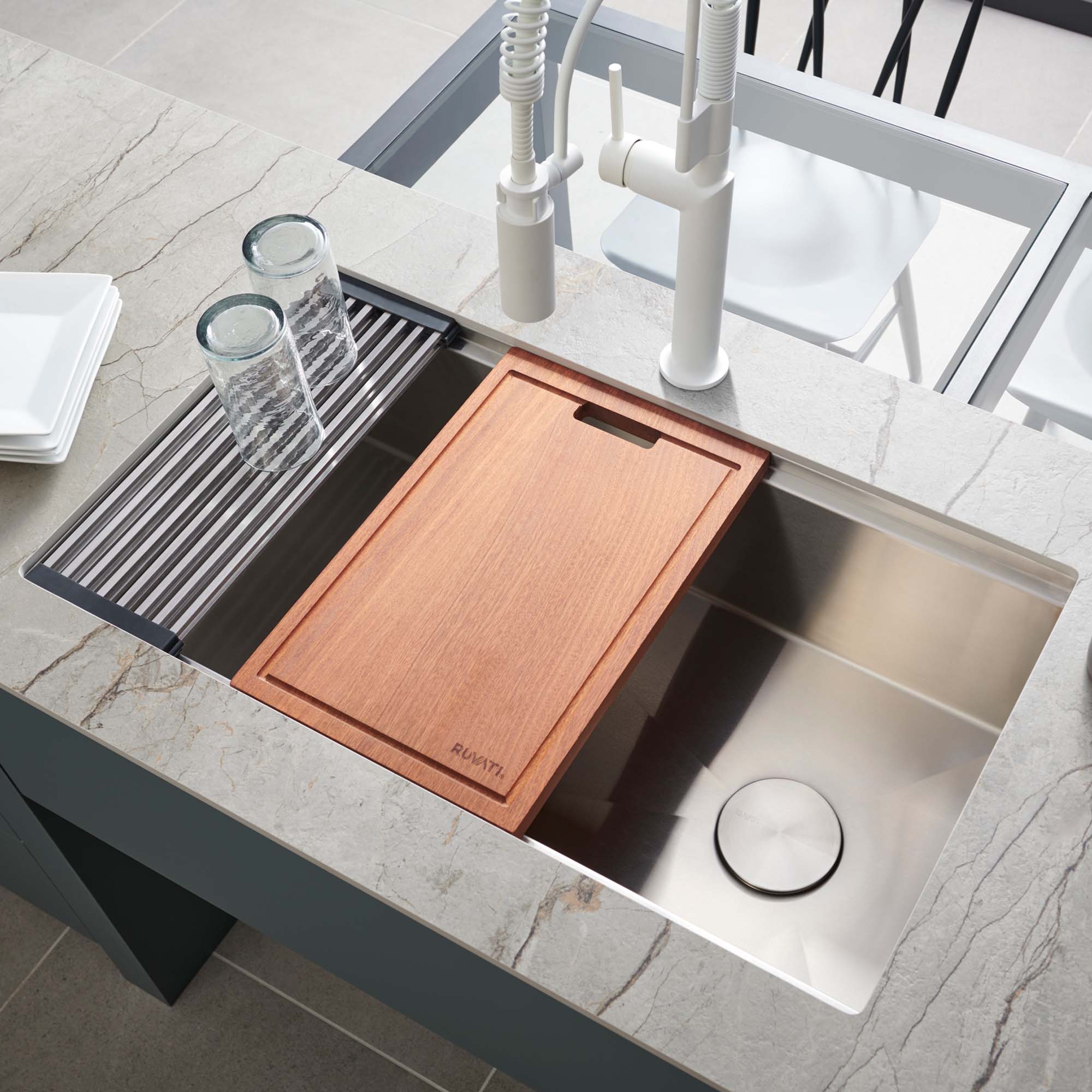
The Veniso workstation sink comes in a number of different size variations. It has built-in ledges that you can use to put the cutting board and steel grid.
Along with these two accessories, the Veniso sink also comes with a bottom sink grid that you can start using instantly to offer protection to your utensils (and to the sink’s bowl).
The 16-gauge stainless steel construction offers durability along with an aesthetic appearance. The material has a soundproof coating, which reduces the sound and clatter during your day-to-day tasks.
Ruvati Dual Tier
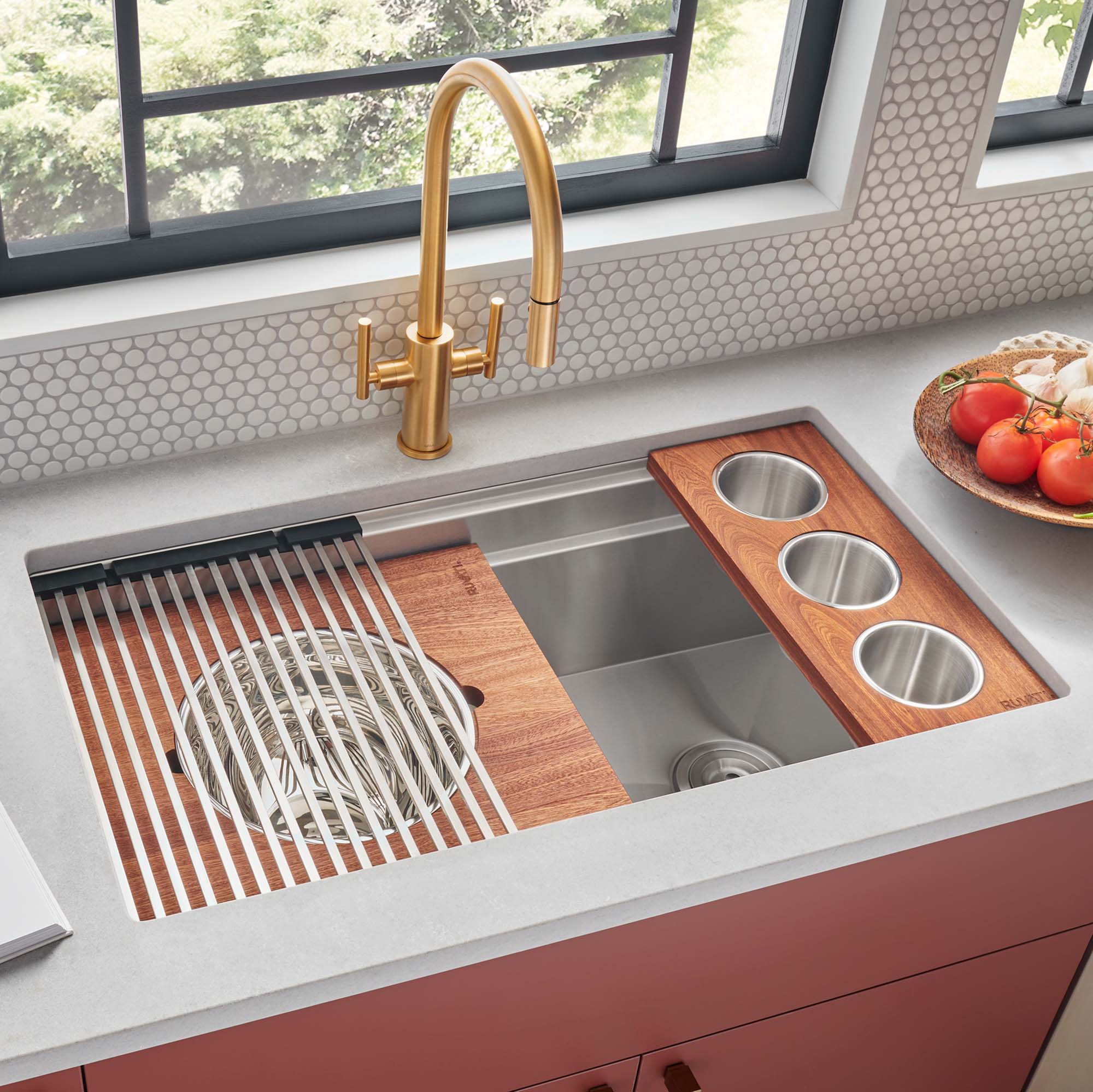
The Ruvati Dual Tier takes “accessorizing” to a whole new level. There are two ledges around the edge of the sink that you can use to place accessories, not just one. For example, it’s entirely possible for you to place the cutting board on the lower tier and the steel grid on the upper tier.
The Dual Tier sink gives you more options to perform your day-to-day kitchen tasks at the sink. It is ideal for “heavy” users who have to multitask a lot.
Ruvati Dual Tier Nova
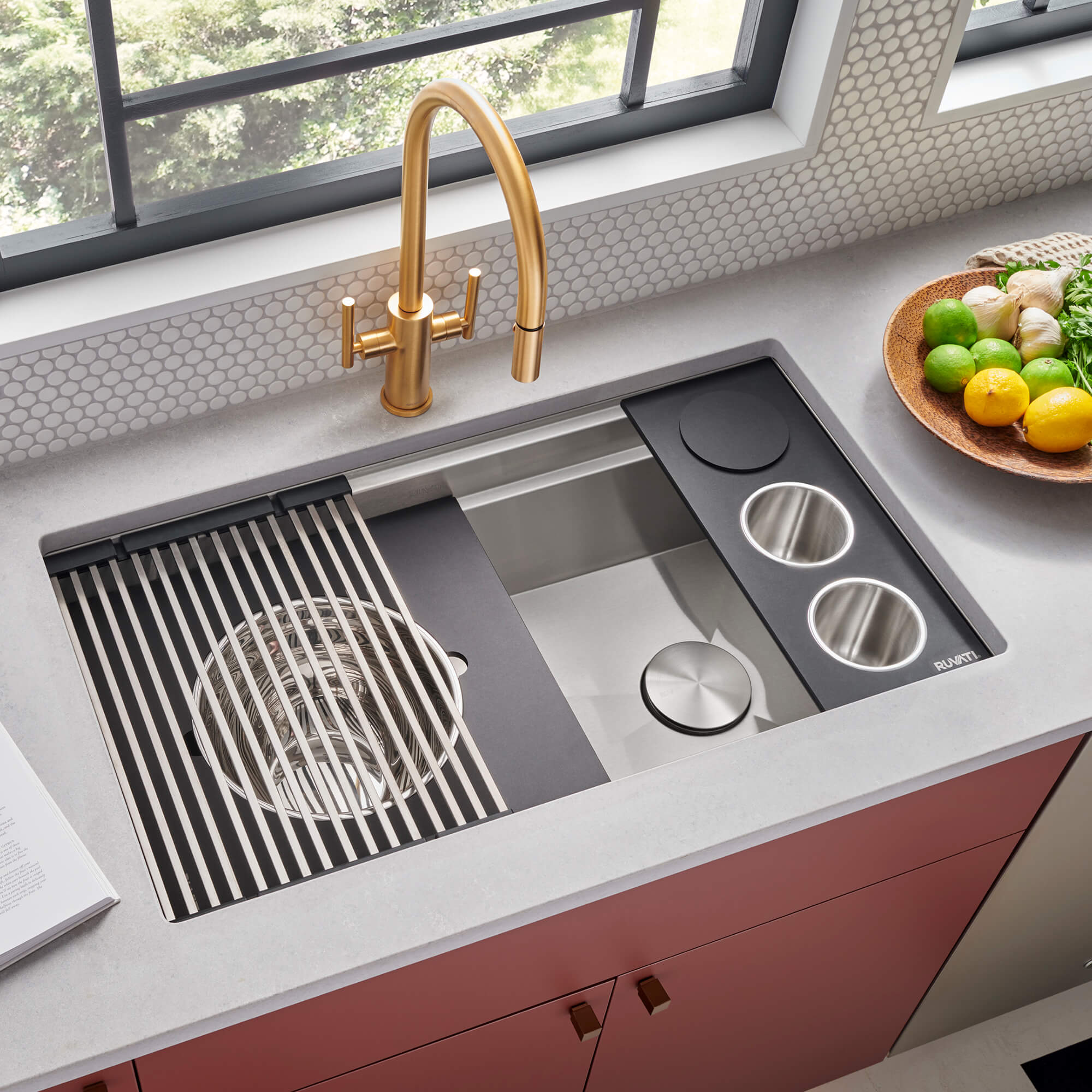
The Ruvati Dual Tier Nova features black composite accessories instead of stainless steel. If the theme of your kitchen is monochrome, you can go for the Ruvati Dual Tier Nova instead of the normal dual tier.
Other than the color/material difference, the rest of the sink design is the same. There are two levels that you can use to install the accessories, which include a cutting board, a steel grid, condiment bowls, and a mixer bowl.
Conclusion
Slope bottom sinks offer a lot of benefits. They can make day-to-day sink usage easier by improving water drainage and reducing cleaning sessions.
There are also a number of considerations that you need to make when using these sinks.
In the post above, we’ve covered not only the benefits but also the downsides of owning these sinks so that you can get the full picture before making your purchase.
All in all, the benefits outweigh the downsides, and it’s a great idea to buy a sloped-bottom sink if you can afford it.
Frequently Asked Questions About Sloped-Bottom Sinks
How steep is the slope in these sinks?
Usually, sloped-bottom sinks have a 1-inch height difference between the shallow and deep ends. This slope helps to ensure that while the water flows easily, it’s not steep enough to cause functional issues while the sink is in use.
Are there any complications in installing a sink with an offset drain?
No, there usually aren’t any problems and complications in installing a sink with an offset drain. Your plumber will be able to make the connection using the standard setup underneath the countertop.
How do I make sure that the water flow is properly directed for ideal drainage?
If you have a movable faucet, turn it so that the water falls on the shallow (raised) end. When washing or cleaning anything, do it on this side of the sink to ensure a smooth flow.
Sinks Featuring a Slope Bottom®
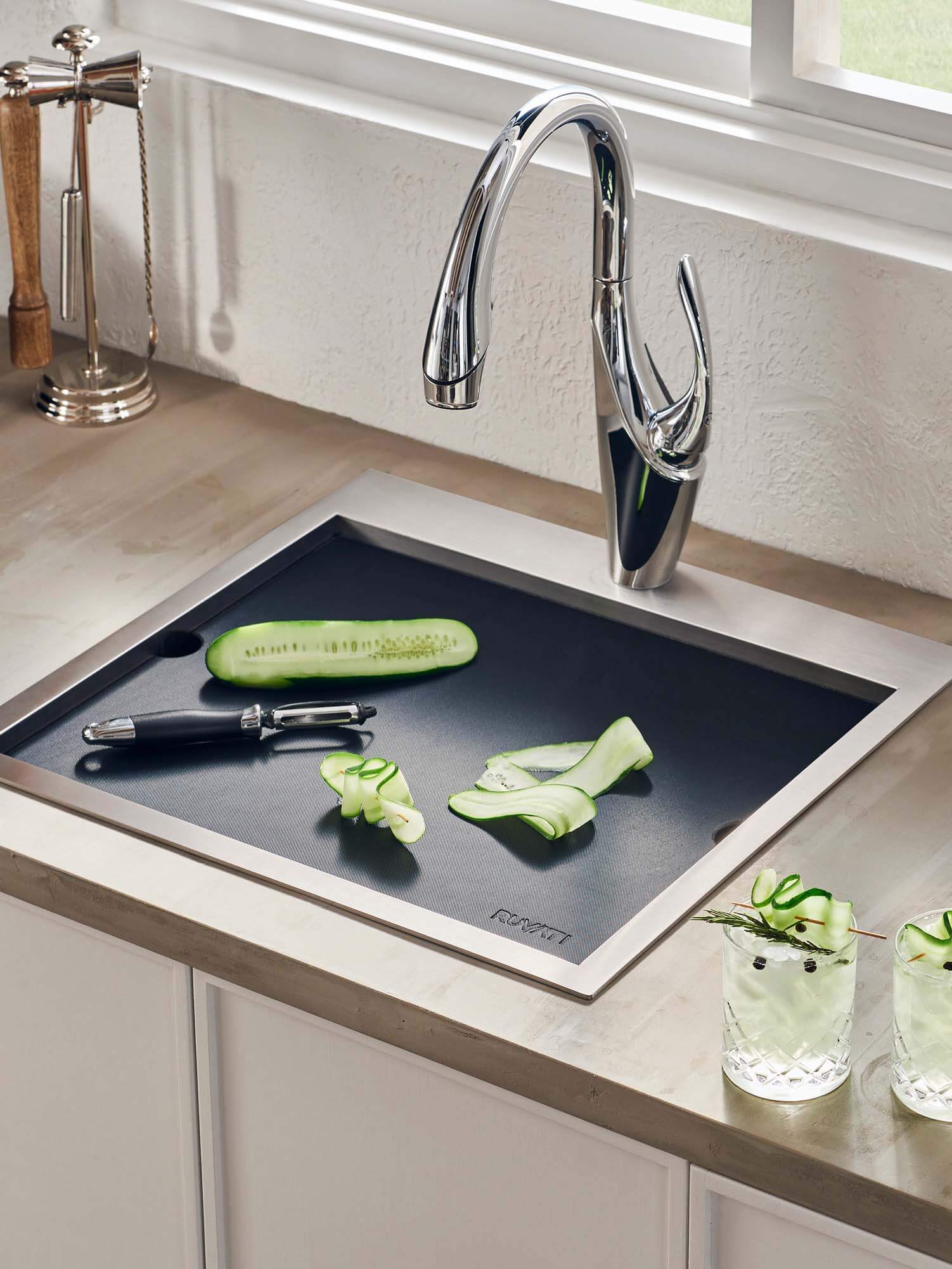
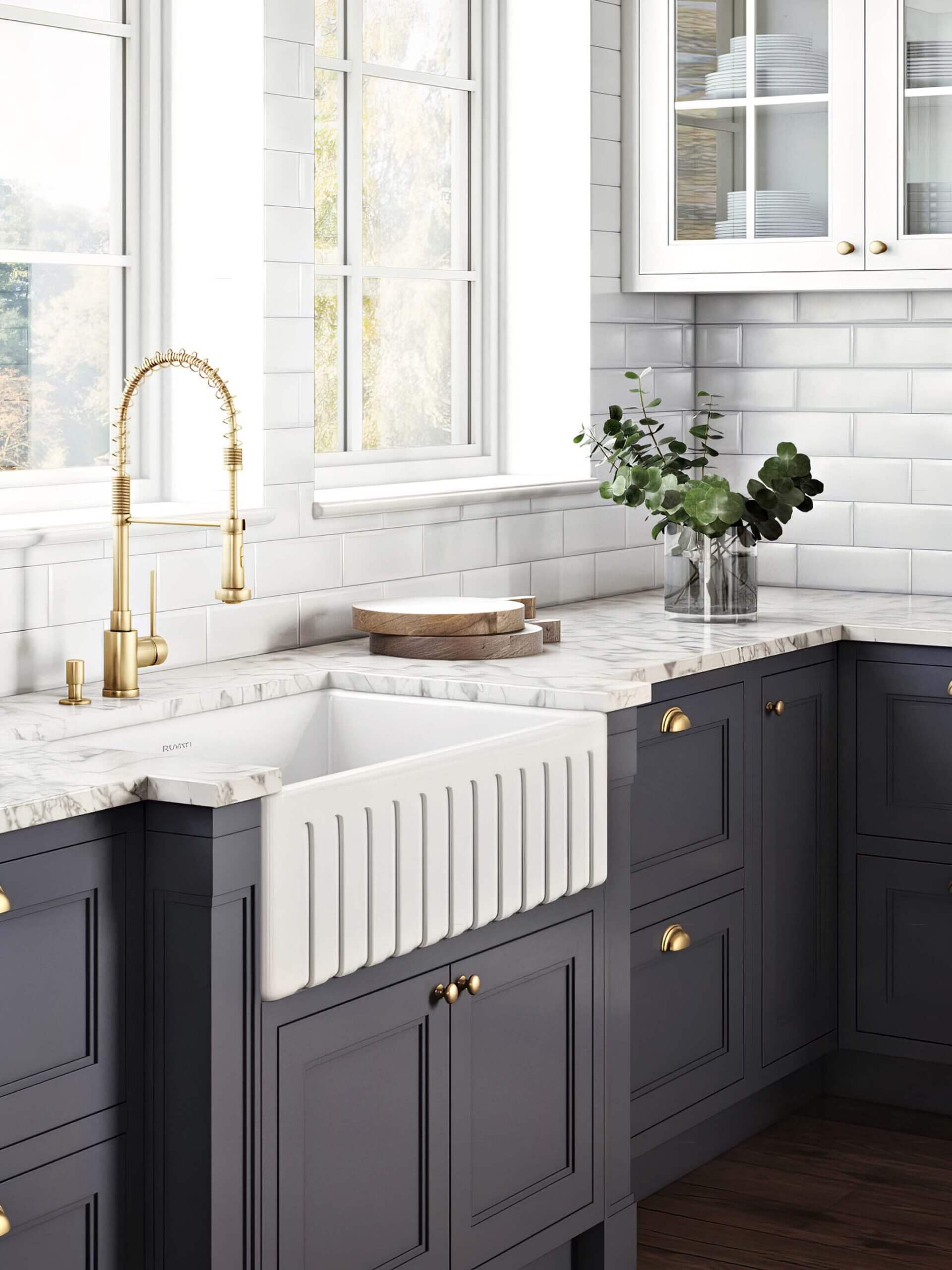
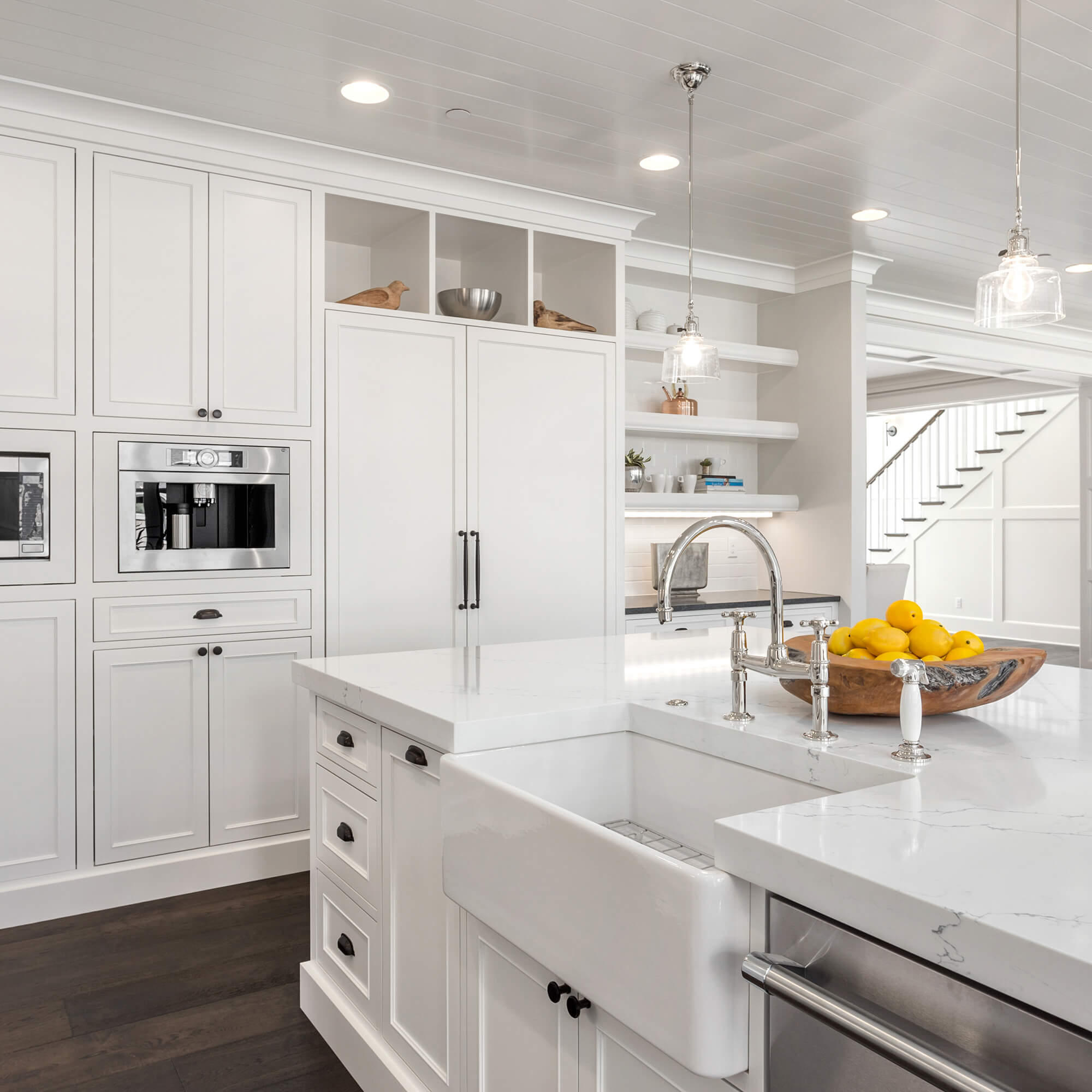

We believe in perfect craftsmanship and flawless function. From rustic farmhouse to modern contemporary, we have a sink that fits your home style. With a commitment to quality materials, design, and performance, we back all Ruvati sinks with a limited lifetime warranty.