Clean a faucet aerator by unscrewing it from the faucet tip, soaking it in white vinegar for at least 30 minutes to dissolve mineral deposits, then scrubbing it with a small brush. Rinse thoroughly and reattach. Clean every 3–6 months to maintain a steady water flow and prevent clogging.
Introduction
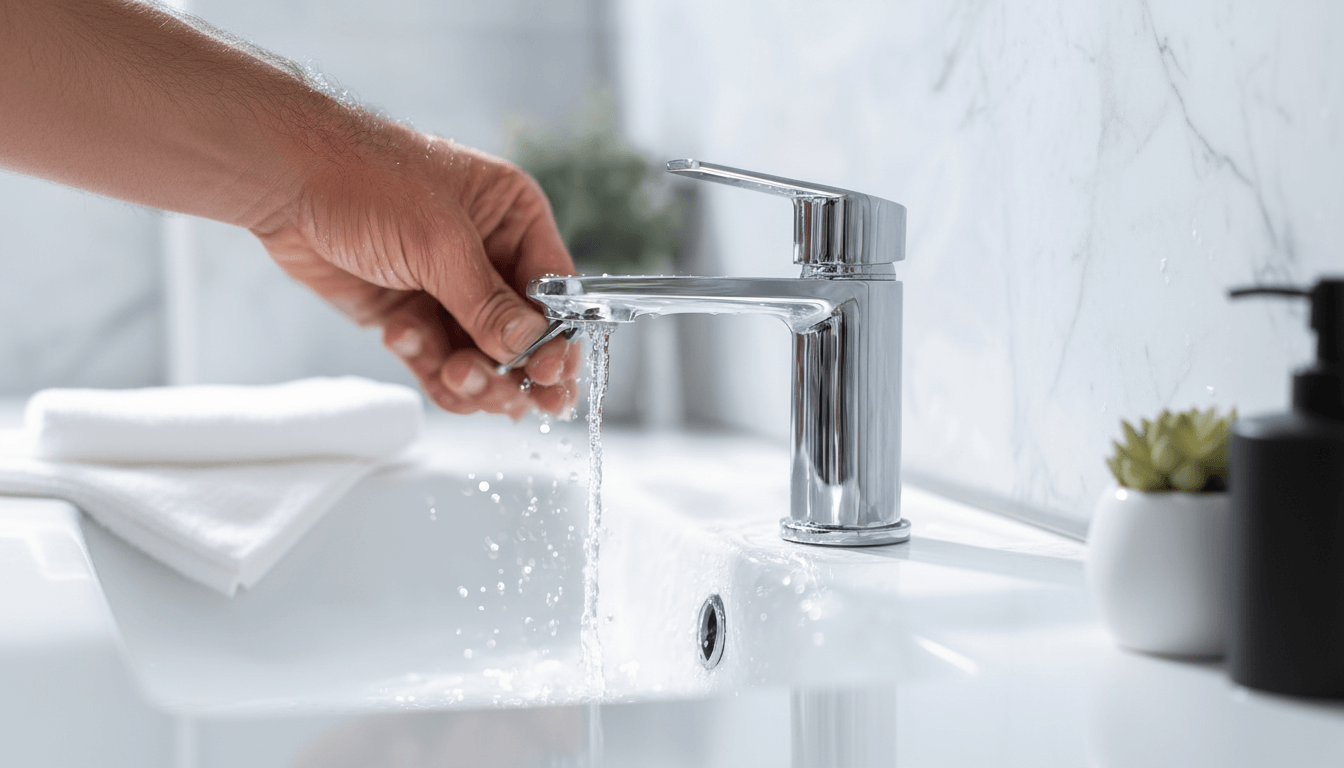
A faucet aerator is an important component of the faucet that helps ensure that the water flows evenly. Over time, the aerator can become blocked with debris and residue, which requires it to be cleaned. If the aerator is not cleaned, the flow of the water can become obstructed, and using the faucet can become troublesome.
We’re going to guide you on how to clean your faucet aerator with easy steps. The process is quick, simple, and doesn’t require a lot of skill.

Tools/Items Needed to Clean a Faucet Aerator
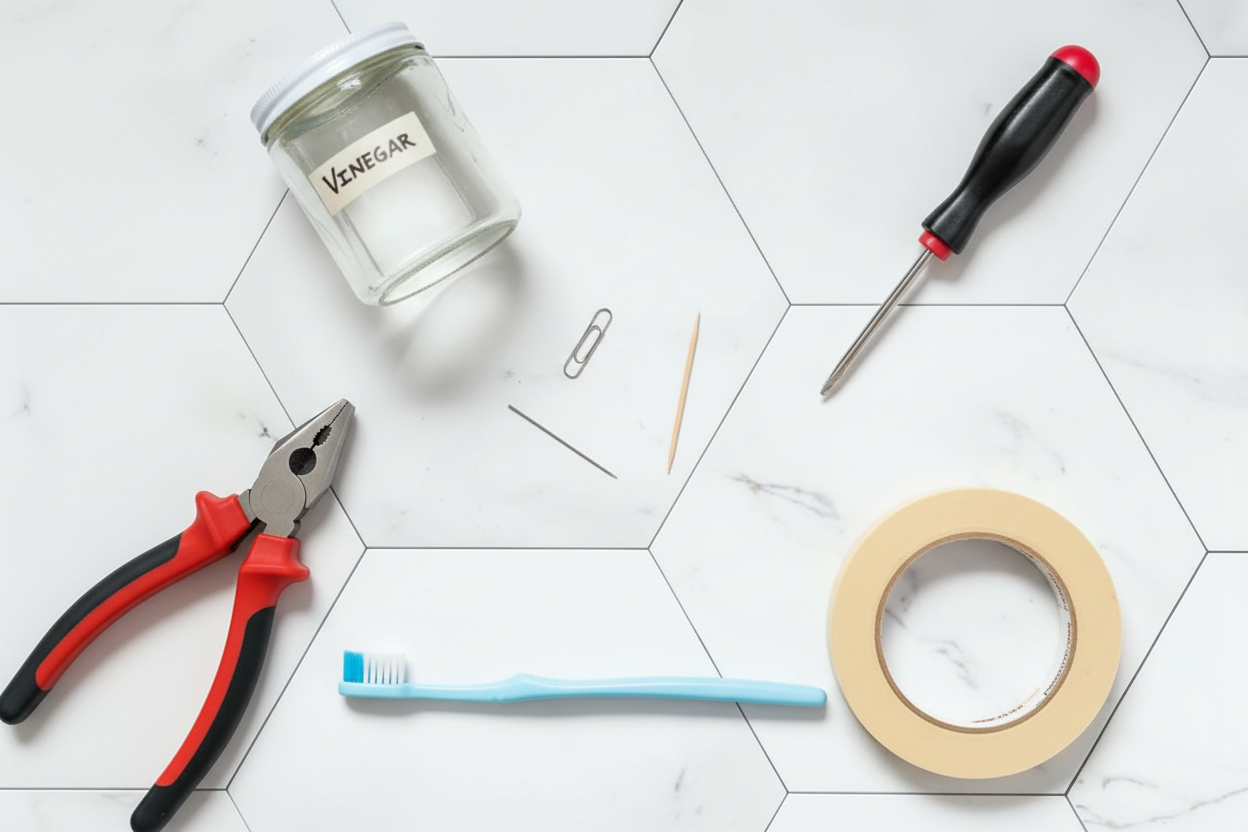
Here is a list of the tools/items that you need to clean your faucet aerator. We’ve explained the purpose of each item in front of it.
| Tool/Items | Description |
|---|---|
| Pliers | Pliers are needed to loosen the aerator if it is stuck or screwed on too tightly. |
| Electrical Tape/Heat Tubing | Electrical tape/heat tubing has to be applied to the plier jaws so that they don’t damage the aerator. |
| Screwdriver | The screwdriver is used to loosen bits of debris from the faucet and from the aerator assembly. |
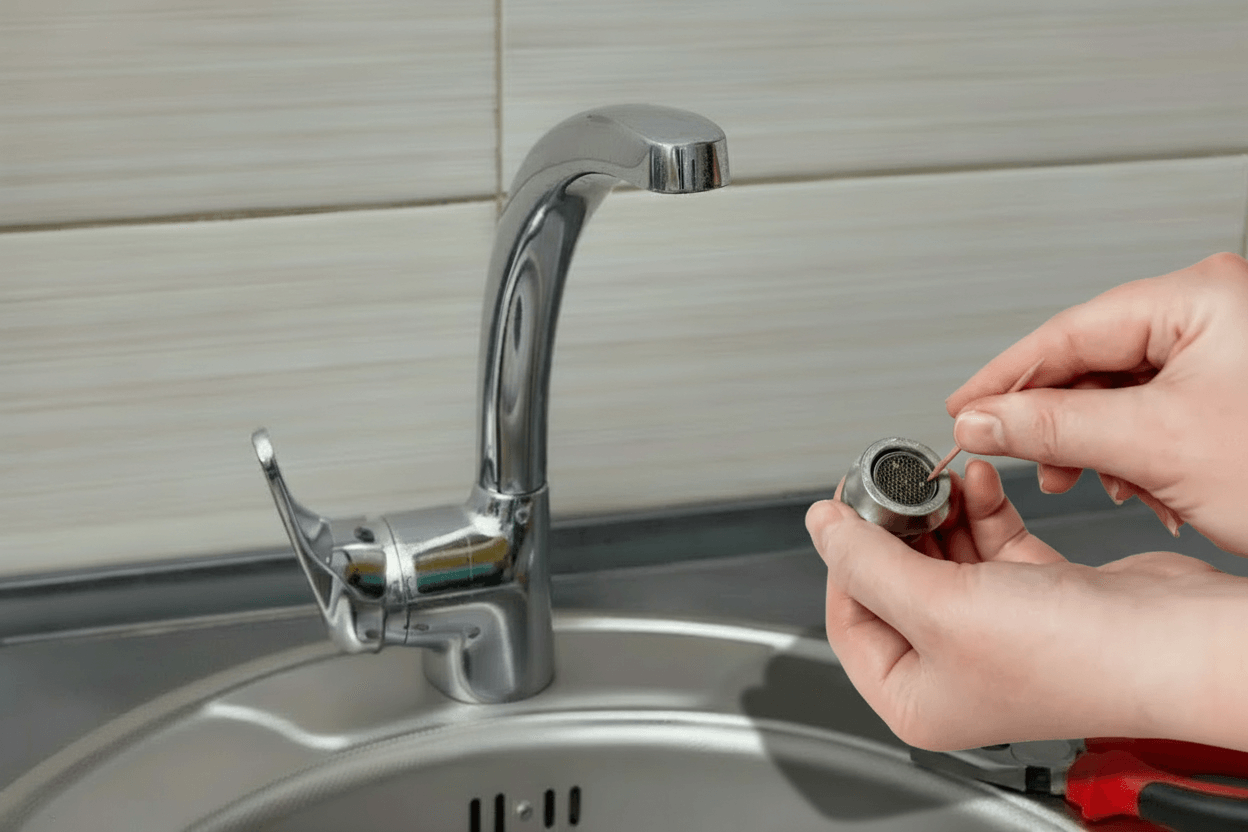
| Sewing Needle | A sewing needle is needed to open the holes of the aerator if they are closed due to debris. |
| Toothbrush | For cleaning purposes. |
| Vinegar | Vinegar is needed for softening and removing the mineral deposits from the aerator. |
Step-by-Step Guide for the Aerator Cleaning Process
Now that we’re done with the list of tools and materials that you need to clean your aerator, let’s get down to the process itself.
Here are the steps that you need to follow:
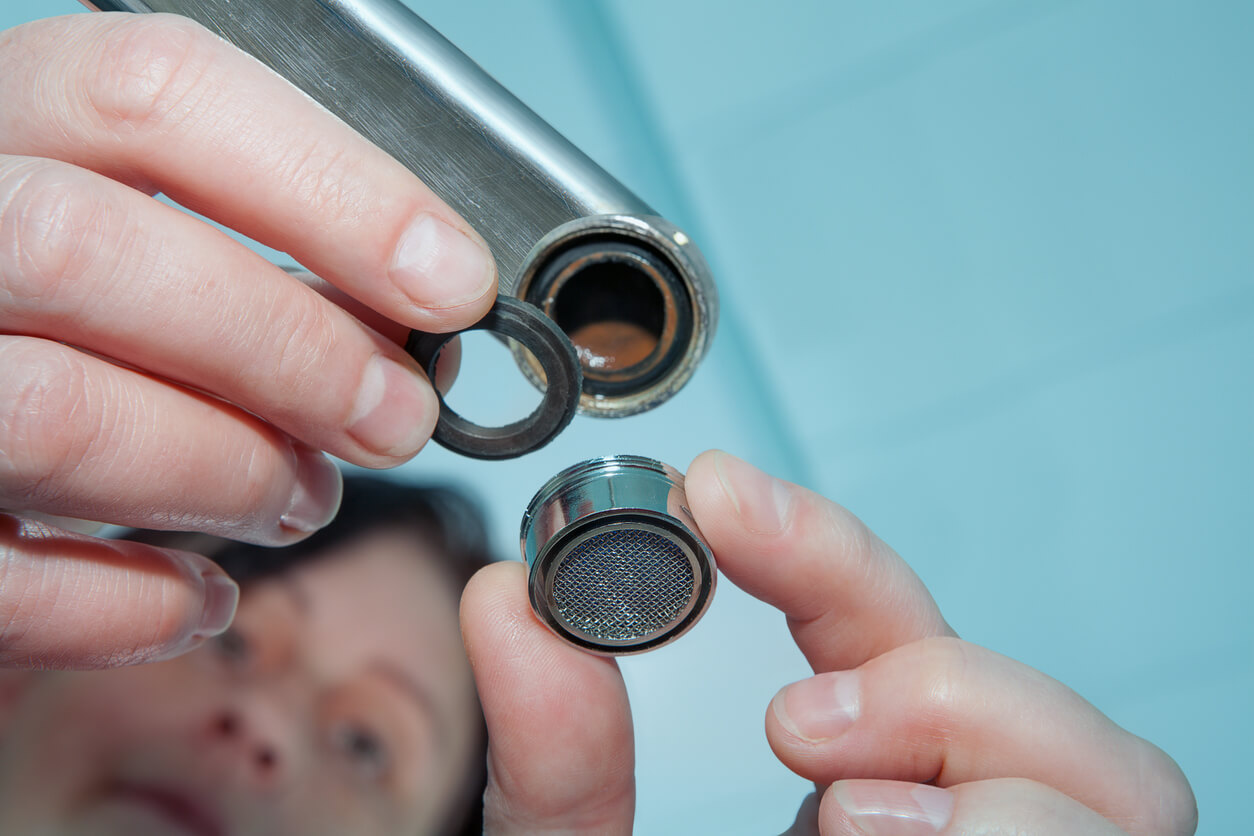
Step 1: Unscrew and remove the aerator
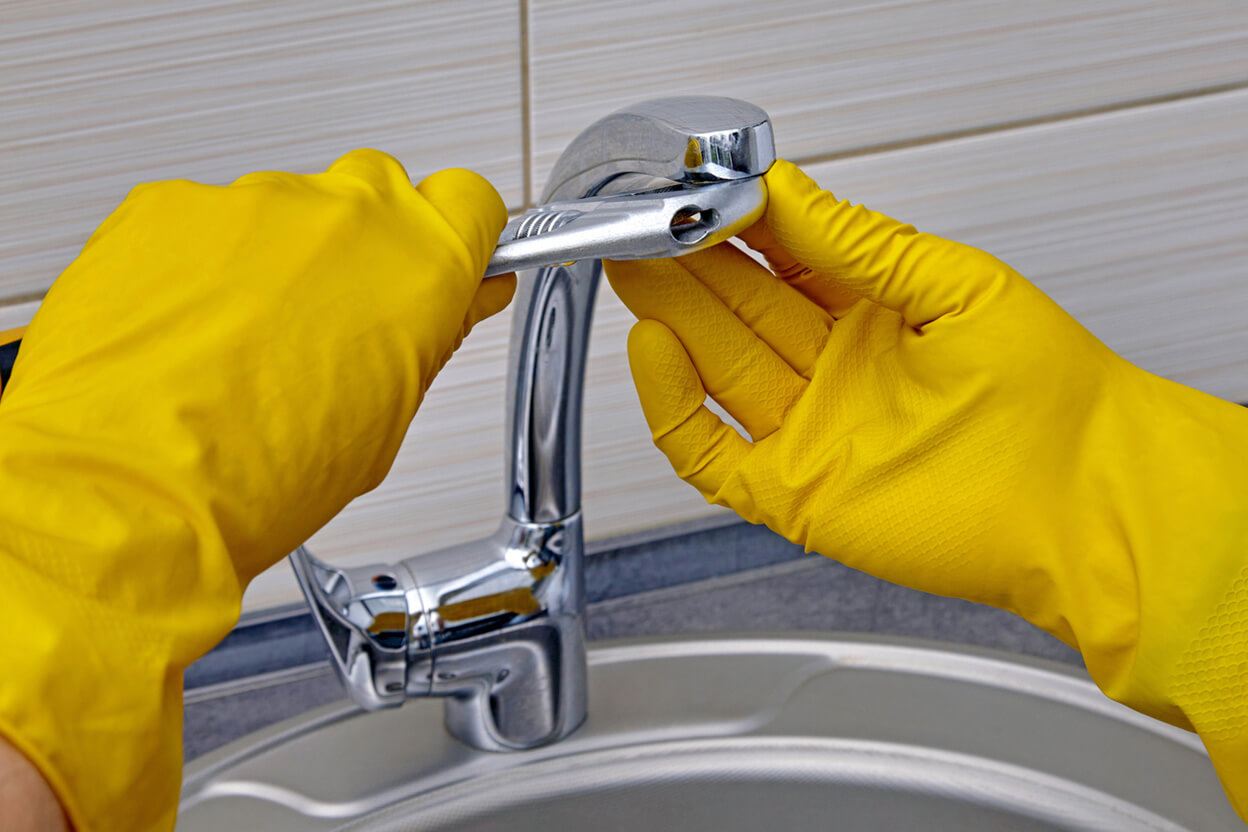
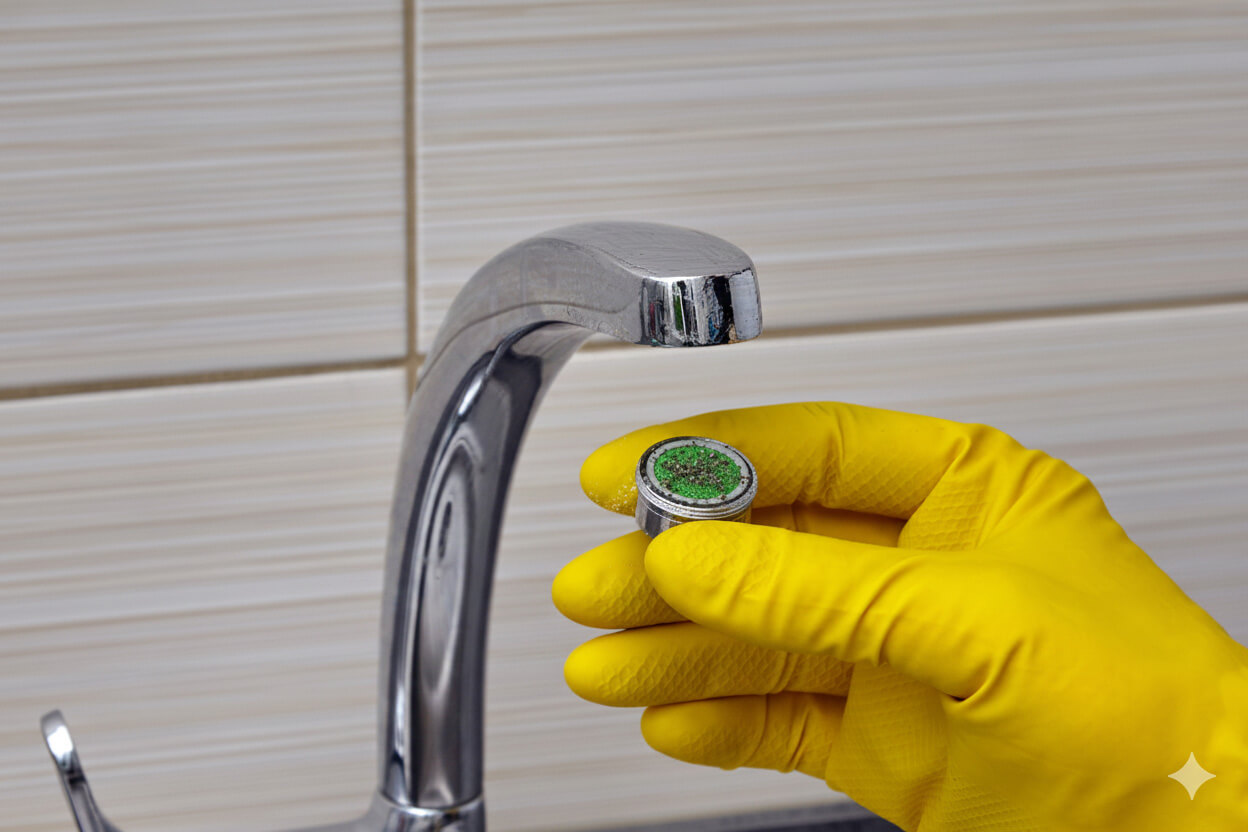
The first thing that you need to do is remove the aerator from the faucet.
Aerators can be easily removed once they are unscrewed from the faucet opening.
You can unscrew the aerator by hand. However, in some cases, it can be stuck due to the mineral deposits holding it in place.
That is where the pliers come in.
You can use the pliers to loosen the aerator to the point where you can turn it by hand. However, when using the pliers, you have to make sure not to break or damage the aerator.
Take the electrical tape and wrap it multiple times around each jaw of the plier. The rolls of tape will provide a cushioning effect to the aerator.
You can also use heat-shrink tubing for this purpose, as it provides the same cushioning effect.
Step 2: Clean out the faucet spout
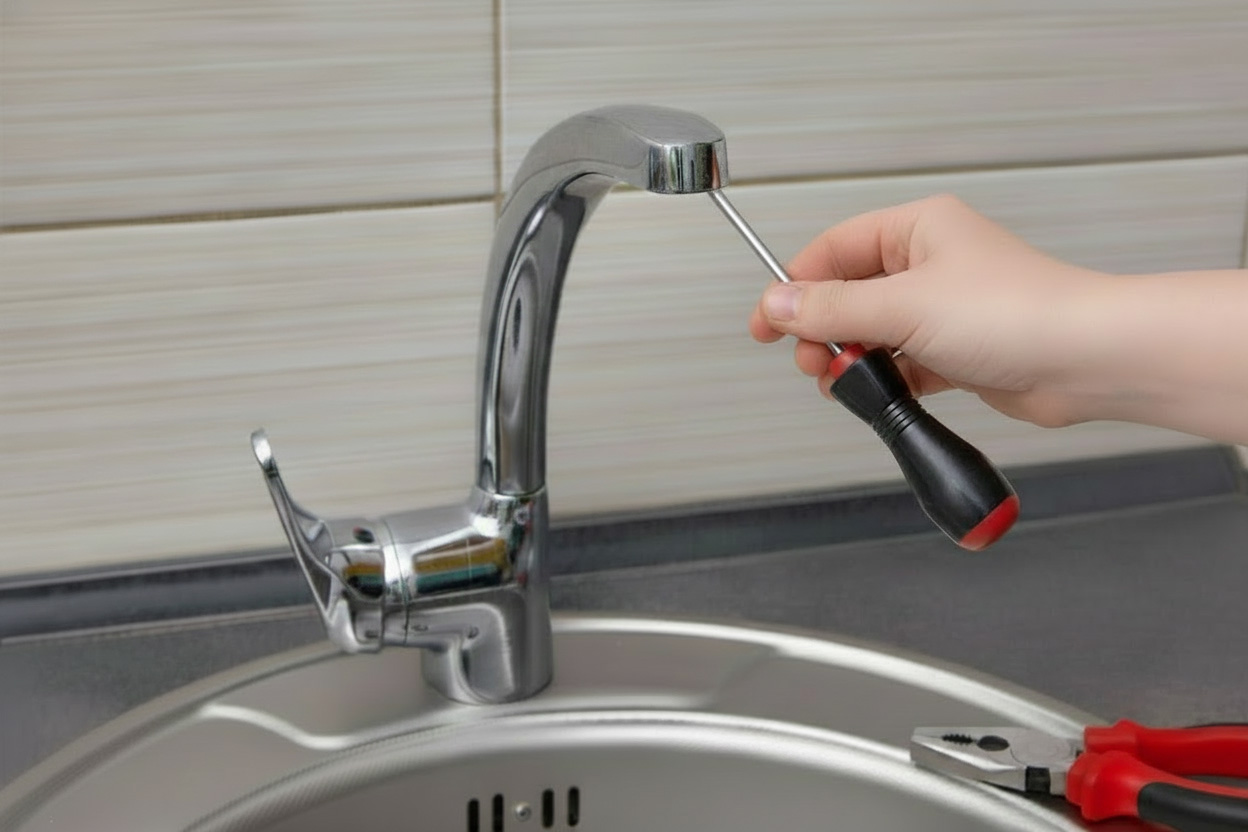
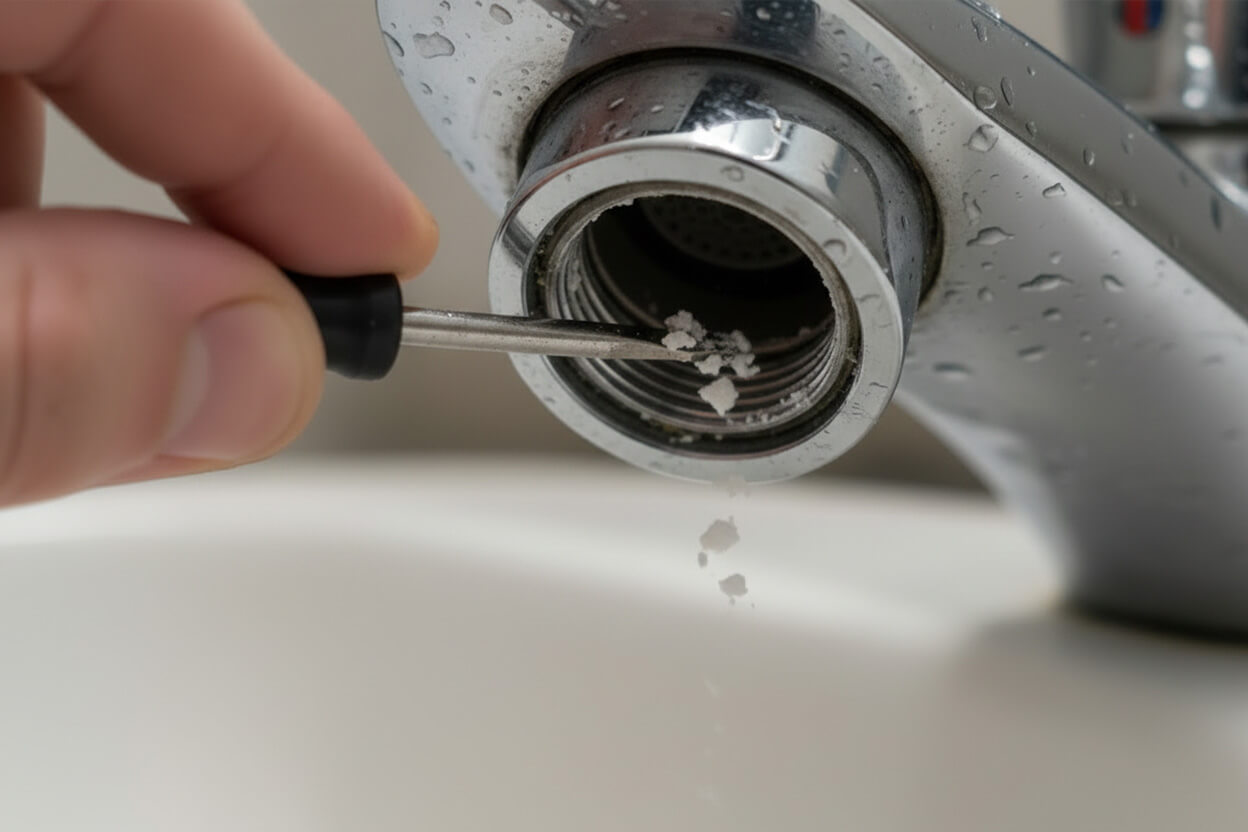
Once the aerator has been taken out, put it to the side and clean the faucet spout.
Feel around the opening to see if you can detect any mineral buildups. If removable by hand, do so. If not, use the screwdriver to dislodge and remove it.
After cleaning the faucet, turn the water on a few times to flush out any loose debris that may be pushed inside. You don’t want it to stay there, and fix the aerator back on it.
(Be gentle when turning the water on. The aerator serves to streamline the flow of the water, and without it, it’s going to splash around.)
Step 3: Carefully disassemble the aerator
The next thing you need to do is disassemble the aerator. Don’t worry. It’s not as hard as it sounds.
The assembly of the aerator comprises a few different parts. You can take them apart one by one easily. If you need to pivot the perforated disk out, you can use the sewing needle.
Just make sure to keep a note of where everything is supposed to go. That way, you will be able to assemble the aerator easily once you are done.
Step 4: Use vinegar to clean the aerator parts
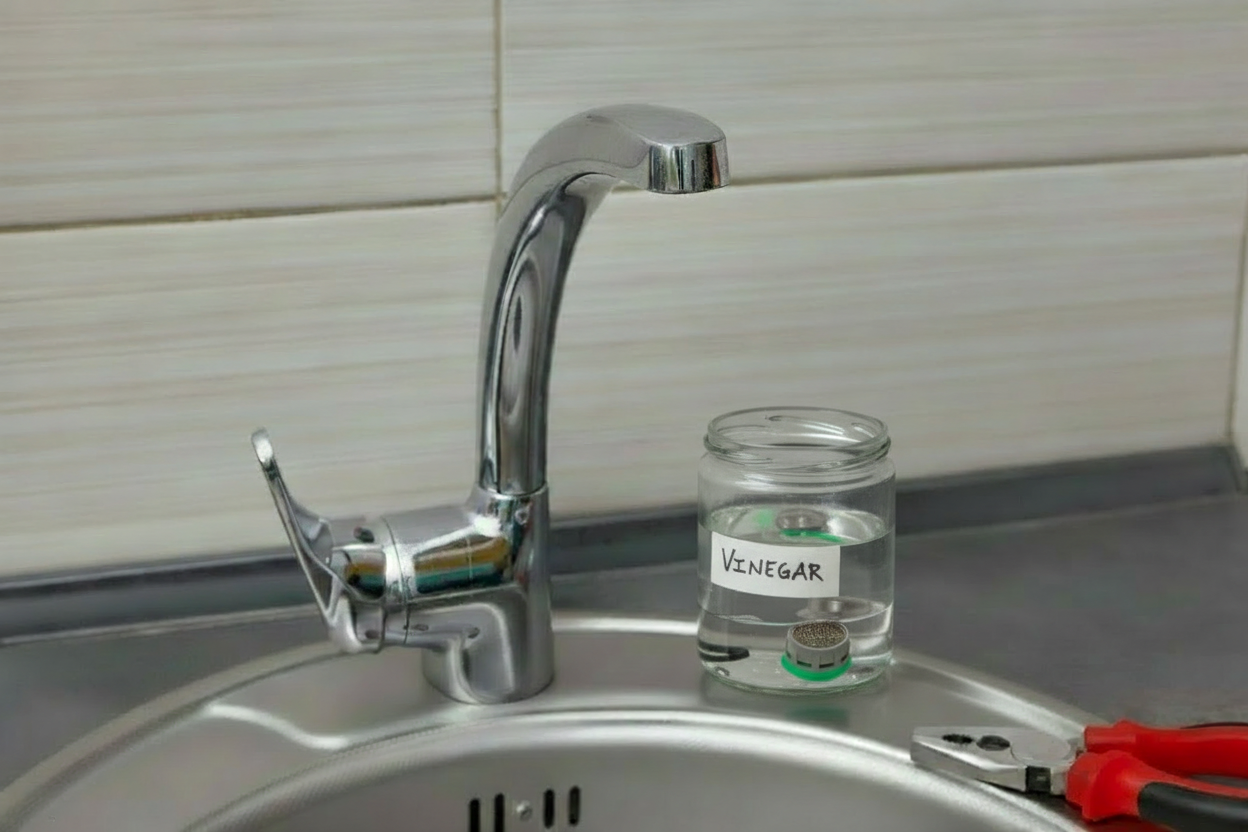
Next, take the separated parts of the aerator and soak them in vinegar. To do so, use a container (any normal one in your kitchen will do) and fill it up with vinegar so that the aerator parts can be fully submerged.
Place the parts in the vinegar and leave them to rest for at least 2 to 3 hours. Letting them sit for 12 to 24 hours is ideal, as the vinegar is able to do its work and loosen the mineral deposits.
Step 5: Use the toothbrush to give the aerator a good scrub
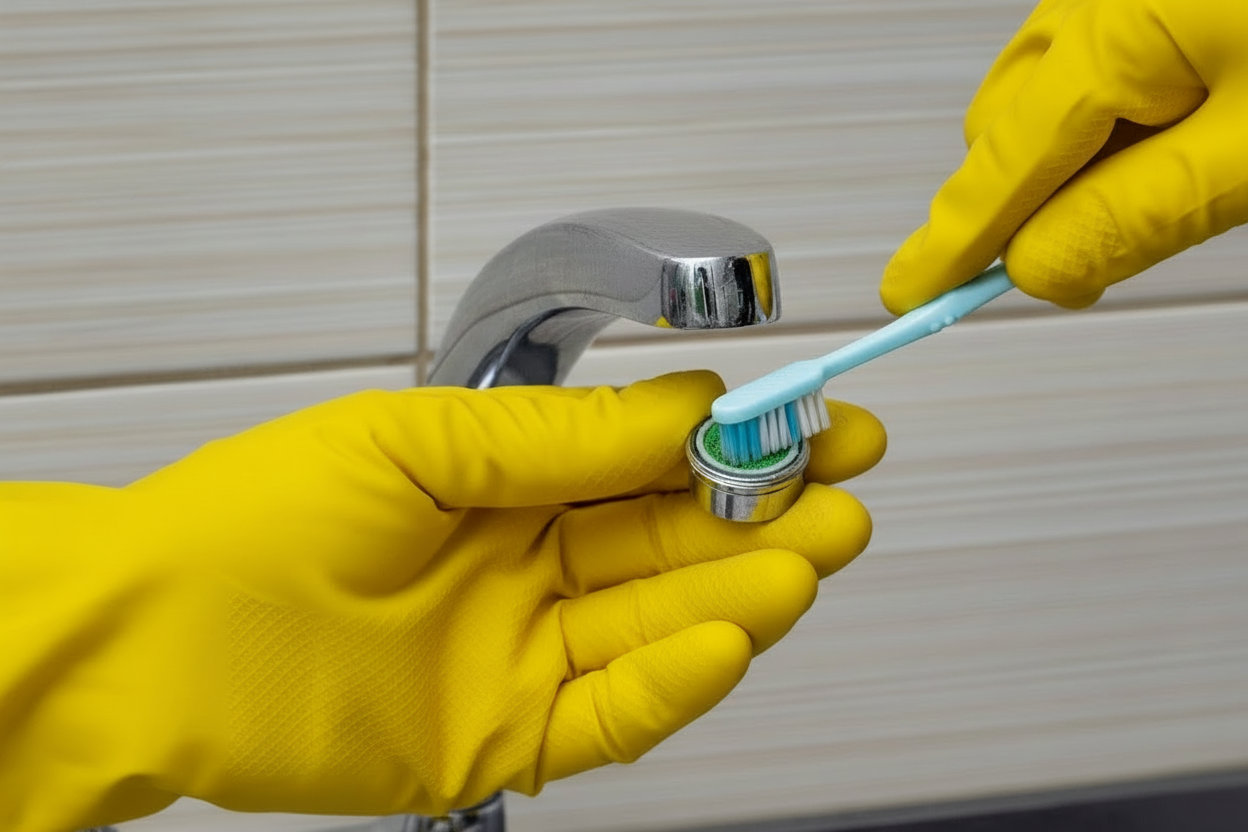
Take the aerator parts out of the vinegar and give them a good scrub with the toothbrush. While the vinegar does the job of dislodging the residue on the aerator, it still has to be cleaned off.
A toothbrush is a good tool to use for this purpose, as the bristles can get into the nooks and crevices.
Note: If you notice residue in the aerator’s perforations that don’t come out with the toothbrush, use the sewing needle. Push the residue out so that the holes are open and clear.
Step 6: Reassemble and put the aerator back on the faucet
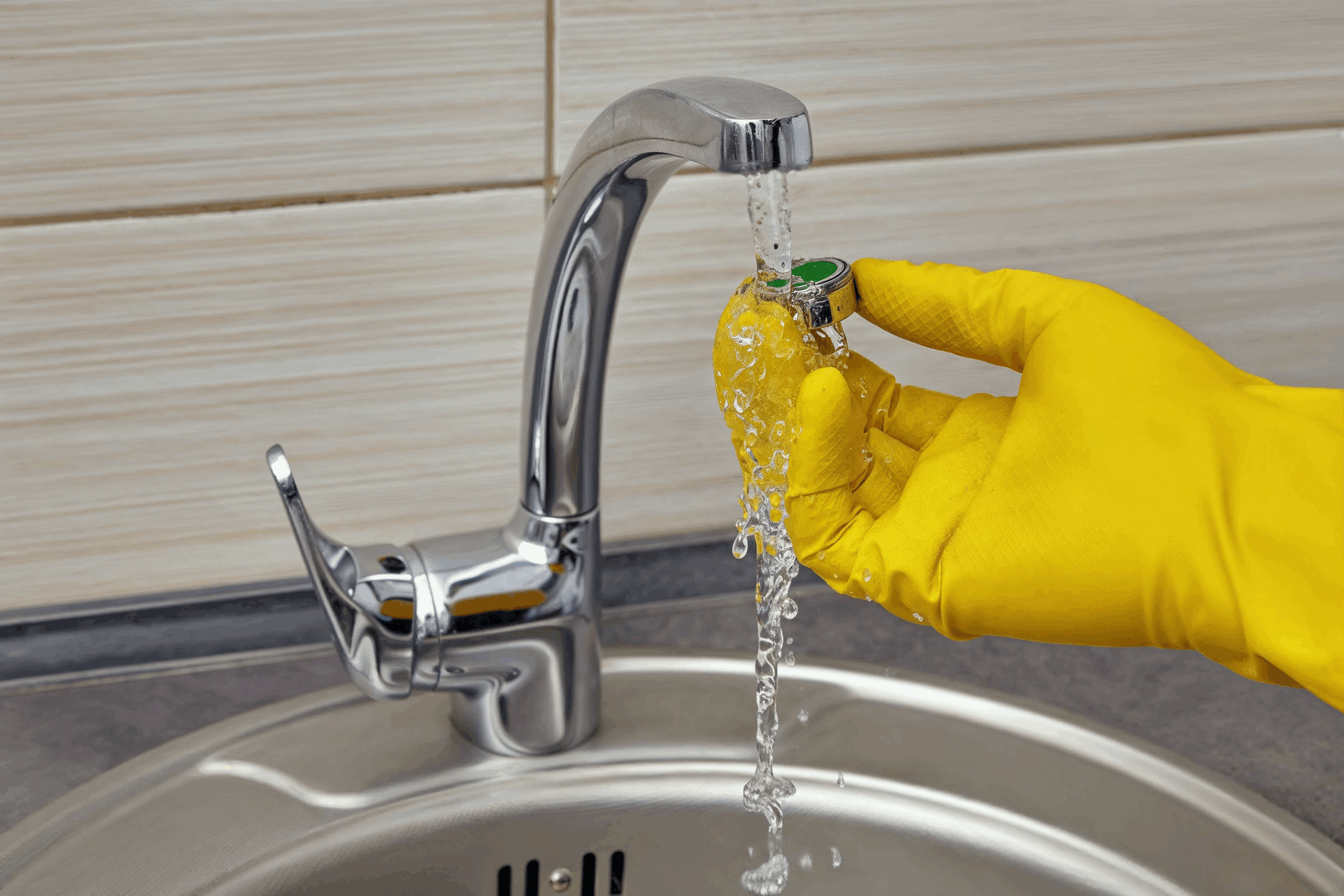
After cleaning the aerator parts properly, reassemble them. Attach the aerator back to the faucet in the same manner as before. Screw it back into the faucet spout and tighten it by hand.
Once the aerator is installed, turn the water on briefly to test for leaks. If the water trickles outside the aerator, it needs to be tightened more. You can reuse the cushioned pliers for this purpose.
How to Clean a Faucet Aerator Without Removing?
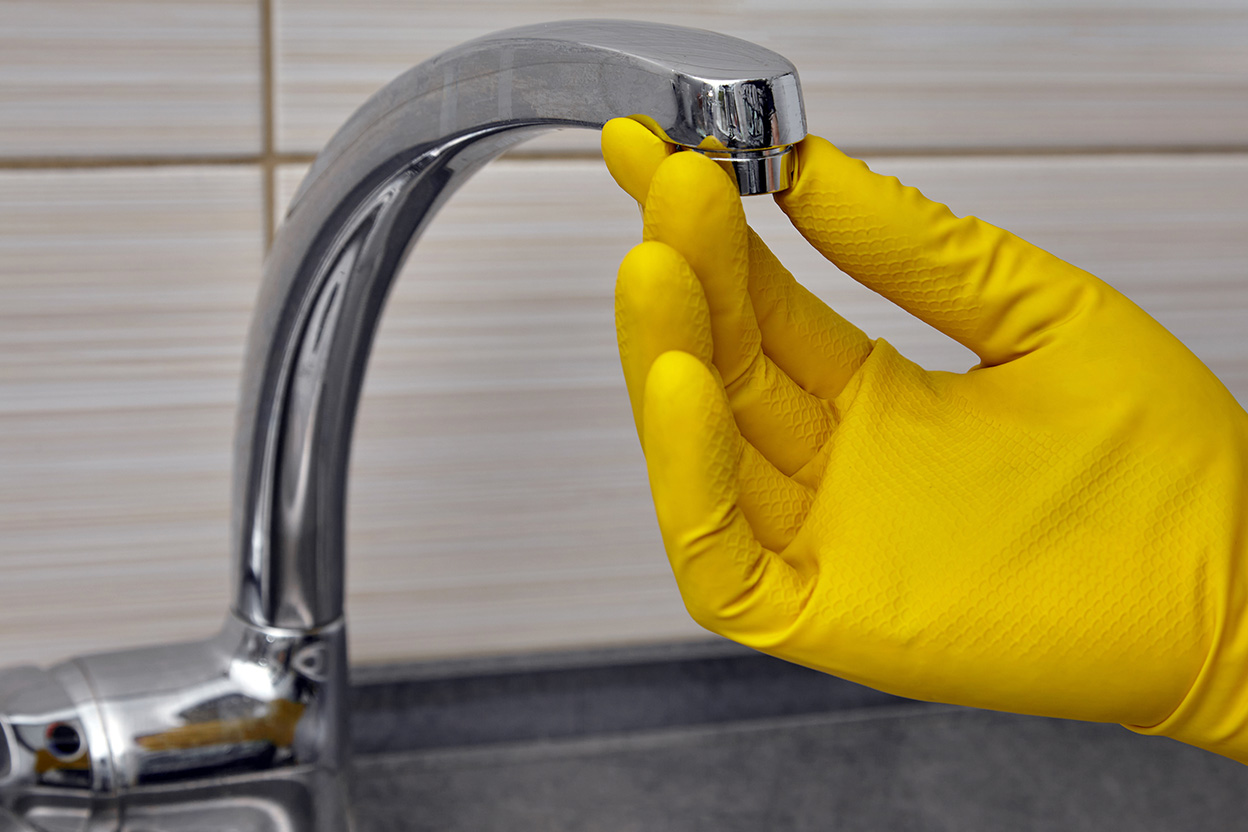
The steps that we mentioned above require the aerator to be removed from the faucet, which can be a bit time-consuming. If you don’t want to remove the aerator before cleaning it, here is an alternate method that you can try.
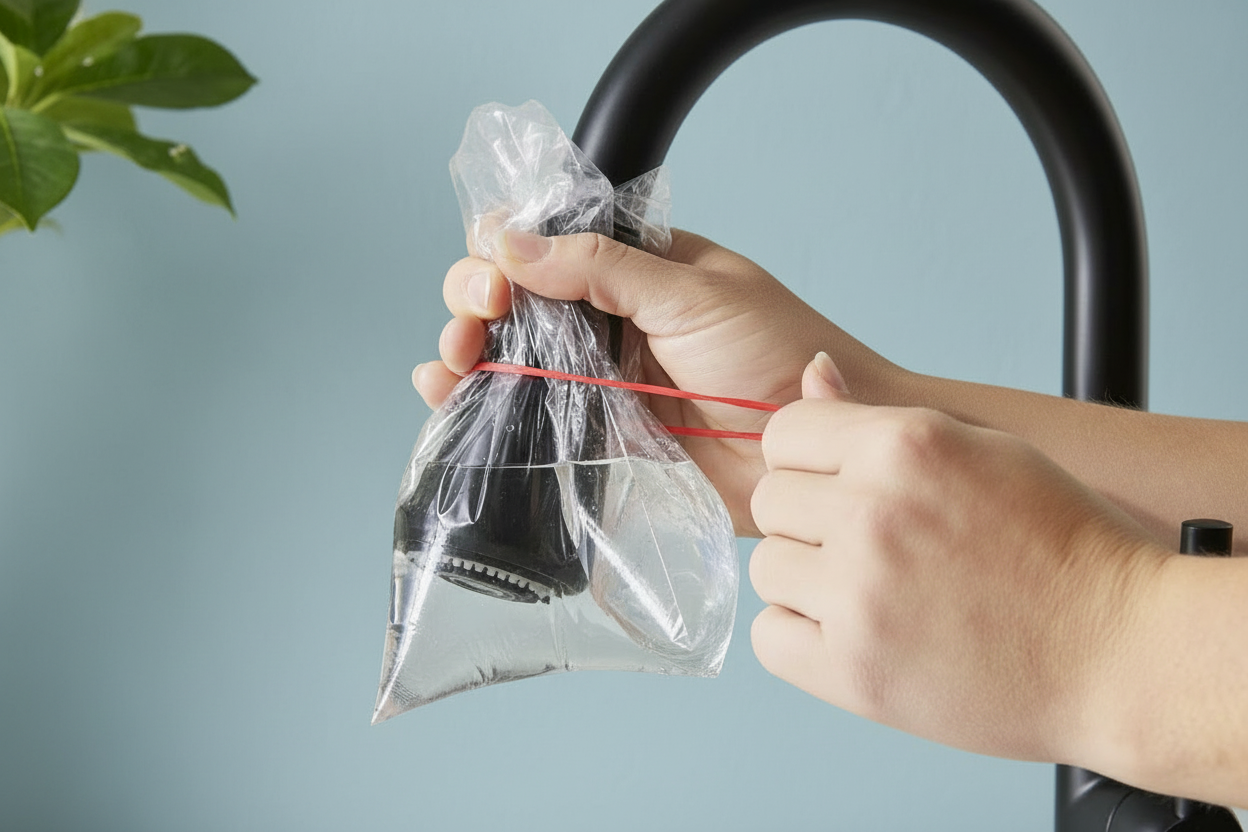
- Take a plastic bag and fill it with vinegar.
- Tie the plastic bag to the faucet in such a way that the aerator is dipped in the vinegar.
- Keep the aerator submerged for 1 to 2 hours.
- Remove the bag.
- Use the toothbrush to clean the aerator.
- Use the sewing needle to open blocked holes.
- Run the water a few times.
While this process works, it’s not as effective as taking the aerator off and then cleaning it. Without removing the aerator, any debris inside the faucet spout won’t be flushed out.
Mistakes to Avoid When Cleaning a Faucet Aerator
Here are some mistakes that people can make when cleaning their faucet aerator. Be extra careful about not making these same mistakes:
- Not using padding around the plier jaws before prying loose the aerator. By doing this, the aerator can get scratched and dented (if it is metal) or cracked (if it is plastic).
- Not taking the aerator apart before putting it in the vinegar. If the aerator is not taken apart, the vinegar won’t be able to get into the little nooks and crevices.
- Not flushing the debris out before reattaching the aerator. The debris will then get stuck inside.