Short answer: Workstation sinks offer four key benefits. They maximize counter space by adding built-in ledges that hold accessories like cutting boards and drying racks. They improve the cooking and cleaning flow by keeping tools in one zone. They provide multifunctional layouts, and they elevate kitchen style with modern, integrated designs.
Introduction
Workstation sinks offer a lot of different benefits. You might be seeing these sinks pop up here and there during your search for the perfect one. If you aren’t sure what perks they offer, don’t worry.
We’ll clarify them in this post so that you can know what to expect once you buy and start using a workstation sink
Understanding Workstation Sinks
To start, here is a definition of a workstation sink:
A workstation sink is a kitchen sink that integrates built-in accessories on sliding ledges to create a full prep station. A workstation sink allows you to perform tasks like chop, rinse, drain, and prep food inside the sink using tools like cutting boards, colanders, and drying racks.
What are the Accessories That You Can Use with Workstation Sinks?
Here are some of the accessories that you can use with workstation sinks. We’ll name them and add a little description to help you understand what they’re used for.
Condiment Bowls: Small ledge-sitting cups for holding chopped herbs, spices, sauces, or meal-prep portions—great for organized, assembly-line cooking.
Cutting Board: Slides along the sink ledge for over-the-basin chopping and easy scrap disposal.
Colander/Strainer: Rests on the workstation track for rinsing produce, draining pasta, or thawing food.
Roll-Up Drying Rack: Unrolls over the basin to air-dry dishes or hold hot pots without eating counter space.
Drying Tray/Drip Tray: Contains water while drying glasses or utensils on the sink ledge.
Bottom Grid: Protects the sink base from scratches and improves drainage by elevating dishes.
Soap Dispenser: Built-in pump that reduces countertop clutter and simplifies refills.
Prep Bowls/Accessory Bins: Small containers for holding chopped ingredients or catching scraps during prep.
Knife Block Insert: Keeps knives accessible and safe on the ledge while you work.
Utensil Holder: Perforated cup for staging or drying spatulas, whisks, and other tools.
Over-the-Sink Serving Board: Spans the sink for plating, serving, or extending your workspace.
Fold-Out Drying Shelf: Removable tiered rack for drying larger items without consuming counter area.
What are the Benefits of a Workstation Sink?
The following are the benefits that you can enjoy when using a workstation sink.
Maximize counter space
Workstation sinks allow you to maximize the space you have on your counter.
How exactly does that happen?
Let’s say you want to chop some vegetables, soak some rice, and drain some pasta. All within 3 minutes of each other.
With a normal sink, you’d first get a colander, drain the pasta, set it to rest somewhere nearby (which would take space), then clean the vegetables and put them aside (on the counter…taking up space), take out a large bowl, fill it with water, and then soak the rice (with the bowl taking up even more space).
However, when you have a workstation sink, instead of using up all of that space on the counter, you can do all of those things right inside the sink itself.
- The colander would fit inside the sink bowl and allow for easy draining
- The vegetables can be cleaned and placed in a mixing bowl, which is also found over the sink
- When cutting the same, a cutting board can be placed in the ridges of the sink instead of on the counter, saving space
- To soak the rice, you can use another mixing bowl, also fitted above the sink
In the end, you’d be left with a busy sink, but all the counter space around it would be free.
Improve the cleaning and cooking flow
On top of maximizing counter space, a workstation sink also helps improve the cleaning and cooking flow.
Here are some of the ways in which a workstation sink helps out in that regard:
- Faster transitions between tasks: You can rinse, chop, drain, and wash in the same zone without walking around the kitchen.
- Centralized mess control: Food scraps, peelings, and dirty tools stay contained inside the sink area instead of spreading across prep zones.
- Smoother ingredient handling: Ledge-mounted prep bowls/condiment bowls let you sort, portion, and add ingredients quickly without interrupting your rhythm.
- Reduced tool juggling: Over-the-sink accessories let you stage utensils, rinsed produce, or washed items without interrupting what’s happening in the main basin.
- Cleaner handoffs mid-cooking: Roll-up racks or utensil holders give you a landing spot for hot, wet, or greasy tools so you’re not scrambling for a safe place to set them down.
- Streamlined washing workflow: Bottom grids elevate dishes, improving drainage and letting you rinse/wash/rack items in one continuous motion.
- Less back-and-forth cleanup: Because prep and rinse steps stay contained, end-of-cook cleanup is shorter and more linear—fewer surfaces to wipe and fewer stray items to gather.
- Better hygiene control: Separating raw produce, utensils, and wastewater using different ledge accessories minimizes cross-contamination during busy cooking sessions.
Versatile and multifunctional
Saving counter space and improving the cooking and cleaning flow are great when you’re in full meal-prep mode.
But even outside those busy moments, workstation sinks stay useful because they’re inherently versatile and multifunctional. A lot of the tools you’d normally buy separately or dig out of crowded drawers are already built into the system.
Here’s what we mean.
If you walk into your kitchen looking to quickly make a sauce for your barbecue chicken, you don’t have to pull out a bunch of utensils. Rather, you can slide over to your sink, use the cutting board, colander, and condiment bowls, clean everything there and then, and leave.
Similarly, let’s say you wanted to make a salad. Same thing. There’s no need to open a whole bunch of cabinets and drawers and pull out your entire culinary arsenal. Rather, you can just use the sink.
Since workstation sinks are so versatile, you can use them for a lot of different, separate, and standalone tasks even if you’re not cooking a full meal.
Style and aesthetics
Last but not least, with a workstation sink, you get the benefit of the style and aesthetics.
A workstation sink upgrades the look of your kitchen as much as the function. The ledges, accessories, and clean lines give the whole setup a more refined feel. Instead of a standard basin that just sits there, you get a focal point that looks modern and aesthetic.
Let’s break down the “looks” perks that you can enjoy with a sink like this.
- Modern, integrated look: Workstation sinks have clean lines and built-in ledges that make the whole setup feel intentional rather than like a basic drop-in fixture.
- Accessories that blend in: Cutting boards, colanders, and drying racks sit flush with the sink, creating a cohesive, almost professional-kitchen vibe.
- Organized even when busy: Because everything has a defined place, the sink area looks structured instead of cluttered, even during heavy prep.
Material options that elevate the space: Whether you go stainless steel, composite, or matte black, workstation sinks typically lean toward contemporary, high-end finishes.
How to Get the Most Benefits Out of a Workstation Sink?
Here are some actionable tips to remember to get all the benefits of workstation sinks when using them.
- Use the bottom grid all the time: It improves drainage, protects the basin, and keeps dishes from sitting in dirty water. Low effort, high impact.
- Prep bowls and condiment cups are your friend: Portion ingredients, hold scraps, or organize toppings without creating a mess trail across the kitchen.
- Clean as you go: Because everything happens inside one zone, quick rinses and wipe-downs become automatic. The sink stays tidy, and the end-of-cook cleanup shrinks.
- Match the accessories to the job: Big cutting board for full meals, small board for snack prep, colander for heavy rinsing, mixing bowl for soaking—treat it like a modular system.
- Use the accessories as your default workspace: Treat the cutting board, colander, prep bowls, and roll-up rack as your primary prep station instead of the countertop. That’s the whole point.
- Keep the ledge accessories within reach: Store them close to the sink so swapping pieces is a two-second move, not a chore.
- Work in layers, not zones: Rinse, prep, sort, and discard inside the sink area so you’re not bouncing around the kitchen.
Final Thoughts
The benefits of workstation sinks are many. We’ve detailed them in the post above. The main benefits include counter space saving, versatility in functionality, improved cooking and cleaning flow, and, of course, the enhanced aesthetics.
To get the most out of your workstation sinks, make sure to follow the tips that we’ve mentioned at the end of the post above. Thanks for reading!

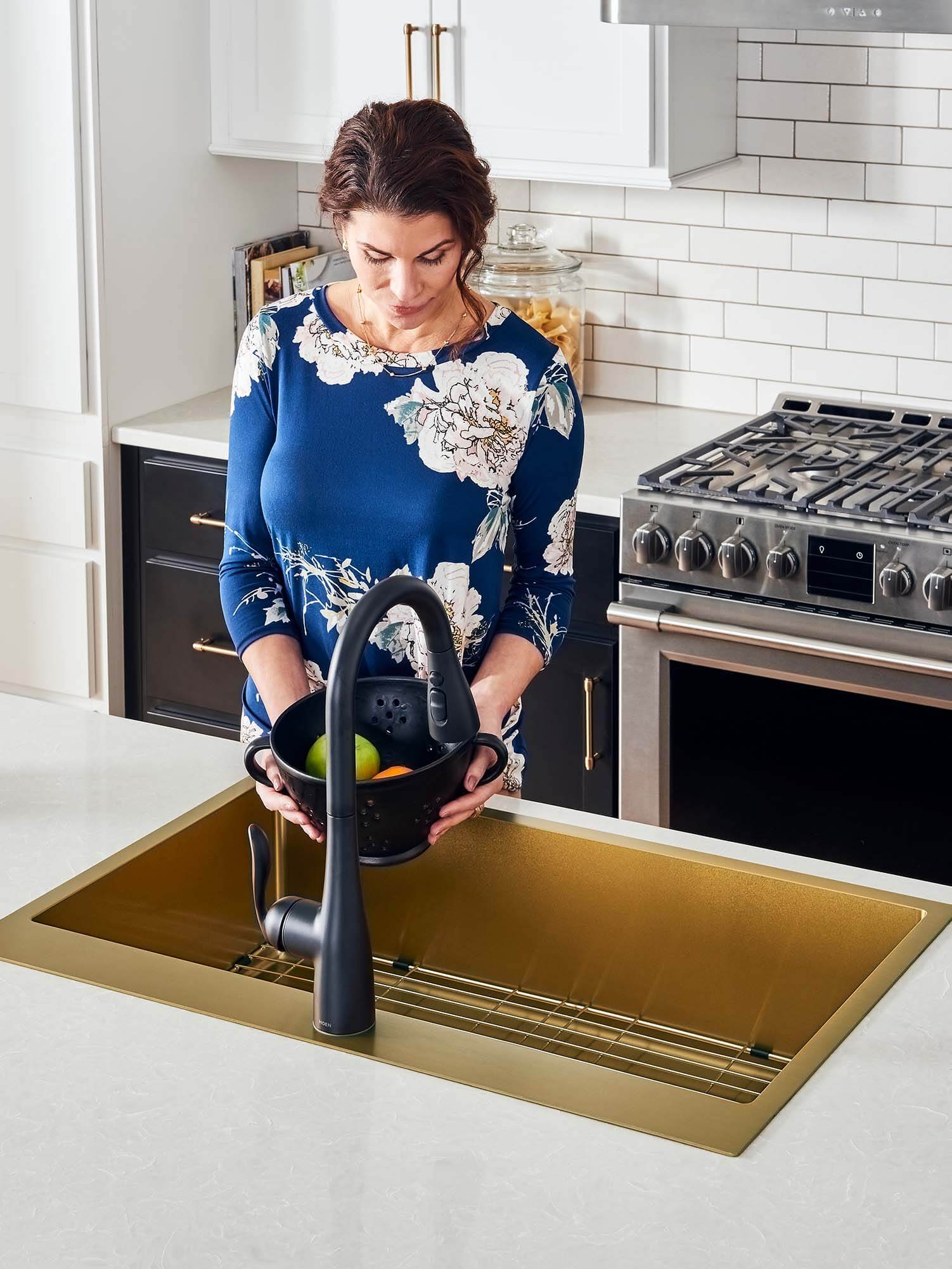
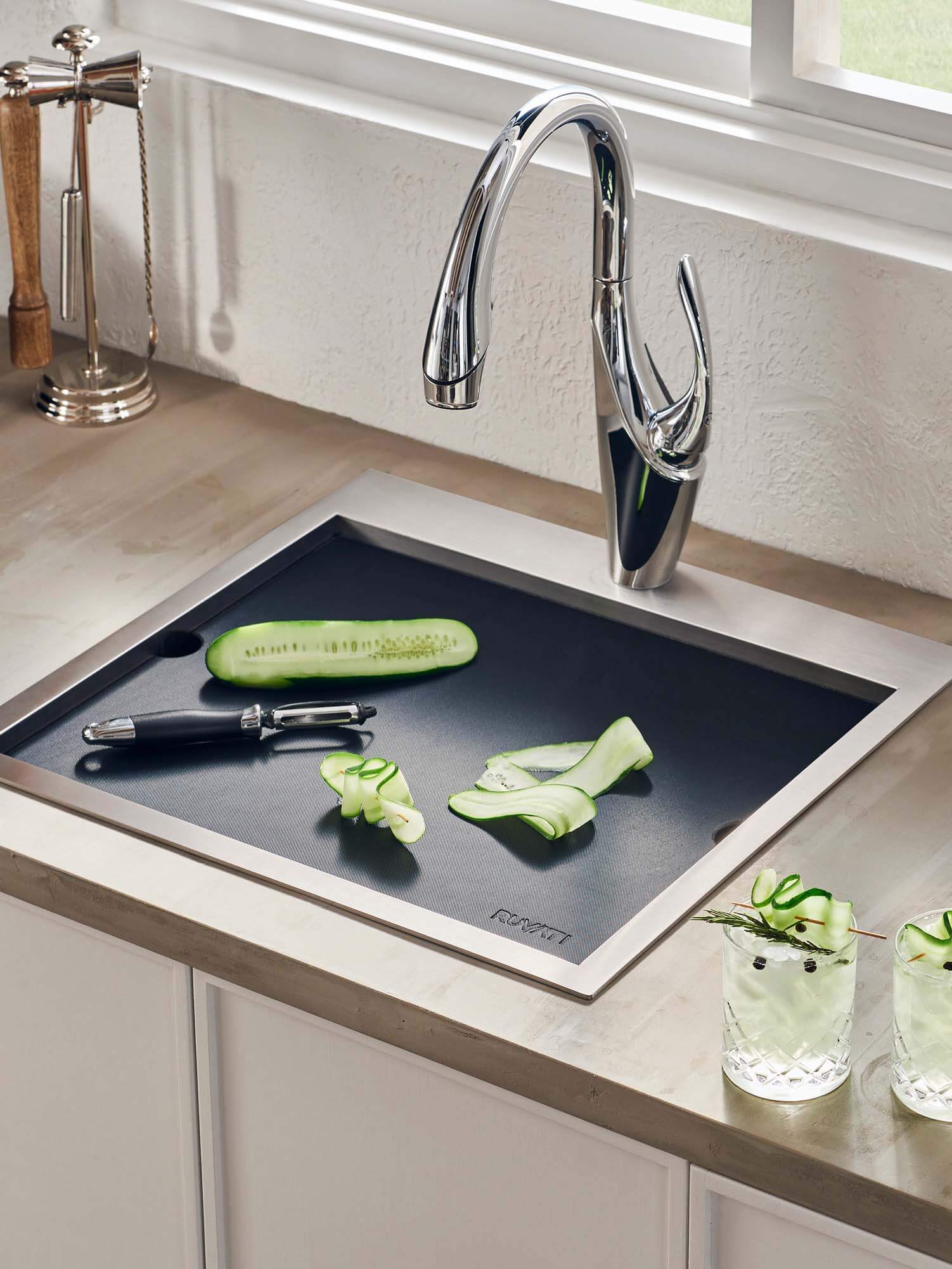
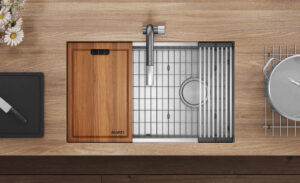
Workstation sinks from Ruvati convert your kitchen sink into a full functional workstation. You can do all your prep work right on top of your sink and keep your countertops clean and free of mess.