

May people confuse themselves with farmhouse sink and apron front sink, while in reality both are same. So what is actually the difference in between farmhouse sink vs apron sink?
A farmhouse sink and an apron sink are the same style. Both feature a large, deep basin with an exposed front panel. The terms are interchangeable, but “farmhouse sink” often refers to rustic or traditional designs, while “apron sink” includes modern variations.
As you embark on designing your dream kitchen, one of the most crucial decisions you’ll make is choosing the right sink. For those who value both style and functionality, apron sinks and farmhouse sinks are two popular options that can transform your culinary space.
Whether you’re a culinary enthusiast or an interior designer, understanding the difference between apron sink and farmhouse sink is essential for creating a kitchen that reflects your personality and meets your needs. In this article, we’ll delve into the pros and cons of apron sinks vs farmhouse sinks, helping you decide which one is the best farmhouse sink vs apron sink for your unique kitchen design.
For homeowners who appreciate the quality and craftsmanship offered by brands like Ruvati, selecting a sink that complements your kitchen’s aesthetic while enhancing its functionality is paramount. Both apron and farmhouse sinks offer a unique blend of style and practicality, but they cater to different design visions and kitchen layouts. Let’s explore how these sinks can elevate your kitchen experience.
Apron Sink vs Farmhouse Sink: What is the Difference?
When it comes to kitchen design, the debate of apron sink vs farmhouse sink is often discussed interchangeably, yet they have distinct characteristics that set them apart. Both types feature an exposed front panel, which adds a touch of elegance and functionality to any kitchen. However, the differences in design, installation, and functionality can significantly impact your kitchen’s aesthetic and usability.
Design Differences
Front Panel Design
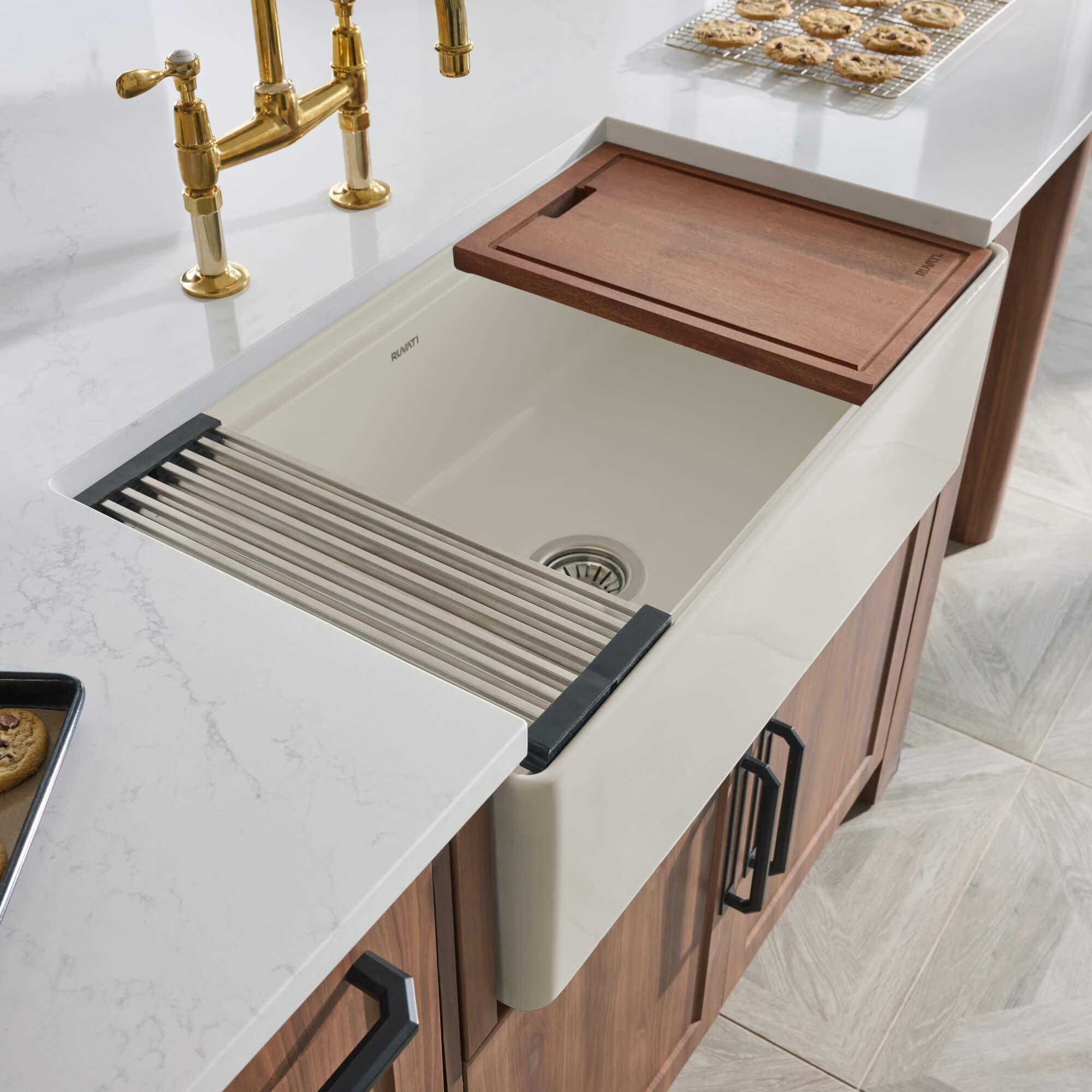
Both apron and farmhouse sinks have an exposed front panel, but the way they integrate with the cabinetry differs. Traditional farmhouse sinks often have apron corners rounded, enhancing user comfort and contributing to their rustic aesthetic. An apron sink typically protrudes above the cabinetry, creating a visually striking focal point in the kitchen. In contrast, a farmhouse sink is often flush with the cabinets or may require custom cabinetry to accommodate its larger size.
Basin Depth and Size
Farmhouse sinks are generally deeper and wider, providing ample space for soaking large cookware and dishes, making them ideal for families or frequent cooks. Apron sinks, while also available in deep designs, offer more versatility in size, making them suitable for smaller kitchens.
Material Differences
- Material Options: Both apron and farmhouse sinks are available in durable materials like fireclay, porcelain, and stainless steel. However, traditional farmhouse sinks are often made from enameled cast iron or fireclay, which provide a classic look and durability. Apron sinks offer a broader range of materials, including copper and natural stone, allowing for greater design flexibility.
Functional Differences
- Ergonomics: The forward orientation of apron sinks reduces the need to lean over the counter, providing ergonomic benefits. Farmhouse sinks also offer a comfortable working height due to their deep basins, which facilitate lifting heavy cookware in and out of the sink.
- Aesthetic Appeal: Both styles add a rustic charm to the kitchen, but farmhouse sinks are often associated with a more traditional, vintage look, while apron sinks can blend into both modern and traditional designs.
While both apron and farmhouse sinks share similarities in their exposed front panels, they differ significantly in terms of size, installation requirements, and design flexibility. Understanding these differences is crucial for selecting the right sink to enhance your kitchen’s functionality and aesthetic appeal.
Farmhouse Sink vs Apron Front Sink: Installation
The installation requirements for apron sinks and farmhouse sinks differ primarily in terms of support and cabinetry modifications. Here’s a breakdown of these differences:
Apron Sinks Installation
- Cabinetry Modifications: Apron sinks typically require less modification to existing cabinetry compared to farmhouse sinks. They can often fit into standard cabinetry with minimal adjustments.
- Support Requirements: While apron sinks are generally lighter than farmhouse sinks, they still need adequate support to ensure stability. However, the support structure is often less complex.
- Installation Flexibility: Apron sinks can be installed with various mounting styles, including undermount and topmount, offering flexibility in design.
Farmhouse Sinks Installation
- Cabinetry Modifications: Farmhouse sinks often require custom cabinetry due to their larger size and weight. The cabinet must be reinforced to support the sink’s weight, which can exceed 300 pounds when filled with water. In some cases, you may need to replace cabinetry altogether to ensure it can support the weight and size of a farmhouse sink.
- Support Requirements: Farmhouse sinks necessitate a robust support frame within the cabinet to handle their weight. This typically involves installing additional wooden supports or brackets.
- Installation Complexity: The installation process for farmhouse sinks is generally more complex and may require professional assistance. It involves precise measurements, cutting the cabinet front, and ensuring the sink is level and secure.
Key Differences
- Weight and Size: Farmhouse sinks are larger and heavier, necessitating more substantial support and custom cabinetry.
- Installation Complexity: Farmhouse sinks have a more involved installation process due to their size and weight.
- Cabinetry Adaptation: Farmhouse sinks often require more significant modifications to existing cabinetry compared to apron sinks.
In summary, while both types of sinks require careful installation, farmhouse sinks demand more extensive modifications and support due to their size and weight.
Best Farmhouse Sink vs Apron Sink: Choosing the Right One
When deciding between an apron or farmhouse sink, consider your kitchen’s size, your budget, and your personal style preferences.
- Kitchen Size: Larger kitchens benefit from farmhouse sinks, while apron sinks are versatile and suitable for smaller spaces.
- Budget: Farmhouse sinks are generally more expensive due to their size and installation requirements.
- Style: Farmhouse sinks offer a traditional look, while apron sinks provide a similar aesthetic with greater adaptability for modern kitchens.
Modern Farmhouse Sink vs Traditional Apron Sink
- Modern Farmhouse Sinks often blend traditional designs with contemporary materials like stainless steel or natural stone, offering a sleeker look.
- Traditional Apron Sinks maintain a classic appeal with materials such as fireclay or porcelain. The traditional farmhouse sink, with its historical origins, often features materials like fireclay or porcelain, maintaining a classic appeal.
Apron Front Sink vs Undermount Farmhouse Sink
- Apron Front Sinks are typically installed with the front panel exposed, offering an ergonomic design that reduces leaning over the counter.
- Undermount Farmhouse Sinks sit below the countertop, providing a clean look and easier cleaning.
Unlike conventional sinks, which offer varied installation methods, apron front and undermount farmhouse sinks provide specific aesthetic and functional benefits.
Farmhouse Sink Styles and Materials Comparison vs Apron Front Sinks
When it comes to farmhouse sinks and apron front sinks, both offer a wide range of styles and materials that cater to different design preferences and functional needs. Here’s a comprehensive comparison of their styles and materials:
Farmhouse and apron sinks have evolved from their historical roots to become popular choices in modern kitchen designs, offering both aesthetic appeal and practical benefits.
Materials for Farmhouse Sinks
Fireclay: Known for its timeless elegance and durability, fireclay is a popular choice for farmhouse sinks. It offers a smooth, glossy finish that is nonporous and resistant to heat and damage.
Cast Iron: Coated with a layer of porcelain enamel, cast iron sinks are sturdy and resistant to chipping and cracking. They provide a classic look and are easy to clean.
Stainless Steel: Stainless steel farmhouse sinks are made from 304-grade steel and offer a modern look with a smooth, matte finish. They are resistant to corrosion and easy to maintain.
Copper: Copper sinks have antimicrobial properties and a living finish that patinas over time. They require occasional waxing to maintain their appearance.
Granite and Quartz Composite: These materials offer durability and elegance, with resistance to scratches and stains. They are ideal for those seeking a modern aesthetic.
Concrete: Concrete sinks provide a unique, industrial look and are durable, though they may require more maintenance than other materials.
The deep and wide design of farmhouse sinks makes them ideal for accommodating large pots and other hefty kitchen items.
Materials for Apron Front Sinks
Fireclay: Similar to farmhouse sinks, apron front sinks in fireclay are popular for their durability and classic look.
Porcelain: Offers a smooth finish and is easy to clean, making it a practical choice for apron front sinks.
Stainless Steel: Provides a modern look and is resistant to corrosion, making it suitable for both farmhouse and apron front designs.
Copper: Also available for apron front sinks, copper adds a touch of luxury with its antimicrobial properties and unique patina.
Natural Stone Composites: Materials like granite and quartz composites are gaining popularity for their durability and aesthetic appeal in apron front sinks as well.
Pairing an apron front sink with a pull down faucet can enhance kitchen efficiency by making it easier to wash large cookware and minimize spillage.
Style Comparison
Farmhouse Sinks: Often associated with a traditional, rustic look, farmhouse sinks are typically larger and deeper, providing ample space for large cookware. They can be installed flush with the cabinets or may require custom cabinetry.
Apron Front Sinks: While similar in design to farmhouse sinks, apron front sinks are more versatile in size and can fit into existing cabinetry with less modification. They offer a modern twist on the traditional farmhouse look.
While larger than the average kitchen sink, both farmhouse and apron front sinks offer unique design and functional benefits that can enhance your kitchen.
Durability and Maintenance
Both farmhouse and apron front sinks are available in durable materials, but the choice ultimately depends on your lifestyle and maintenance preferences. Fireclay and stainless steel are generally low maintenance, while copper and concrete may require more upkeep.
However, the larger size of these sinks can reduce under sink storage space, necessitating creative organizational solutions.
Both farmhouse and apron front sinks offer a range of materials and styles that cater to different kitchen designs and needs. Whether you prefer the classic look of fireclay or the modern appeal of stainless steel, there’s a sink style and material combination that can enhance your kitchen’s functionality and aesthetic appeal.
Apron Sink and Farmhouse Sink Kitchen Design Ideas
Both apron sinks and farmhouse sinks offer a unique blend of style and functionality that can elevate your kitchen’s aesthetic appeal. Here are some comprehensive design ideas for incorporating these sinks into your kitchen:
Utilizing the inside of cabinet doors for storage can help maximize space and improve the functionality of your kitchen when using farmhouse or apron sinks.
Apron Sink Kitchen Design Ideas
- Rustic Chic: Pair an apron sink with wooden cabinetry and exposed beams for a cozy, vintage feel. Add warm lighting and natural textures like stone or brick to enhance the rustic ambiance.
- Modern Minimalism: Use an apron sink in a sleek, modern kitchen with minimalist decor. Combine it with white or gray cabinets, stainless steel appliances, and a clean backsplash for a contemporary look.
- Coastal Elegance: Create a coastal vibe by pairing an apron sink with light-colored cabinets, marble countertops, and nautical-themed decor. This design is perfect for a beach-inspired kitchen.
- Farmhouse Fusion: Blend traditional and modern elements by combining an apron sink with modern appliances and classic shaker cabinets. This fusion creates a unique and inviting kitchen space.
Farmhouse Sink Kitchen Design Ideas
- Classic Farmhouse: Pair a farmhouse sink with traditional shaker cabinets, marble countertops, and a warm color palette to create a classic farmhouse look. Add vintage decor and rustic lighting for a cozy feel.
- Contemporary Twist: Incorporate a farmhouse sink into a modern kitchen by pairing it with sleek cabinets, stainless steel appliances, and a bold backsplash. This design blends traditional charm with modern sophistication.
- Eclectic Charm: Use a farmhouse sink as a focal point in an eclectic kitchen. Combine it with bold-colored cabinets, unique lighting fixtures, and a mix of textures like wood and metal.
- Glamorous Touch: Add glamour to your kitchen by pairing a farmhouse sink with luxurious materials like quartz countertops, gold accents, and dramatic lighting. This design creates a sophisticated yet rustic look.
- Coastal Farmhouse: Create a coastal farmhouse look by combining a farmhouse sink with light-colored cabinets, natural stone countertops, and nautical-themed decor. This design is perfect for a beach-inspired kitchen with a rustic twist.
Both apron and farmhouse sinks offer versatility in design, allowing them to fit seamlessly into various kitchen styles, from traditional to modern. Whether you prefer the classic look of a farmhouse sink or the modern twist of an apron sink, these design ideas can help you create a kitchen that reflects your unique style and meets your functional needs.
Pros and Cons of Apron Sinks vs Farmhouse Sinks
Pros of Apron Sinks:
- Versatility: Available in various sizes, suitable for smaller kitchens.
- Easier Installation: Can fit into existing cabinetry.
- Budget-Friendly: Generally less expensive than farmhouse sinks.
Cons of Apron Sinks:
- Smaller Capacity: May not offer as much space as farmhouse sinks.
- Less Traditional Look: While stylish, they may not provide the same rustic charm as farmhouse sinks.
Pros of Farmhouse Sinks:
Here are some key farmhouse sink pros to consider:
- Large Capacity: Ideal for soaking large cookware and dishes.
- Traditional Aesthetic: Offers a classic, rustic look.
- Durability: Often made from durable materials like fireclay.
Cons of Farmhouse Sinks:
- Space Requirements: Takes up more space and may require custom cabinetry.
- Higher Cost: More expensive due to size and installation needs.
Which is Better: Apron Sink or Farmhouse Sink?
The choice between an apron sink and a farmhouse sink depends on your kitchen’s layout, your budget, and your personal style preferences, as both types of kitchen sinks offer unique benefits. Both options offer unique benefits and can enhance your kitchen’s functionality and aesthetic appeal.
Ruvati’s Most Popular Style
| Model | Type | Material | Dimensions | Key Features |
| RVG1533BK | Farmhouse | Granite Composite | 33″ x 20.5″ x 9″ | Reversible design, Single basin, Center drain, Built-in ledges for accessories |
| RVH9733CP | Farmhouse | Stainless Steel | 33″ x 22″ x 9″ | Sound absorbent, Rear drain, Zero radius edges |
| RVL2100WH | Farmhouse | Fireclay | 30″ x 20″ x 9″ | Reversible design, Smooth glossy finish, Resistant to chips and scratches |
| RVH9308GG | Apron Front | Stainless Steel | 36″ x 22″ x 9″ | Nano-PVD finish, Soundproof coating, Matching roll-up drying rack |
| RVL2387WH | Apron Front | Fireclay | 33″ x 20″ x 9″ | Workstation sink, Foldable drying rack, Superior wood cutting board |
| RVH9201 | Apron Front | Stainless Steel | 33″ x 20″ x 9″ | Low-divide double bowl, Built-in ledge, Heavy-duty rubber padding |
Key Features Explained:
- Reversible Design: Allows for installation with either a curved or flat apron front, offering flexibility in design style.
- Sound Absorbent: Reduces noise from clattering dishes and water flow.
- Zero Radius Edges: Provides a modern look with sharp inside corners.
- Workstation Sink: Includes integrated ledges for accessories like cutting boards and drying racks.
- Nano-PVD Finish: Offers a durable, colored finish resistant to wear and abrasion.
FAQs
Are apron sinks and farmhouse sinks the same?
While often used interchangeably, apron sinks typically protrude above cabinetry, whereas farmhouse sinks are often flush or require custom cabinetry due to their size.
What is the difference between an apron sink and a farmhouse sink?
The main differences lie in installation requirements, size, and design. Farmhouse sinks are larger and often require custom cabinetry, while apron sinks are more versatile and easier to install.
Which is more durable: apron sink or farmhouse sink?
Both can be very durable, depending on the material used. Fireclay and porcelain are common materials for both, known for their durability.
Can I install an apron sink in a small kitchen?
Yes, apron sinks are available in various sizes, making them suitable for smaller kitchens.
Are farmhouse sinks worth the investment?
Yes, they can add significant value to your kitchen due to their traditional aesthetic and large capacity, making them ideal for families or frequent cooks.
Elevate Your Kitchen with the Perfect Sink
As you embark on designing your dream kitchen, choosing the right sink is a crucial decision that can elevate both the functionality and aesthetic appeal of your culinary space. Whether you’re drawn to the timeless charm of a farmhouse sink or the versatility of an apron sink, both options offer a unique blend of style and practicality that can transform your kitchen into a warm and inviting hub.
For those who appreciate the quality and craftsmanship offered by brands like Ruvati, selecting a sink that complements your kitchen’s design while enhancing its functionality is paramount. Both apron sinks and farmhouse sinks are available in a variety of materials and styles, from traditional fireclay to modern stainless steel, ensuring there’s a perfect fit for your unique kitchen vision.
When deciding between these two popular options, consider your kitchen’s layout, your budget, and your personal style preferences. Whether you opt for the spacious elegance of a farmhouse sink or the ergonomic design of an apron sink, both can add significant value to your kitchen, making it a joy to cook, entertain, and spend time with family and friends.
At Ruvati, we understand the importance of quality, durability, and style in kitchen design. Our sinks are crafted to provide not only a beautiful focal point but also a reliable and functional centerpiece for your kitchen. Whether you’re a culinary enthusiast or an interior designer, we invite you to explore our collection of apron sinks and farmhouse sinks to find the perfect addition to your dream kitchen.
By choosing the right sink, you’re not just selecting a fixture; you’re creating a space that reflects your personality and enhances your cooking experience.
So, take the first step towards transforming your kitchen into a culinary haven that you’ll love for years to come.