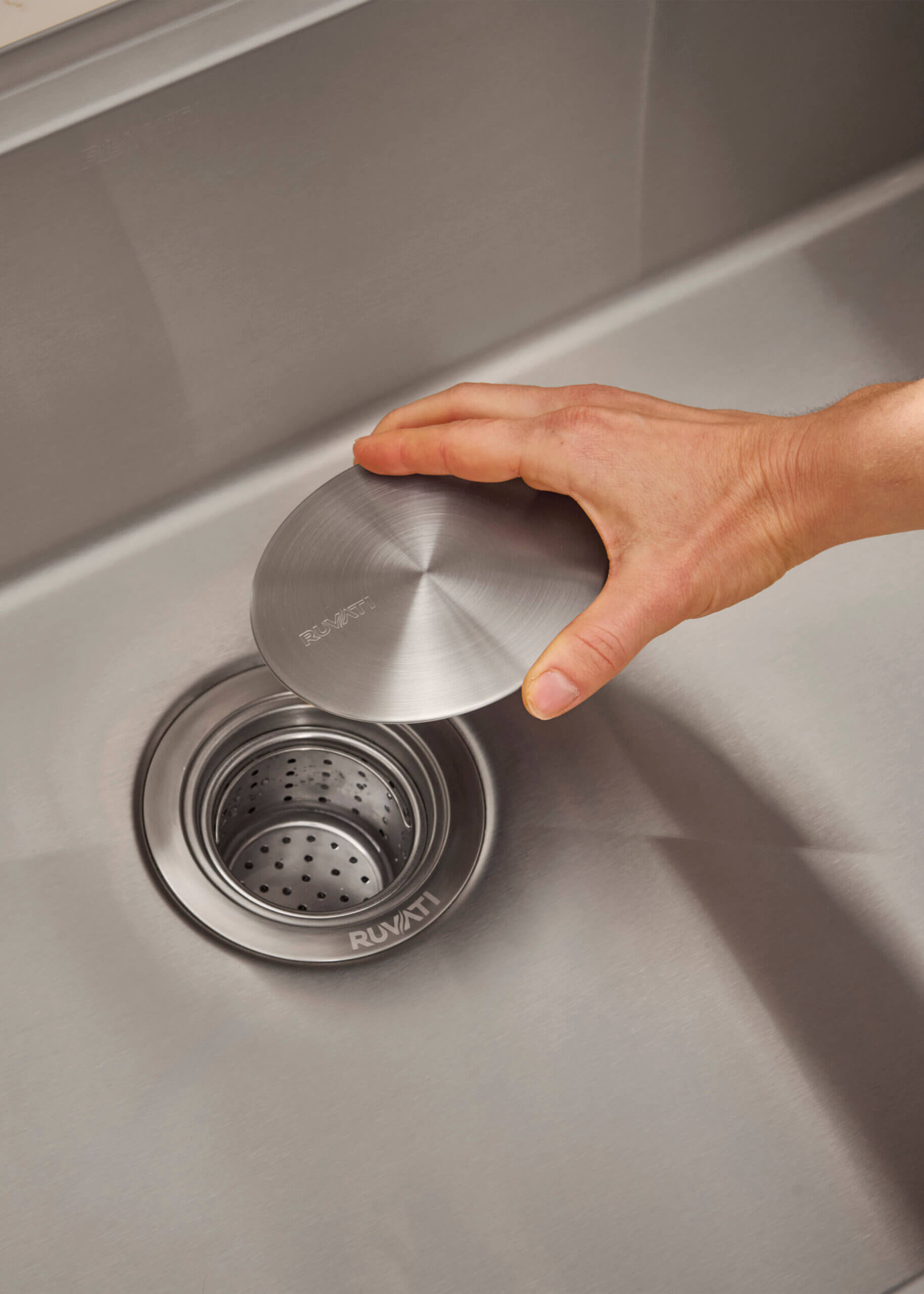
A stinky sink drain is just terrible. It’s terrible to be around. It’s terrible to think of.
If you have people over, it’s embarrassing as anything.
Needless to say, it’s something that you want to get rid of as soon as possible.
In this post, we’re not only going to tell you how you can get rid of the smell. That would just entail us throwing a bunch of solutions at you, leaving you to decide which one works for your situation.
Rather, we’re going to mention all the main causes first, and then talk about the different solutions, matching each of the latter to the former.
Why Does Your Kitchen Sink Drain Smell?
Before you start pouring things down the drain, it helps to know what you’re dealing with. A stinky sink drain usually comes from one of these six things:
- Food debris and grease buildup sitting inside the drain or coating the pipe walls
- Biofilm, which is a slimy layer of bacteria that forms over time on the inside of your pipes
- A dry or dirty P-trap, which is the curved pipe under your sink that’s supposed to hold water and block sewer gas
- Garbage disposal buildup, where food residue collects on the blades and rubber splash guard
- Sewer gas leaking up through a cracked seal, loose connection, or improperly vented drain
- Clogged or sluggish pipes that are holding standing water and letting bacteria multiply
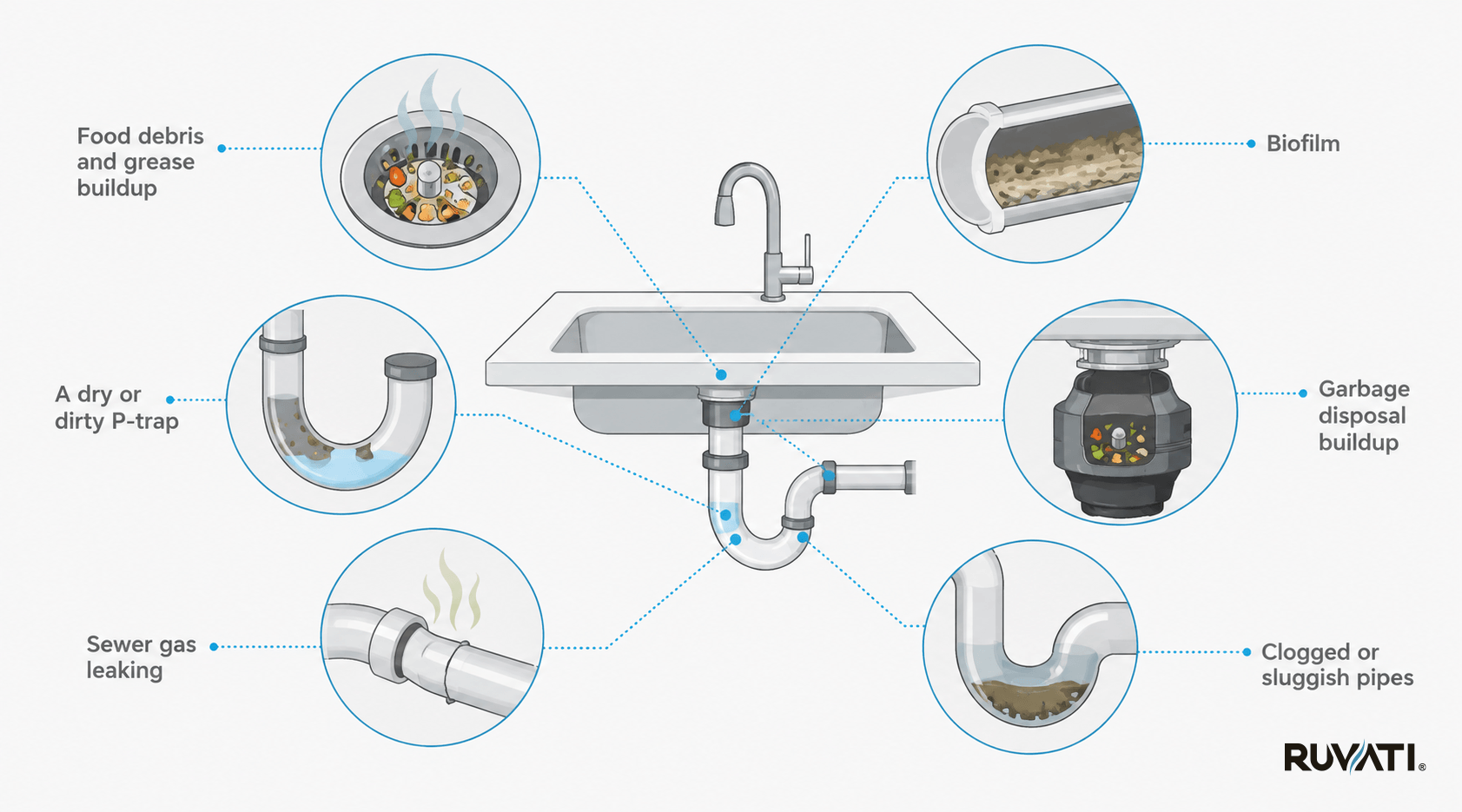
Most kitchen sink smells fall into the first four categories. The last two are less common but worth knowing about, because no amount of baking soda will fix a sewer gas leak.
How to Fix a Smelly Kitchen Sink Drain
Match the method to the cause. If your drain smells like rotten food, start with methods 1 or 2. If the smell is more sulfur or sewage-like, skip to methods 6 or 7.
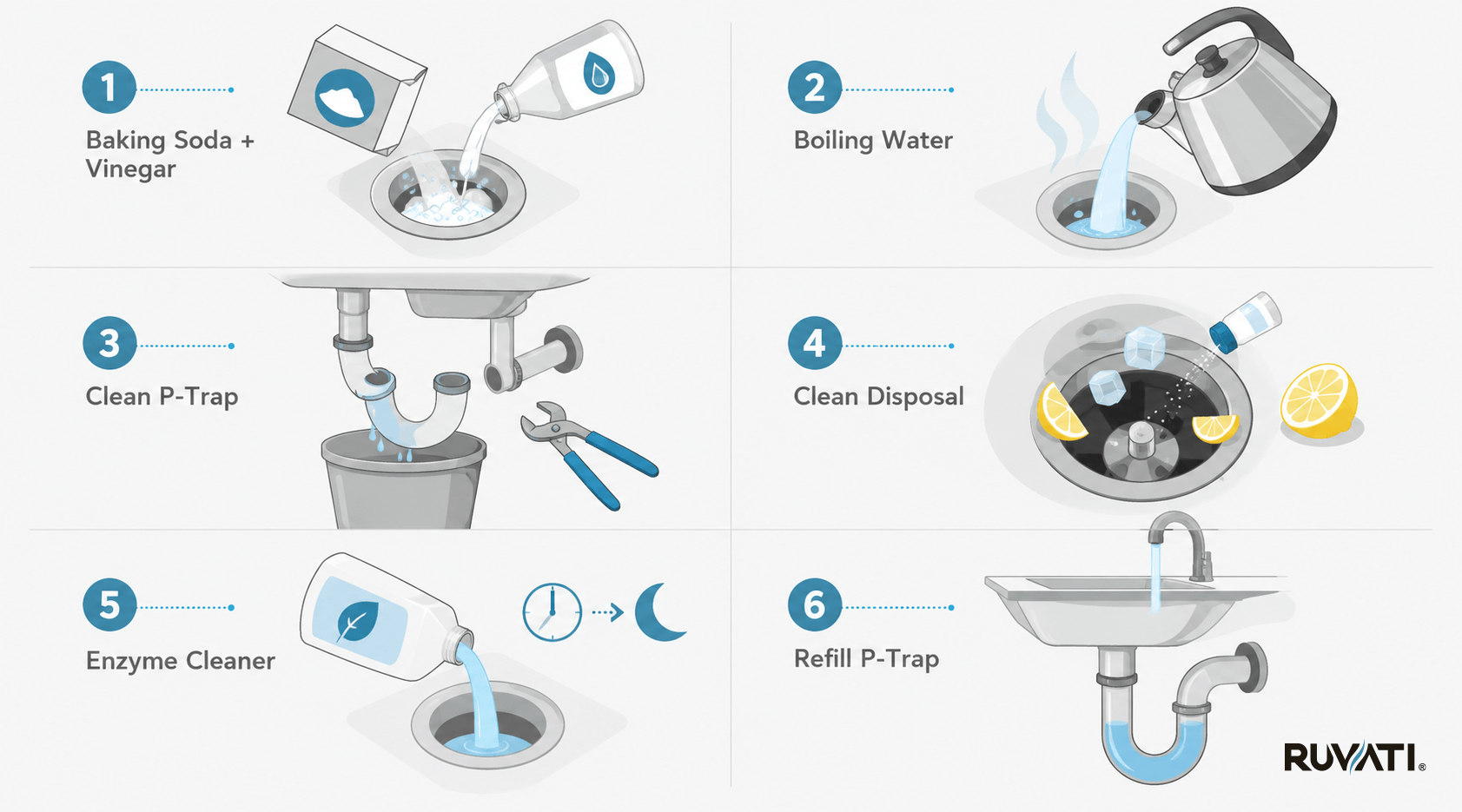
Method 1: Baking Soda and Vinegar Flush
This is the first thing most people try, and for mild odors from food debris or light biofilm, it actually works well.
| Time Required | 15–20 minutes |
|---|---|
| Things You Need | 1 cup baking soda, 1 cup white vinegar, boiling water |
| What Cause It Resolves | Food debris buildup, mild biofilm, general odor |
Steps:
- Pour the baking soda directly down the drain.
- Follow immediately with the white vinegar. You’ll hear fizzing, which is the reaction breaking down the buildup on the pipe walls.
- Let it sit for 10–15 minutes without running any water.
- Flush with a full kettle of boiling water to clear everything out.
Tip: Do this once a week as maintenance, and you’ll rarely deal with recurring smell issues.
Method 2: Boiling Water Flush
Simple, fast, and surprisingly effective for grease-based smells. Hot water melts and moves the grease that’s been coating your pipes and trapping food particles.
| Time Required | 5 minutes |
|---|---|
| Things You Need | A full kettle of boiling water |
| What Cause It Resolves | Grease buildup, light food debris |
Steps:
- Boil a full kettle of water.
- Pour it slowly down the drain in two or three stages, giving it a few seconds between each pour so it works its way through the pipe rather than just rushing past.
- Run the hot tap for a minute afterward.
Tip: Don’t do this if you have PVC pipes. Boiling water can soften the joints over time. Hot tap water works fine as an alternative.
Method 3: Clean the P-Trap
The P-trap is that curved pipe shaped like a U or P under your sink. It holds a small amount of water at all times to block sewer gas from coming up. When it gets gunked up with grease and debris, it starts to smell. Badly.
| Time Required | 20–30 minutes |
|---|---|
| Things You Need | Bucket, adjustable pliers or pipe wrench, old toothbrush, dish soap |
| What Cause It Resolves | P-trap buildup, trapped food debris, grease accumulation |
Steps:
- Place a bucket directly under the P-trap to catch the water inside.
- Unscrew the slip nuts on both ends of the curved section by hand or with pliers. Most modern P-traps are hand-tightened.
- Pull the P-trap out and dump the contents into the bucket.
- Scrub the inside of the P-trap with an old toothbrush and dish soap until it’s clean.
- Reattach it, making sure both connections are snug but not overtightened.
- Run the water for 30 seconds to refill the trap and check for leaks.
Tip: While the P-trap is out, shine a flashlight into the drain pipe in the wall. If you see heavy buildup in there, an enzyme cleaner (Method 5) will help.
Method 4: Clean the Garbage Disposal
If you have a garbage disposal and your sink smells like something died in it, the disposal is almost certainly the culprit. Food residue gets trapped under the rubber splash guard and on the blades, and it just sits there rotting.
| Time Required | 15 minutes |
|---|---|
| Things You Need | Dish soap, ice cubes, coarse salt, half a lemon or lime, disposal cleaning tablets (optional) |
| What Cause It Resolves | Garbage disposal odor, food residue on blades and splash guard |
Steps:
- Turn off the disposal and lift the rubber splash guard out of the drain opening.
- Scrub both sides of the splash guard with dish soap and a brush. This part alone makes a huge difference. It’s where most of the smell lives.
- Fill the disposal with ice cubes and a handful of coarse salt. Run the disposal for 30 seconds. The ice and salt scrub the blades and walls.
- Cut a lemon or lime in half and run the pieces through the disposal to neutralize odor.
- Finish by squirting dish soap into the drain, running cold water, and letting the disposal run for another 20 seconds.
Tip: Drop in a disposal cleaning tablet once a month to keep things fresh between deep cleans.
Method 5: Use an Enzyme Drain Cleaner
Enzyme-based drain cleaners are different from chemical ones. Instead of burning through buildup, they introduce bacteria that digest organic material, like food particles, grease, and biofilm, over several hours. They’re slower, but they’re thorough and won’t damage your pipes.
| Time Required | 8–12 hours (overnight works best) |
|---|---|
| Things You Need | Enzyme drain cleaner (Bio-Clean, Green Gobbler, or similar) |
| What Cause It Resolves | Biofilm, persistent organic buildup, recurring odors that won’t go away with basic flushing |
Steps:
- Pour the recommended amount of enzyme cleaner down the drain according to the product instructions.
- Do this right before bed so the drain sits undisturbed overnight.
- In the morning, flush with warm water.
- Repeat once a week for two to three weeks if the smell has been building for a long time.
Tip: Avoid using enzyme cleaners right after using bleach or chemical drain cleaners. The bleach will kill the bacteria before they have a chance to work.
Method 6: Check and Refill the P-Trap (Dry Trap Fix)
If you have a sink that doesn’t get used much, such as a utility sink, a guest bathroom sink, or a bar sink, the water in the P-trap can evaporate over time. When that happens, there’s nothing blocking sewer gas from coming straight up through the drain. The smell is distinctly sulfur-like or sewage-like rather than food-related.
| Time Required | 2 minutes |
|---|---|
| Things You Need | Water, mineral oil (optional) |
| What Cause It Resolves | Dry P-trap, sewer gas entering through unused drains |
Steps:
- Run the sink for 30–60 seconds to refill the P-trap with water.
- Check if the smell disappears within a few minutes.
- If you want the fix to last longer in a rarely used sink, pour a tablespoon of mineral oil down the drain after refilling. It floats on the water and slows evaporation.
Tip: If you have a sink that sits unused for weeks at a time, just make a habit of running it briefly once every week or two.
Method 7: Inspect for a Sewer Gas Leak
If none of the above methods work, or if the smell comes back within a day or two every time, you may be dealing with sewer gas — and that points to something structural rather than a cleaning issue. Sewer gas smells strongly of sulfur or rotten eggs, and unlike food odors, it tends to linger even when the kitchen isn’t in use.
| Time Required | 30–60 minutes |
|---|---|
| Things You Need | Flashlight, plumber’s putty or Teflon tape (for minor fixes) |
| What Cause It Resolves | Sewer gas from cracked seals, loose pipe connections, or improperly vented drains |
Steps:
- Check under the sink with a flashlight. Look for any visible gaps between the drain pipe and the wall, loose slip fittings, or cracked sections of pipe.
- Check the seal where the drain basket meets the sink basin. If it’s old and cracked, sewer gas can seep through.
- Run water and watch the P-trap area for any dripping or movement that suggests a loose connection.
- If you find a loose fitting, tighten it. If the drain basket seal is cracked, you can replace it with plumber’s putty.
- If everything looks intact and the smell persists, it’s likely a venting issue inside the wall — and that’s where you call a plumber.
Tip: Sewer gas contains methane and hydrogen sulfide, both of which are harmful in high concentrations. If the smell is strong and constant, don’t keep putting it off.
How to Prevent Bad Smells from Coming Back
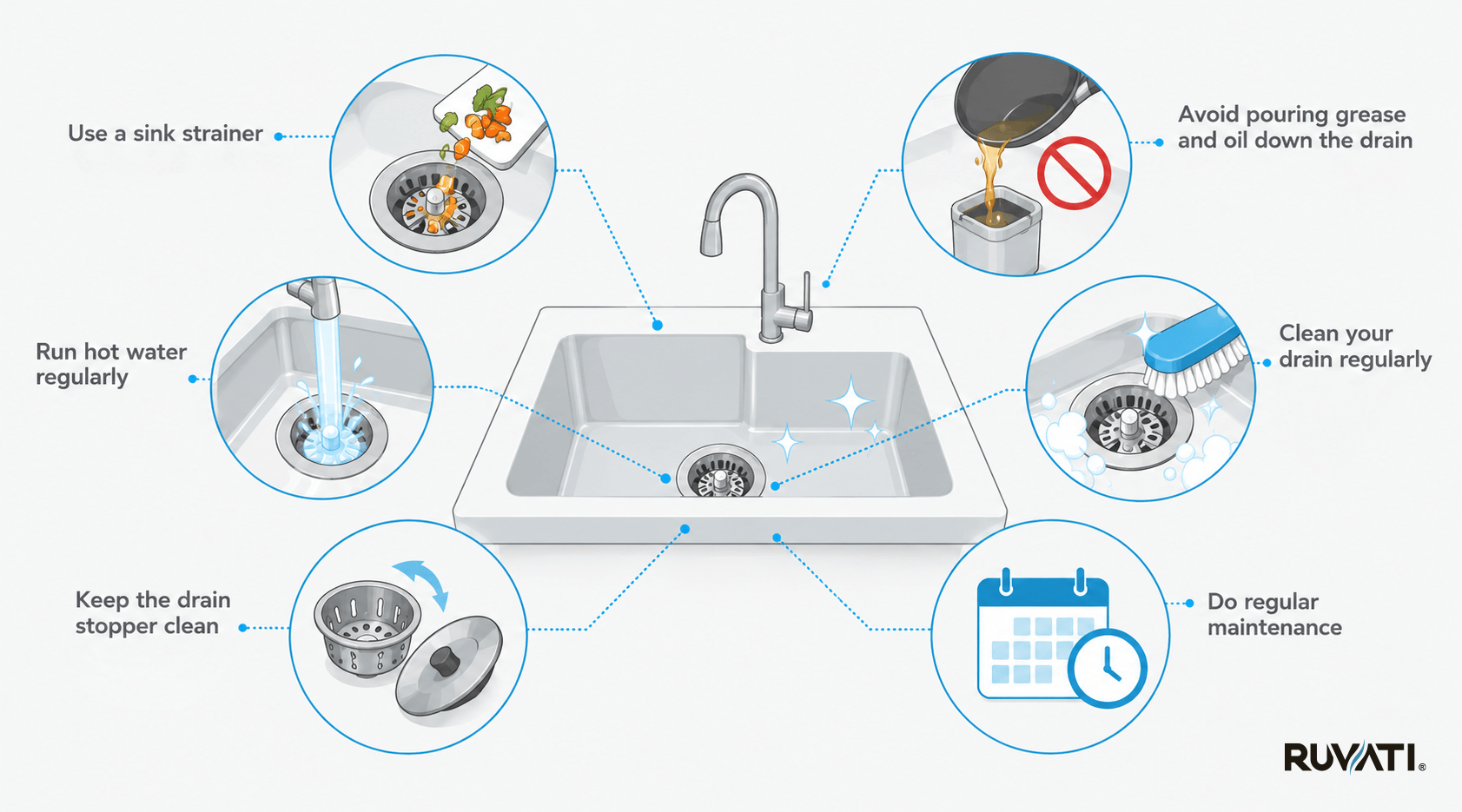
Fixing the smell once is easy. And if you can follow a few basic tips and habits, you can prevent them from coming back ever again.
Here are some things that you can try to prevent bad smells for returning to your kitchen sink drain.
- Run hot water after every use to flush food particles and grease through the pipes before they settle
- Do a baking soda flush once a week. It takes two minutes and keeps biofilm from building up
- Never pour cooking grease down the drain. It hardens in the pipes, traps food debris, and is one of the most common causes of persistent drain odor
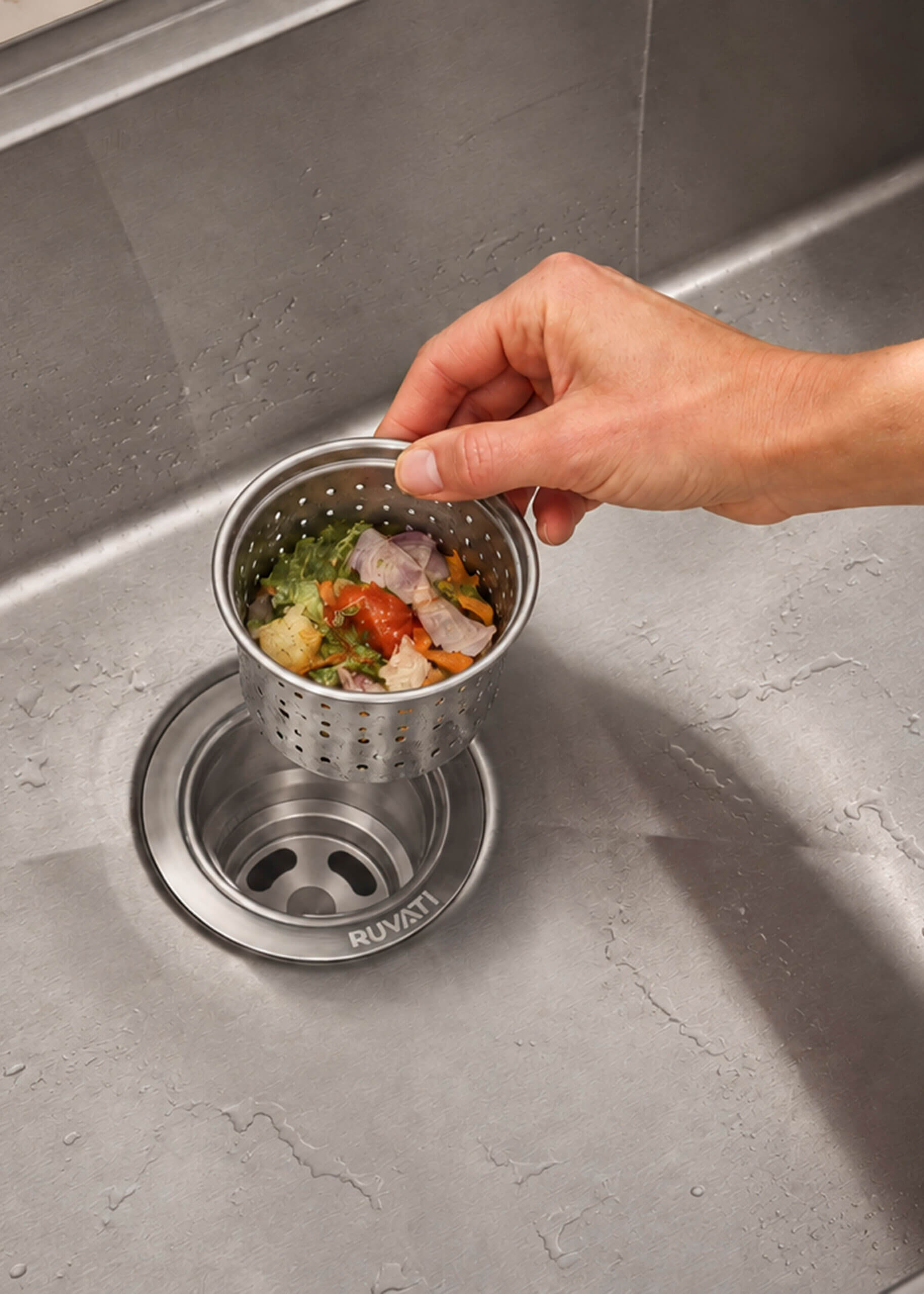
- Use a drain strainer to catch food scraps before they enter the pipe
- Clean your garbage disposal monthly, the splash guard especially
- Run water in rarely used sinks every week or two to keep the P-trap full
When to Call a Plumber
Most smelly drain issues are DIY territory. You can take care of it yourself using any of the measures that we’ve described above.
But there are a few situations where no amount of cleaning will solve the problem.
- Call a plumber if you notice any of the following.
- The smell returns within 24–48 hours after every fix, no matter what you try.
- You hear gurgling sounds from the drain when water goes down, which usually points to a venting problem.
- Multiple drains in the house smell at once, which can indicate a main sewer line issue.
- The smell is strong and constant even when the kitchen hasn’t been used, which is a sign of a structural sewer gas problem rather than a surface-level buildup.
These aren’t issues you can flush away. A plumber can scope the drain, check the venting stack, and identify whether there’s a broken seal or a blockage deeper in the line…which are some things that are genuinely impossible to diagnose from above the sink.



Stainless steel is one of the most durable materials for kitchen sinks. For almost a century, stainless steel sinks have been the sink of choice for American kitchens.