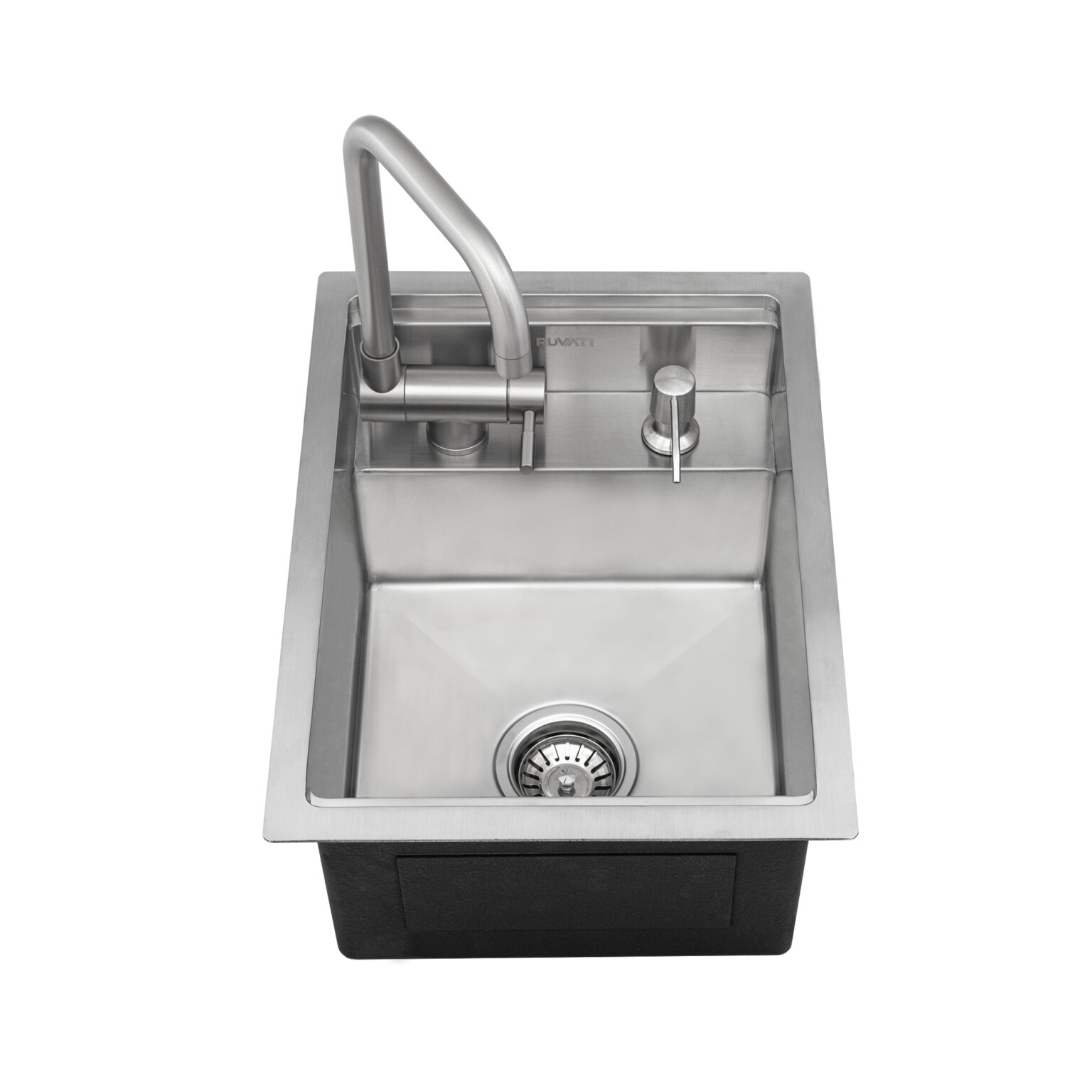
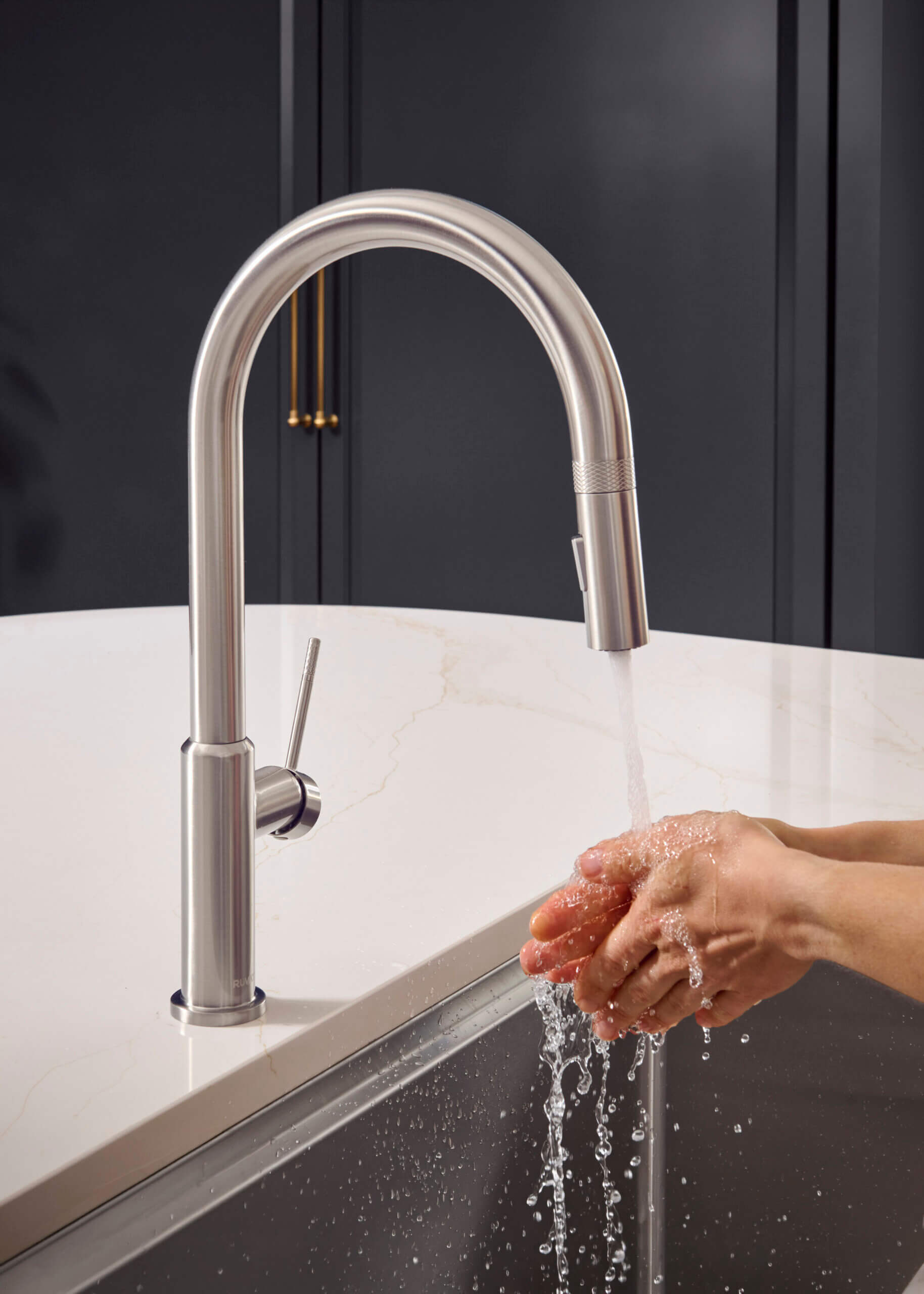
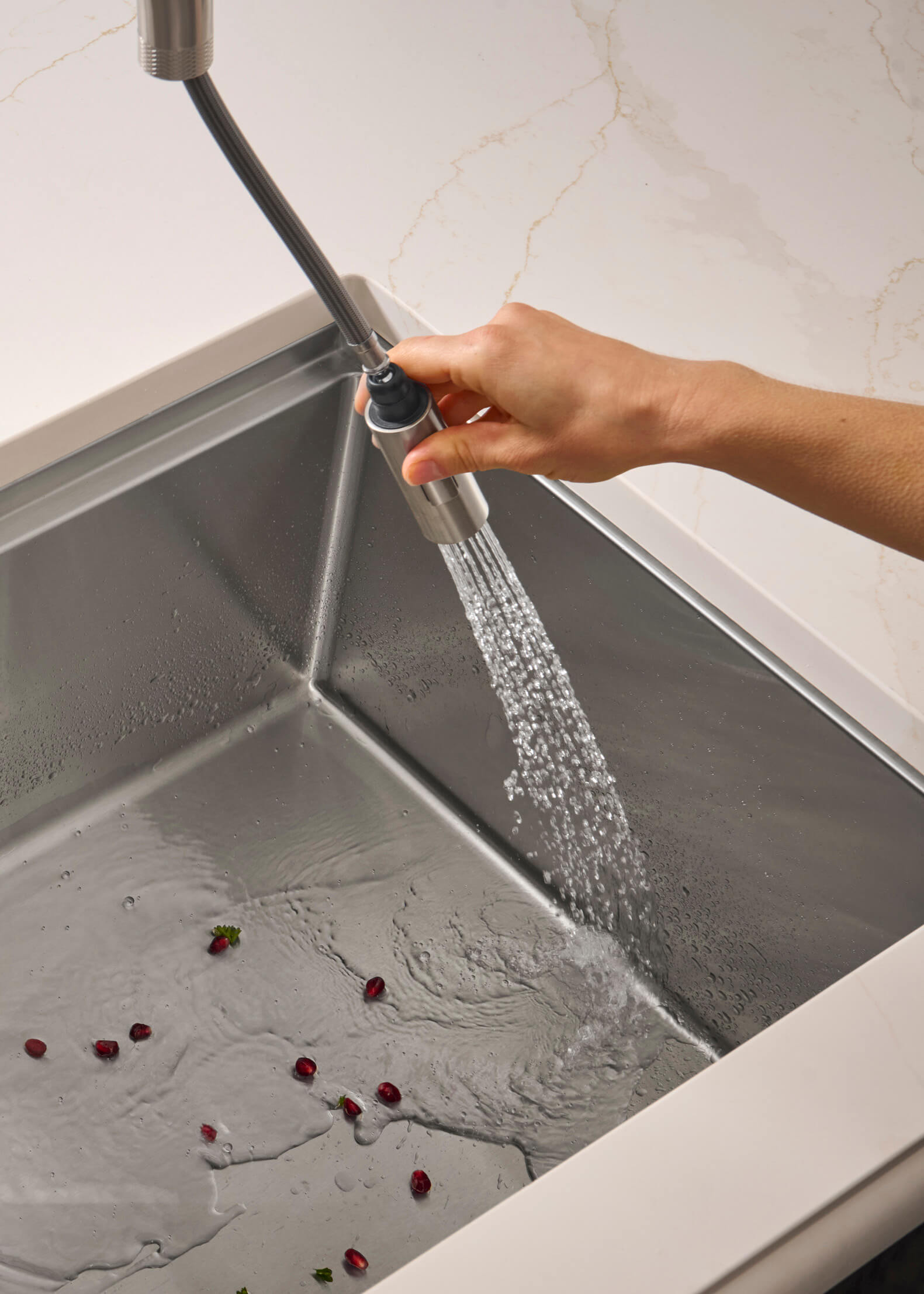
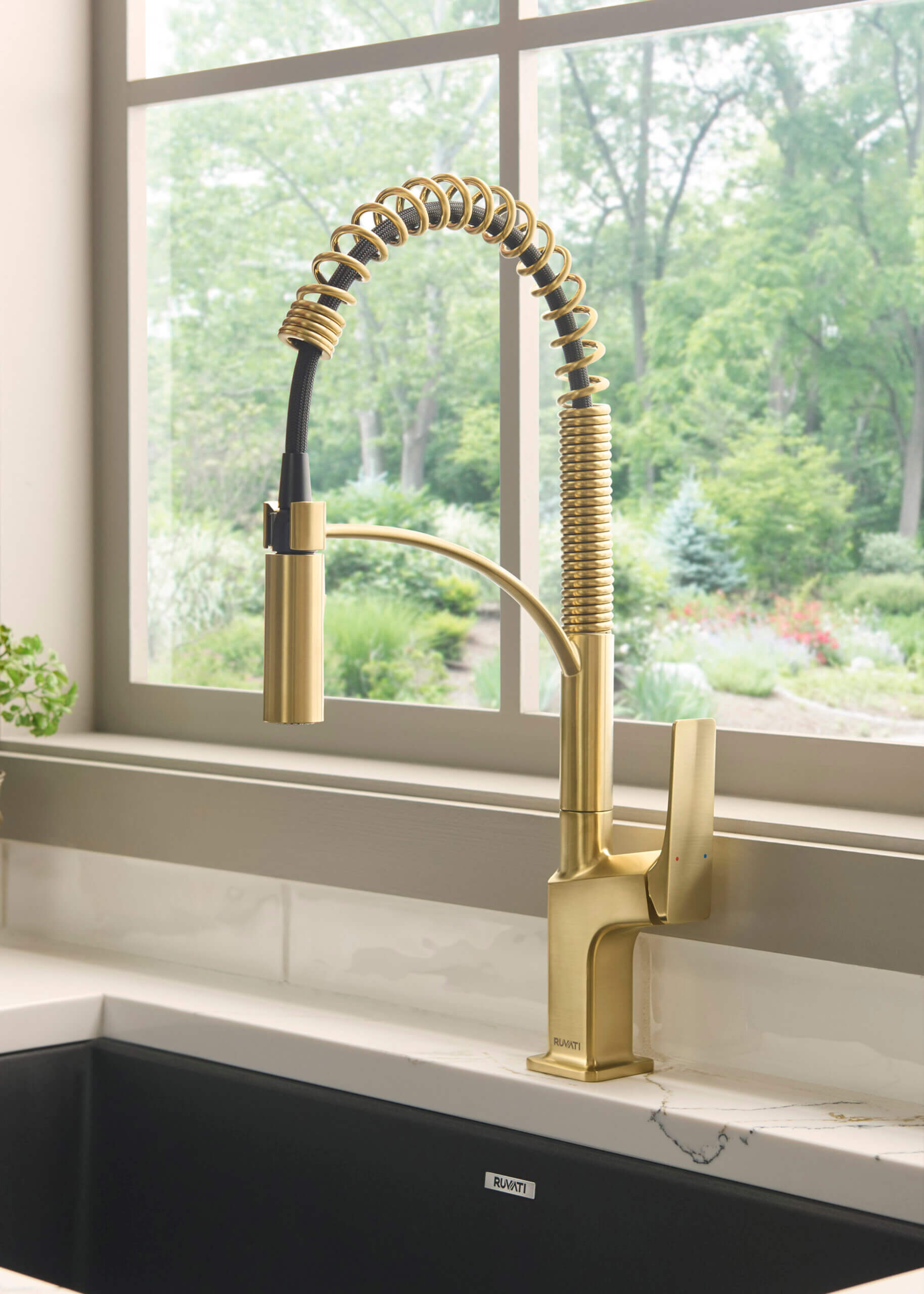
In this post, we’re going to guide you on the various types of kitchen faucets. You should know about all the various types so that you can choose the best possible option the next time you want to have a remodel or a renovation.
The various types of kitchen faucets are divided into categories based on their handle style, spray style, and installation, etc. To start off, we’ll list all of the different types and then go into details for each one.
Overview of the Various Kitchen Faucet Types
Here are the different types of kitchen faucets organized according to handle type, sprayer function, mounting configuration, and style.
1. Handle Type
There are three different types of faucets based on the handle configuration.
- Single Handle
- Double Handle
- Handleless
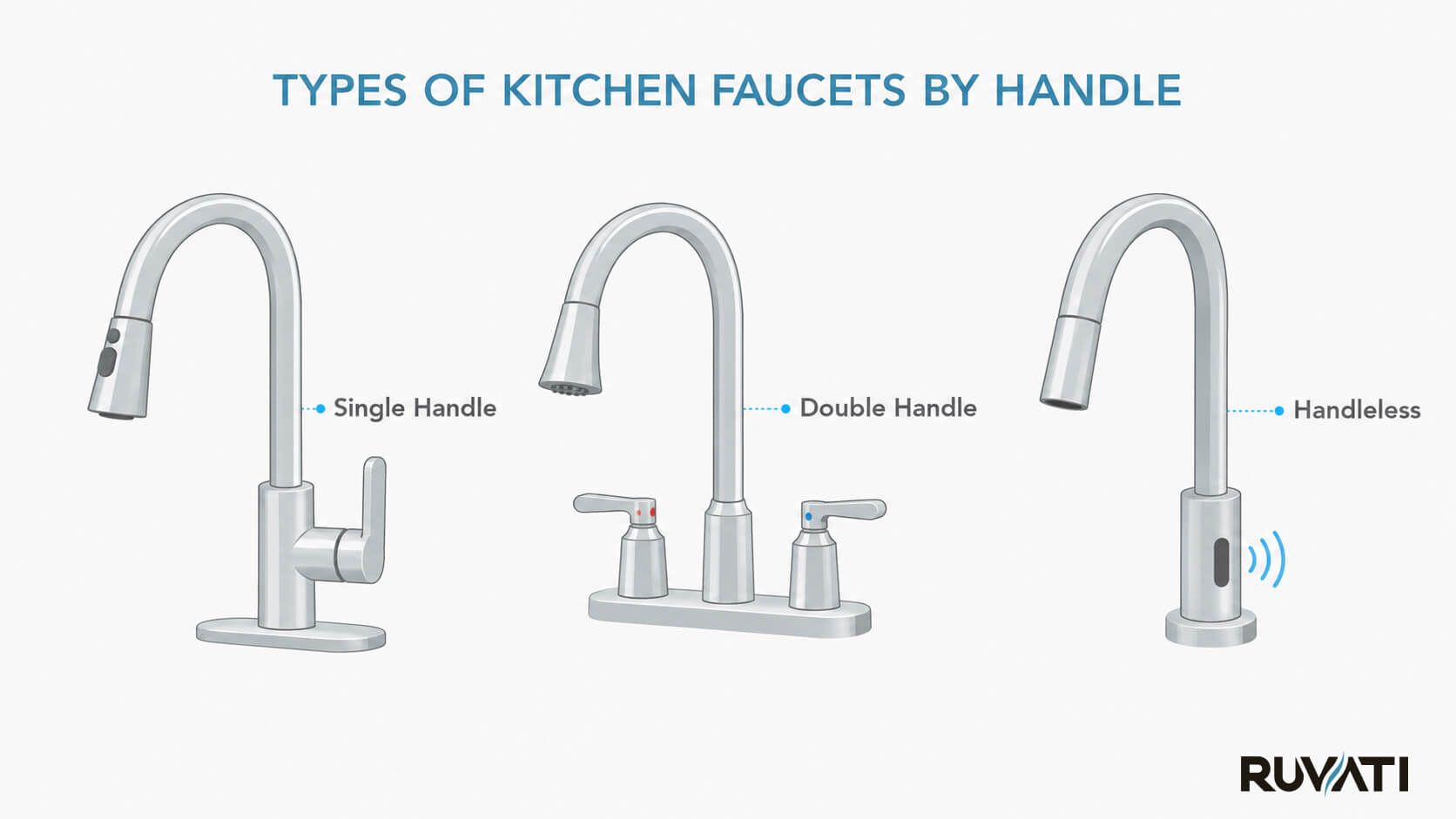
2. Sprayer Function
There are four main kitchen faucet types based on sprayer function, including:
- Pull-Down
- Pull-Out
- Side Sprayer
- Dual-Function Spray
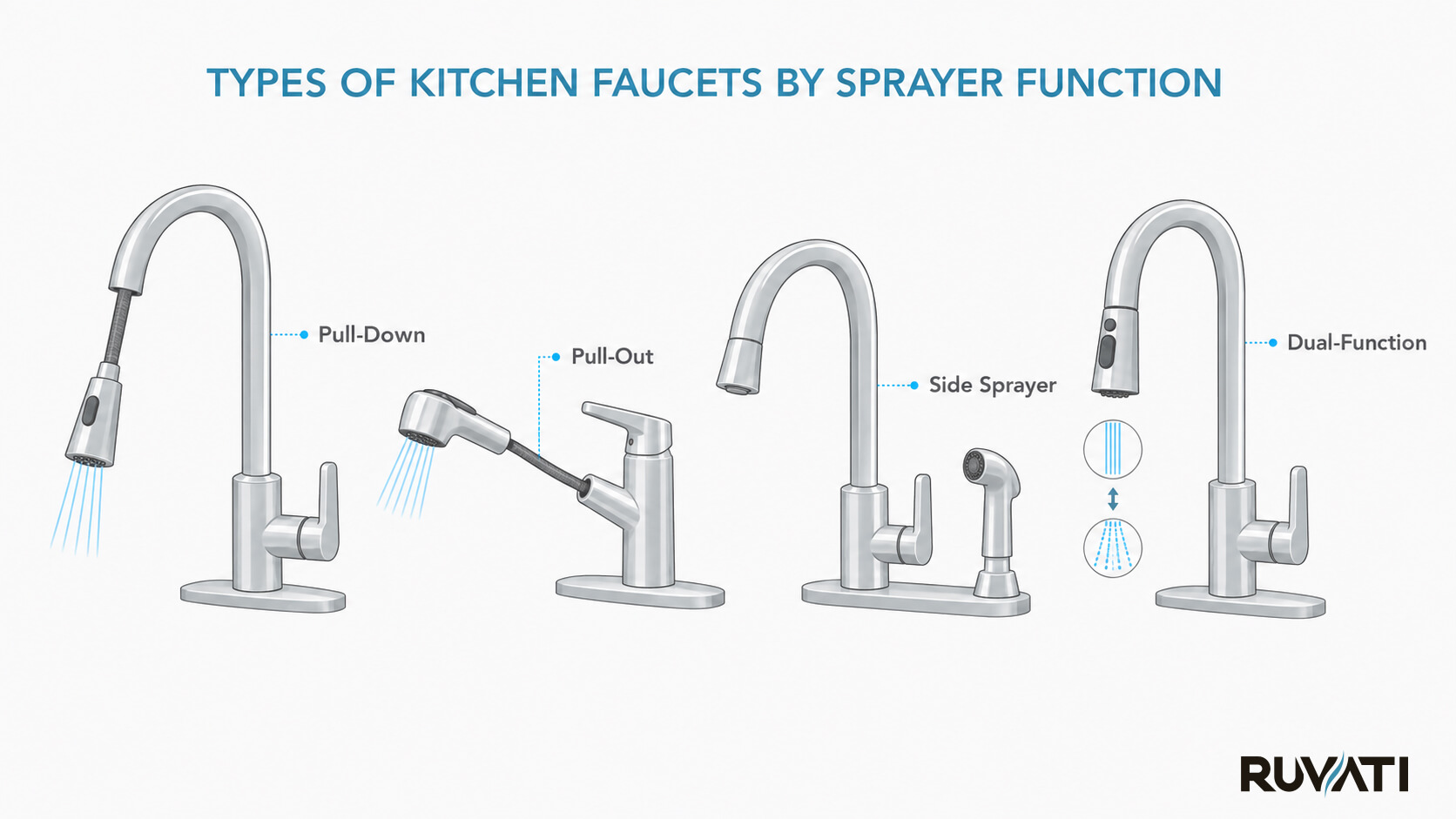
3. Mounting
Faucets can be mounted in a number of different ways, due to which they are divided into different types.
- Deck-Mounted
- Wall-Mounted
- Countertop-Mounted
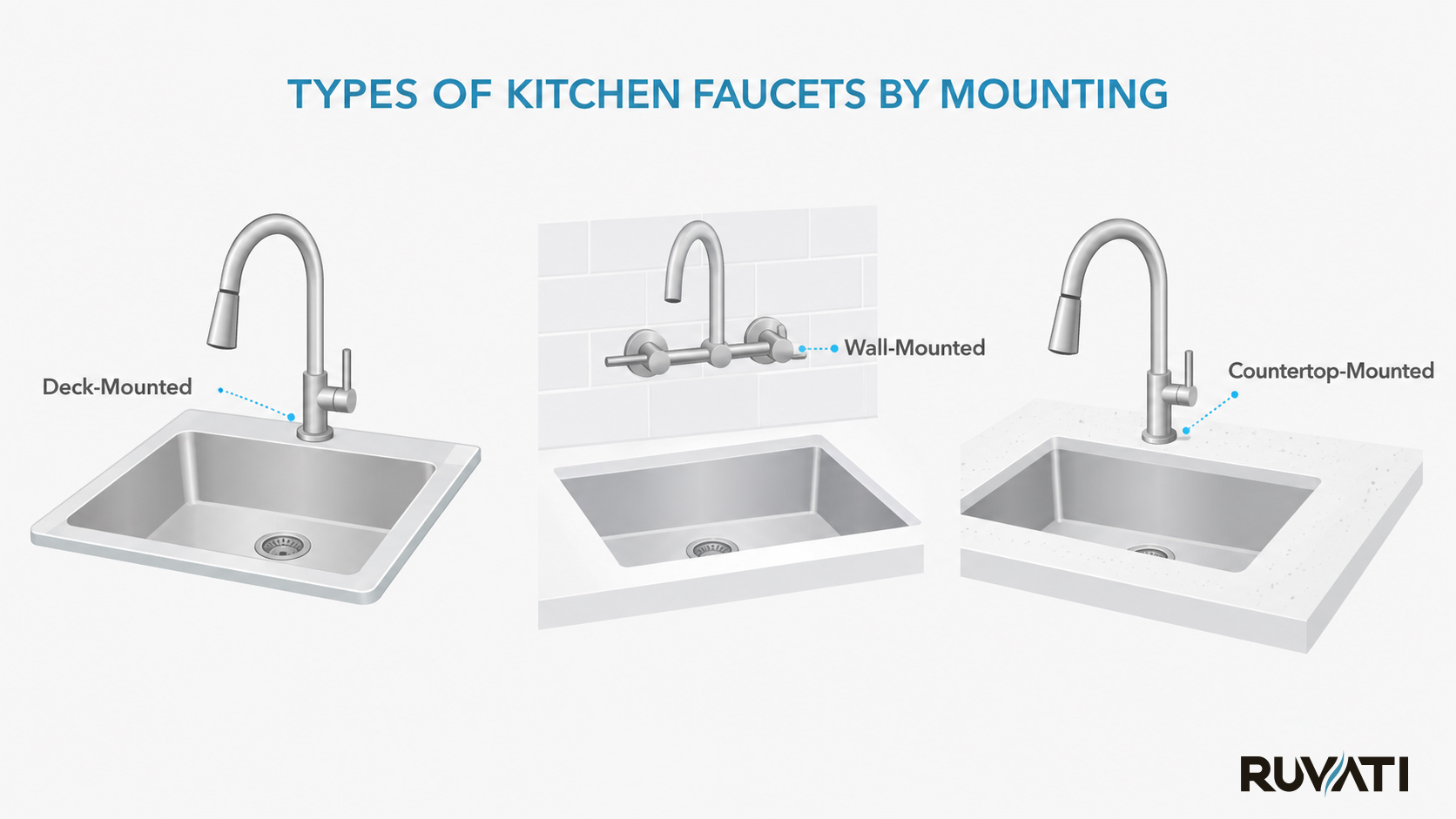
4. Style
Last but not least, the visual and usage styles of the kitchen faucet are also numerous, as they are divided into different types.
- Pot Filler
- Bridge
- Touchless
- Commercial-Style
- Gooseneck
- Smart Faucet
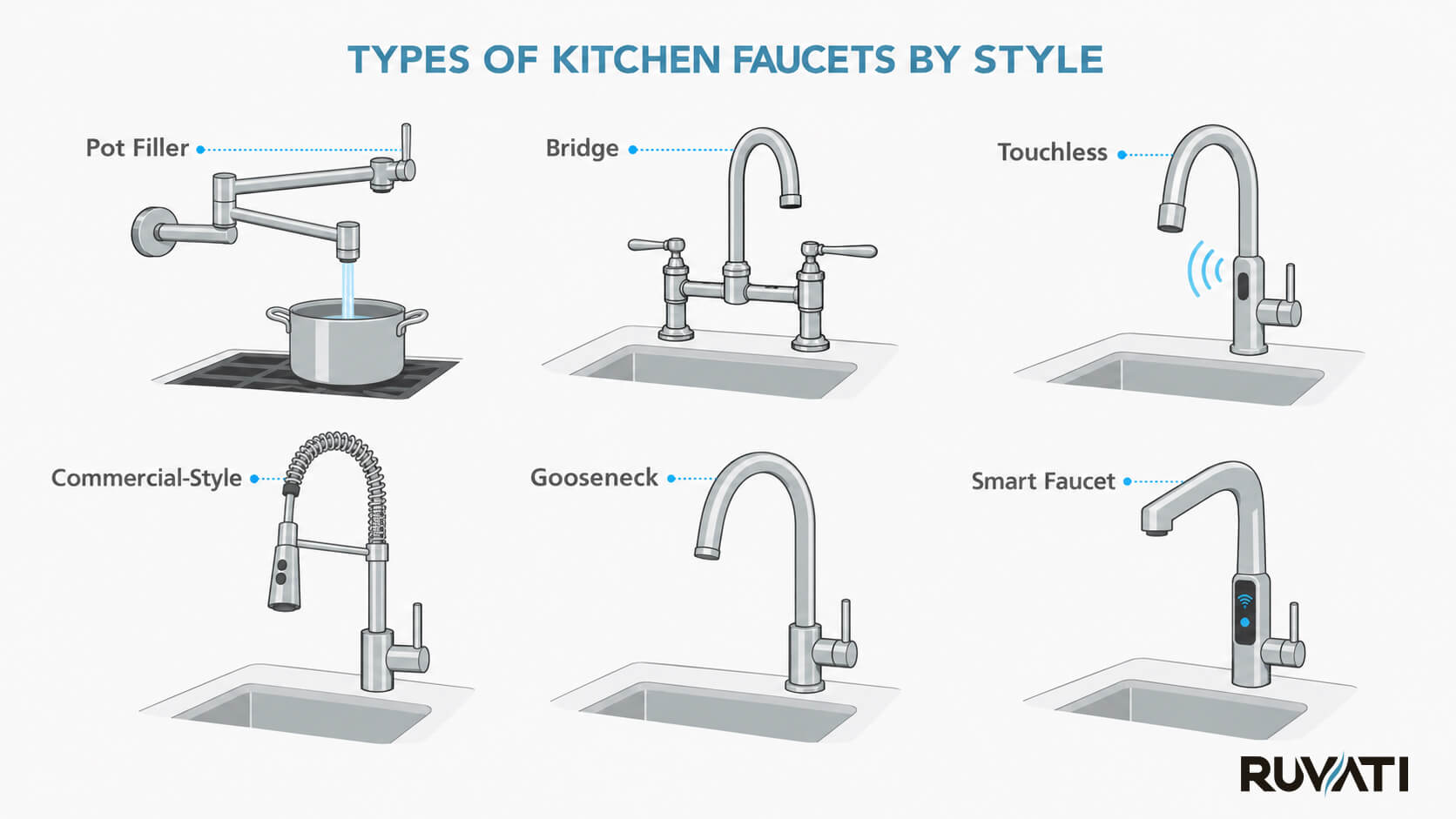
Single Handle Faucet
Best for
Small to medium kitchens. Everyday use.
Salient feature/quality
A single-handle faucet uses one lever to control both water flow and temperature. The handle moves in simple directions to adjust pressure and heat. This design uses one internal valve, which reduces complexity. It also limits the number of holes needed in the sink or counter.
Benefits
- Easy to operate with one hand.
- Simple installation.
- Uses less space.
Downsides
- Temperature control is less exact.
- The internal valve may wear with time.
General cost
Low to mid-range. Common in most price categories.
Double Handle Faucet
Best for
Large kitchens. Users who want control over water temperature.
Salient feature/quality
A double-handle faucet uses two separate handles, one for hot water and one for cold water. Each handle controls its own valve. The user mixes water by adjusting both handles. This setup allows steady flow control and clear separation of temperature sources.
Benefits
- More precise temperature adjustment.
- Handles experience less strain per use.
- Works well with traditional layouts.
Downside
- Requires more space.
General cost
Mid-range to high-range. Price varies by design and finish.
Handleless Faucet
Best for
Modern kitchens. Users who want minimal contact.
Salient feature/quality
A handleless faucet operates without physical handles. Water flow is controlled through sensors, buttons, or touch panels. The system opens and closes an internal valve electronically. This reduces direct contact during use and keeps the faucet body clear of moving parts on the exterior.
Benefits
- Reduces surface contact.
- Easy to clean.
- Creates a clean sink area.
Downside
- Requires power.
- Electronic parts can fail over time.
General cost
Mid-range to high-range. Higher cost than manual faucets.
Pull-Down Faucet
Best for
Deep sinks. Heavy rinsing tasks.
Salient feature/quality
A pull-down faucet includes a spray head that extends straight down from the spout. The hose moves within the faucet body and retracts using a weight system. The spray head usually supports multiple spray modes. This setup keeps the water flow directed into the sink area.
Benefits
- Good control over water direction.
- Helpful for cleaning large items.
- Keeps splashing limited.
Downside
- Needs enough height above the sink.
- Hose and weight can wear out.
General cost
Mid-range. Widely available across brands.
Pull-Out Faucet
Best for
Small sinks. Tight kitchen spaces.
Salient feature/quality
A pull-out faucet has a spray head that pulls outward toward the user. The hose extends horizontally rather than downward. This allows flexible movement across the sink and counter. The compact spout design works well where overhead clearance is limited.
Benefits
- Works in low-clearance areas.
- Easy to direct water.
- Good for small work zones.
Downside
- Shorter reach into deep sinks.
- Less control for large items.
General cost
Low to mid-range. Often less expensive than pull-down models.
Side Sprayer
Best for
Large sinks. Traditional kitchen layouts.
Salient feature/quality
A side sprayer is a separate spray unit installed beside the main faucet. It connects through a hose under the sink and delivers focused water pressure. The main spout stays fixed while the sprayer handles rinsing and cleaning tasks. This setup divides standard flow and spray functions.
Benefits
- Strong spray control.
- Keeps the main faucet simple.
- Useful for targeted cleaning.
Downside
- Requires an extra installation hole.
General cost
Low to mid-range. Usually affordable.
Deck-Mounted Faucet
Best for
Most kitchens. Standard sink and countertop setups.
Salient feature/quality
A deck-mounted faucet installs directly onto the sink or countertop surface. Water lines run up through pre-drilled holes below. This is the most common mounting method used in kitchens. It works with a wide range of faucet styles and configurations.
Benefits
- Easy to install and replace.
- Compatible with most sinks.
- Wide style availability.
Downside
- Uses counter or sink deck space.
- Water can collect around the base.
General cost
Low to high-range. Available at nearly every price point.
Wall-Mounted Faucet
Best for
Open sink areas. Kitchens with exposed or in-wall plumbing.
Salient feature/quality
A wall-mounted faucet is installed in the wall above the sink instead of the counter. Water lines are hidden behind the wall surface. The spout extends outward to reach the sink basin. This setup frees up sink and counter space below.
Benefits
- Creates more working space.
- Easy to clean around the sink.
- Distinct visual placement.
Downside
- Installation is more complex.
- Repairs may require wall access.
General cost
Mid-range to high-range. Installation adds to the total cost.
Countertop-Mounted Faucet
Best for
Custom countertops. Vessel or specialty sinks.
Salient feature/quality
A countertop-mounted faucet installs directly through the countertop rather than the sink body. Water lines pass through the counter surface and connect below. This allows flexible placement and works well when the sink has no faucet holes. The faucet height and reach are chosen to match the sink depth and position.
Benefits
- Flexible placement options.
- Works with specialty sinks.
- Clean separation between sink and faucet.
Downside
- Installation requires precise drilling.
- Leaks can damage the countertop if not sealed.
General cost
Mid-range to high-range. Cost depends on materials and installation.
Pot Filler Faucet
Best for
Home cooks. Sinks with a nearby stove.
Salient feature/quality
A pot filler faucet is installed near or above the cooking range. It has a long articulated arm that extends outward and folds back when not in use. The faucet delivers cold water directly to cookware. This reduces the need to carry heavy pots from the sink to the stove.
Benefits
- Reduces lifting and carrying.
- Saves time during cooking.
- Keeps water access close to the range.
Downside
- Limited use outside cooking.
- Requires wall plumbing.
General cost
Mid-range to high-range. Installation increases total expense.
Bridge Faucet
Best for
Traditional kitchens. Farmhouse and classic designs.
Salient feature/quality
A bridge faucet has two separate water lines that connect to a central spout. The hot and cold supplies are visible and joined by a horizontal bridge. Each handle controls one water source. This design exposes the plumbing and creates a wide stance on the sink deck.
Benefits
- Clear temperature control.
- Strong and steady water flow.
- Fits classic kitchen styles.
Downside
- Requires more space.
- Cleaning around exposed parts takes time.
General cost
Mid-range to high-range. Often priced higher due to design and materials.
Touchless Faucet
Best for
Busy kitchens. Users who want reduced contact.
Salient feature/quality
A touchless faucet uses motion sensors to start and stop water flow. The sensor detects hand movement near the spout. An internal electronic valve controls the water. This allows operation without touching the faucet body.
Benefits
- Improves hygiene.
- Reduces mess on the handle area.
- Convenient during cooking.
Downside
- Requires power or batteries.
- Sensors may misread movement.
General cost
Mid-range to high-range. Price increases with sensor quality.
Commercial-Style Faucet
Best for
Heavy kitchen use. Large sinks and open layouts.
Salient feature/quality
A commercial-style faucet is modeled after professional kitchen equipment. It usually has a tall spring coil, a flexible hose, and a strong spray head. The faucet is built for high water flow and frequent use. The structure supports wide movement and quick repositioning.
Benefits
- High water pressure.
- Large working range.
- Durable construction.
Downside
- Takes up visual space.
- May be too large for small kitchens.
General cost
Mid-range to high-range. Built with heavier materials.
Gooseneck Faucet
Best for
Deep sinks. Kitchens that need extra clearance.
Salient feature/quality
A gooseneck faucet has a high, curved spout that arches over the sink. The curve provides vertical space beneath the faucet. This allows tall pots and containers to fit easily. The design focuses on height and reach rather than added functions.
Benefits
- Provides ample clearance.
- Simple and reliable design.
- Works with many sink types.
Downside
- Can cause splashing in shallow sinks.
- Offers fewer advanced features.
General cost
Low to mid-range. Price depends on the finish and build.
Smart Faucet
Best for
Tech-focused kitchens. Users who want automation.
Salient feature/quality
A smart faucet uses digital controls to manage water flow and temperature. It may include touch panels, voice control, or app integration. Some models allow preset temperatures or measured water output. The system relies on internal sensors and electronic valves to operate.
Benefits
- Improves control and consistency.
- Can reduce water waste.
- Adds convenience to daily tasks.
Downside
- Requires power and setup.
- Higher chance of technical issues.
General cost
High-range. One of the most expensive faucet types.
Faucet Types by Finish
Other than the types of kitchen faucets that we’ve mentioned above, there are also different kitchen faucet variations based on their finishes. Below, we’ve listed some of the man finishes along with their pros and cons.
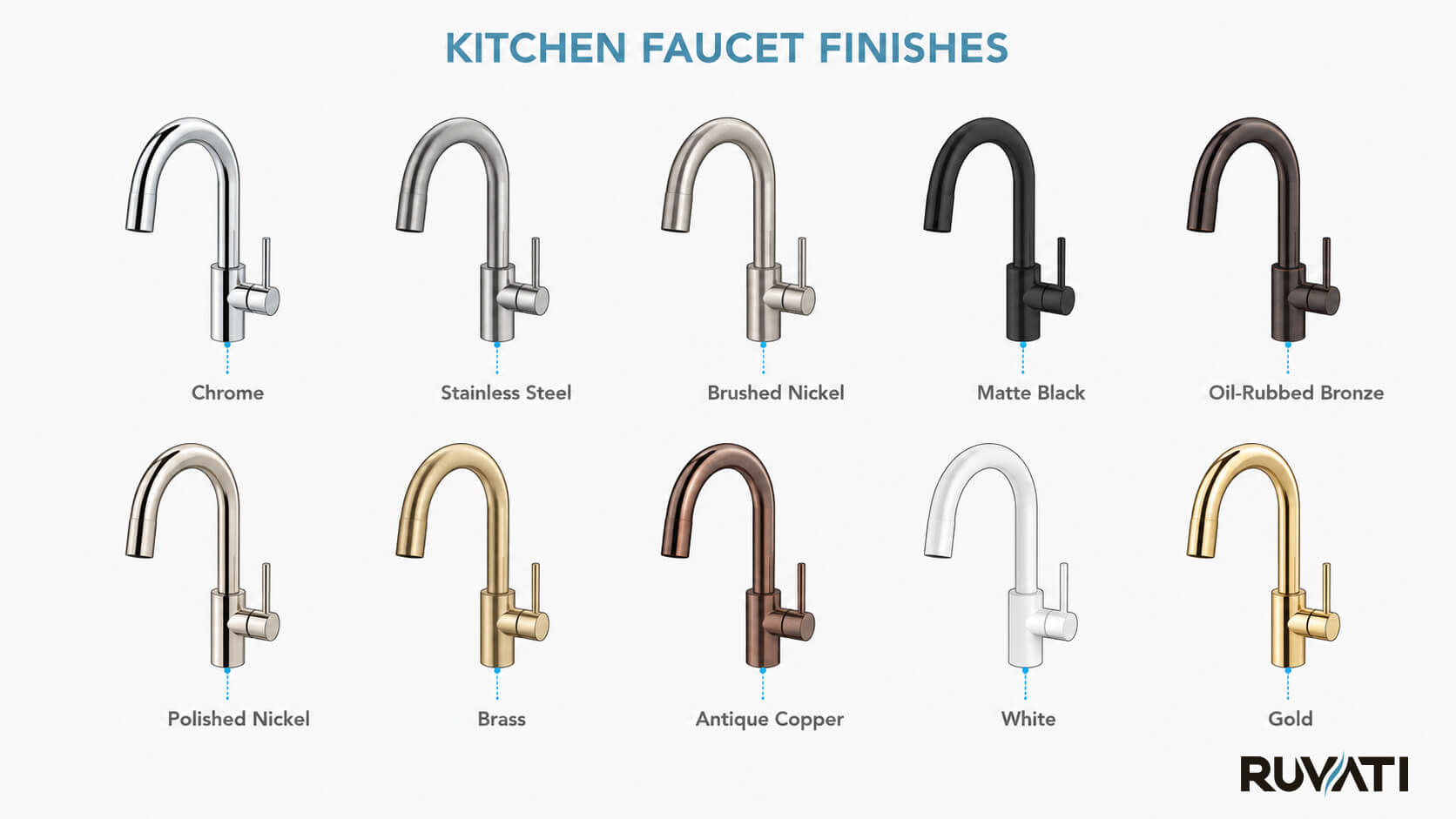
Chrome
Chrome is a shiny, mirror-like finish that reflects light and adds a dazzling look to the faucet.
| Pros | Cons |
|---|---|
| It is easy to clean and maintain. | It tends to show water spots quickly. |
| It is widely available and affordable. | Scratches can be easy to notice. |
Stainless Steel
Stainless steel has a steely appearance like chrome, but the texture is matte, and often brushed, which makes it look more premium.
| Pros | Cons |
|---|---|
| It resists fingerprints better than shiny finishes. | It does not have a glossy appearance. |
| It holds up well to daily use. | Color options are limited. |
Brushed Nickel
Brushed nickel is similar to stainless steel in appearance, as it has a brushed and non-glossy appearance.
| Pros | Cons |
|---|---|
| It hides smudges and water marks well. | It usually costs more than chrome. |
| It has a soft and balanced look. | It can appear dull over time. |
Matte Black
Matte black finish has a similar non-glossy texture as brushed nickel, but the color is, as the name applies, black instead of steely silver.
| Pros | Cons |
|---|---|
| It gives the kitchen a modern feel. | It can show soap and mineral residue. |
| It creates a strong contrast at the sink. | The finish may chip if handled roughly. |
Oil-Rubbed Bronze
Oil-rubbed bronze has a dark, aged appearance with subtle brown and copper undertones. The finish often shows slight variations in color across the surface, giving it a hand-finished look.
| Pros | Cons |
|---|---|
| It adds depth and character to the space. | The color can vary between pieces. |
| It hides wear better than lighter finishes. | It needs gentle cleaning to avoid damage. |
Polished Nickel
Polished nickel has a bright, glossy finish with warm silver tones that give it a softer appearance than chrome. The reflective surface creates a refined, elegant look that works well in traditional and transitional kitchens.
| Pros | Cons |
|---|---|
| It looks warmer than standard chrome. | It shows fingerprints easily. |
| It feels refined and smooth. | It usually comes at a higher price. |
Brass
Brass has a warm, golden-yellow appearance that ranges from bright and polished to soft and antique, depending on the treatment. The finish brings a traditional or vintage feel to the kitchen.
| Pros | Cons |
|---|---|
| It brings warmth to the kitchen design. | It can tarnish if left untreated. |
| It is a strong and long-lasting material. | It often costs more than common finishes. |
Antique Copper
Antique copper features rich reddish-brown tones with darker accents that create depth. The finish has a weathered, lived-in appearance that adds character to the sink area.
| Pros | Cons |
|---|---|
| It develops a unique patina over time. | The color change can be uneven. |
| It stands out from standard finishes. | It requires regular care to maintain. |
White
White is a clean, neutral finish that’s typically made from porcelain or powder-coated metal. It has a smooth, solid appearance that creates a fresh look at the sink.
| Pros | Cons |
|---|---|
| It keeps the sink area looking clean. | It can stain more easily than metal finishes. |
| It blends well with light kitchens. | It limits pairing with darker hardware. |
Gold
Gold finish ranges from bright yellow gold to softer tones. It has a lustrous, eye-catching appearance that draws attention and serves as a statement piece in the kitchen.
| Pros | Cons |
|---|---|
| It adds a decorative focal point. | It tends to be expensive. |
| It gives the kitchen a bold accent. | It may go out of style faster. |
Wrapping Up and Recap
Choosing the right kitchen faucet comes down to understanding what works for your space and how you actually use your sink. The types we’ve covered—whether based on handle configuration, sprayer function, mounting style, or overall design—each serve different needs.
A single-handle faucet makes sense for quick everyday tasks, while a commercial-style faucet handles heavy-duty kitchen work. The finish you choose affects both the look and the maintenance you’ll deal with over time.
Don’t overthink it, but don’t rush it either. Consider your sink depth, counter space, and how much clearance you have above the basin. Think about whether you need a pull-down sprayer for deep pots or a pull-out model for tight spaces.
If you’re cooking frequently, features like a pot filler or touchless operation might be worth the investment. If you just need something reliable that looks good, a gooseneck or bridge faucet in a classic finish will do the job.
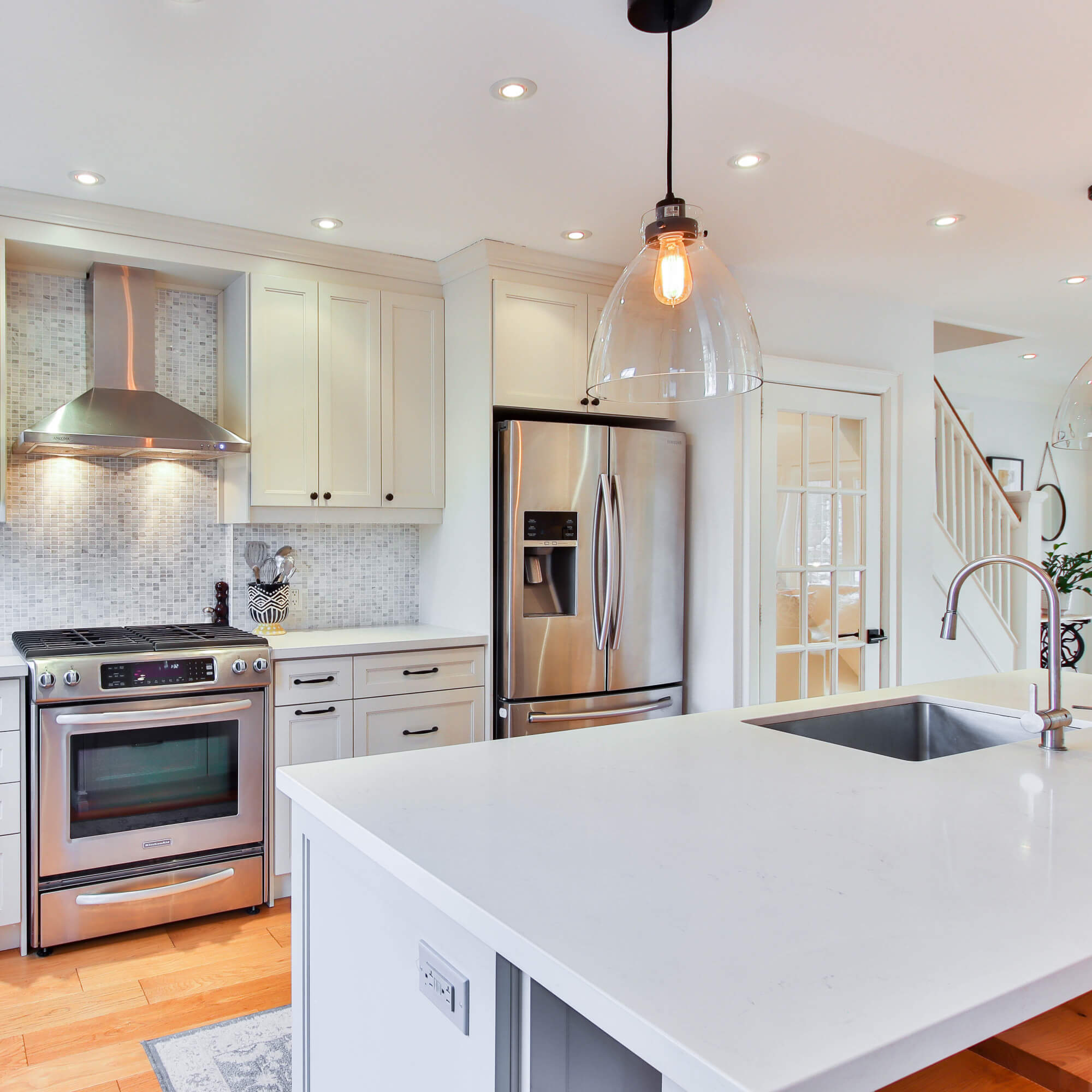

Stainless steel is one of the most durable materials for kitchen sinks. For almost a century, stainless steel sinks have been the sink of choice for American kitchens.